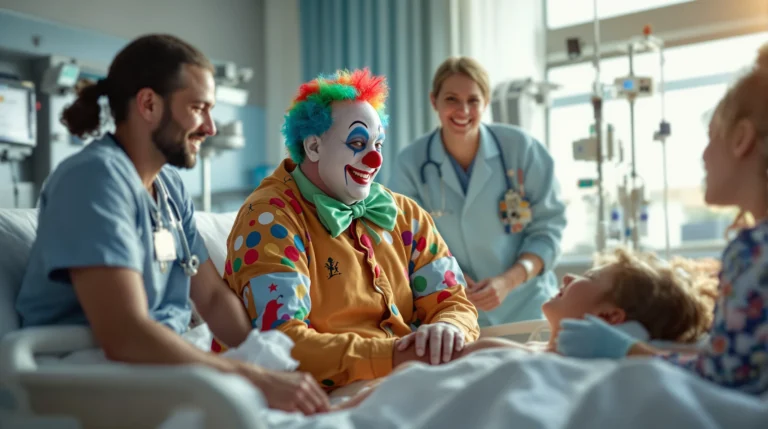
Therapeutic Comedy: Real Medicine That Makes You Laugh
Therapeutic comedy is a clinically validated, evidence-based approach to using humor and laughter as active interventions for pain relief, stress reduction, and improved patient wellbeing in healthcare settings – here is what the science says and how to apply it.
Table of Contents
- What Is Therapeutic Comedy?
- How Therapeutic Comedy Works in the Body
- Clinical Applications of Therapeutic Comedy
- Implementing Humor Interventions in Practice
- Frequently Asked Questions
- Comparing Therapeutic Approaches
- How LaughMD Supports Therapeutic Comedy
- Practical Tips for Using Therapeutic Comedy
- The Bottom Line
- Sources & Citations
Key Takeaway
Therapeutic comedy is the structured clinical use of humor, laughter, and comedic content to produce measurable physiological and psychological health benefits. Grounded in over 400 peer-reviewed studies, it reduces cortisol, boosts endorphins, lowers pain scores, and cuts provider stress – with zero side effects and immediate applicability across patient populations.
By the Numbers
- 91% pain relief reported by patients at USC Norris Cancer Center following laughter-based interventions (USC Norris Cancer Center, 2015)[1]
- 60% reduction in chronic pain documented in an AT Still University comedy intervention study (AT Still University, 2025)[2]
- 39% decrease in stress hormones when subjects simply anticipated humor (Association For Applied And Therapeutic Humor, 2025)[3]
- 23% increase in memory recall observed after watching a funny video (Association For Applied And Therapeutic Humor, 2025)[3]
What Is Therapeutic Comedy?
Therapeutic comedy is the intentional, evidence-based delivery of comedic content and humor-based experiences to produce clinically measurable improvements in physical and psychological health. Unlike informal joking at the bedside, therapeutic comedy operates as a structured intervention – planned, delivered, and evaluated with the same rigor applied to any non-pharmacological therapy. LaughMD has been at the forefront of translating this science into practical resources for patients, caregivers, and healthcare providers across the United States.
The distinction between therapeutic humor and everyday laughter matters clinically. Stanford University researchers Jody and Robert explain it plainly: “Therapeutic humor relieves pain and stress in a way that sustains us long enough to improve our well-being, unlike sarcasm or dark humor.” (Jody and Robert, 2025)[4] Sarcasm and aggressive comedy trigger the body’s stress response rather than relieve it. Therapeutic comedy, by contrast, uses affiliative humor – content that connects rather than demeans – to activate the body’s natural healing mechanisms.
The field has grown substantially over recent decades. As Dr. Emily Chen, Mental Health Specialist at Creativity and Madness, notes: “Therapeutic comedy programs have gained traction, with comedians working alongside mental health professionals offering stand-up comedy workshops as a form of therapy.” (Dr. Emily Chen, 2025)[5] This convergence of clinical and comedic expertise is central to the LaughMD framework and reflects a broader shift in how US healthcare institutions approach non-pharmacological care.
Practically speaking, therapeutic comedy encompasses a range of modalities: structured comedy viewing sessions, laughter yoga, clown therapy in pediatric wards, humor-focused group therapy, and curated comedy prescriptions tailored to individual patient preferences. Each approach draws on the same underlying physiological and neurological mechanisms, making therapeutic comedy a flexible tool adaptable to hospital inpatient units, outpatient cancer centers, home care settings, and provider wellness programs.
How Therapeutic Comedy Works in the Body
Therapeutic comedy triggers a cascade of measurable neurological and physiological changes that directly improve health outcomes. Understanding these mechanisms is what separates evidence-based humor therapy from anecdotal wellness advice, and it is why clinicians trained in the LaughMD framework prescribe comedy with the same confidence they prescribe physical therapy or mindfulness.
At the neurological level, laughter activates the brain’s reward circuits, releasing endorphins – the body’s natural opioids – through the same pathways stimulated by exercise and certain medications. Simultaneously, it suppresses cortisol production, the primary stress hormone linked to immune suppression, cardiovascular disease, and delayed wound healing. Leslie Finlay, MPA, a Mental Health Researcher, describes the mechanism clearly: “Laughter signals our nervous system that a perceived threat has passed, suppressing our fight-or-flight stress response.” (Leslie Finlay, 2025)[6]
The cardiovascular benefits of therapeutic comedy are equally well-documented. Dr. Michael Miller, a Cardiologist at the University of Maryland, describes the direct physiological pathway: “Laughter increases heart and respiratory rates as well as oxygen consumption over a short period, leading to a state of relaxation.” (Dr. Michael Miller, 2025)[7] This transient cardiovascular activation, followed by the relaxation response, mirrors the benefits of moderate aerobic exercise – making therapeutic comedy a genuine physical health tool, not just a mood booster.
The immune system benefits compound these effects. Research cited by Dr. Sarah Koenig, a Clinical Psychologist at Theravive, confirms that “therapeutic humor contributes to the health of the immune system and creates a higher tolerance for pain.” (Dr. Sarah Koenig, 2025)[8] Laughter increases natural killer cell activity and raises immunoglobulin A levels in the upper respiratory tract – a direct immune defense mechanism. For cancer patients undergoing immunosuppressive treatments, this immune modulation carries real clinical significance.
One finding that surprises many clinicians is the power of anticipatory humor. Simply expecting something funny – without actually laughing yet – produces a 39% decrease in stress hormones (Association For Applied And Therapeutic Humor, 2025)[3]. This means that scheduling a comedy session on a patient’s care plan delivers biochemical benefits before the first laugh. The cognitive benefits extend to memory and cognition as well: a 23% increase in memory recall was documented following funny video viewing (Association For Applied And Therapeutic Humor, 2025)[3], with implications for dementia care and post-surgical recovery protocols.
Clinical Applications of Therapeutic Comedy
Therapeutic comedy has moved out of the theoretical and into active clinical practice at hospitals, cancer centers, and outpatient facilities across the United States. The documented outcomes from peer-reviewed trials at US institutions establish it firmly within the toolkit of evidence-based, non-pharmacological pain management and provider wellbeing programs.
The most striking clinical evidence comes from the USC Norris Cancer Center, where 91% of patients reported pain relief following laughter-based interventions (USC Norris Cancer Center, 2015)[1]. For oncology nurses and palliative care teams working in high-stress, high-pain environments, a non-pharmacological intervention achieving that level of patient-reported relief represents a significant addition to the standard of care. The practical protocol involves delivering curated, patient-appropriate comedy content during chemotherapy sessions – a low-cost, immediately deployable approach requiring no additional medical equipment.
Chronic pain management presents a separate but equally compelling case. AT Still University researchers documented a 60% reduction in chronic pain scores following structured comedy intervention (AT Still University, 2025)[2]. With US healthcare systems actively pursuing opioid deprescribing strategies – including state-level programs in Michigan and Stanford-affiliated chronic pain initiatives – therapeutic comedy fills a meaningful gap as a side-effect-free adjunct that patients self-administer at home with appropriate guidance.
Provider wellbeing is a third critical clinical application. Burnout, compassion fatigue, and occupational stress among nurses and physicians represent a systemic crisis in US healthcare. Research at Chapman University demonstrated a 13% reduction in provider stress within just three minutes of a structured humor intervention. Hospital administrators have incorporated this finding into shift handover protocols – a 3-minute comedy break that requires no additional staffing, no clinical training, and produces measurable stress reduction. For a healthcare system facing chronic workforce shortages, that return on investment is hard to ignore.
Geriatric care rounds out the clinical picture. Three studies reviewed by PMC National Institutes of Health confirmed that humor therapy improved depression and anxiety symptoms in elderly seniors (PMC National Institutes of Health, 2024)[9]. Given the prevalence of depression and social isolation among older adults in long-term care settings, laughter-based interventions supported by UCLA Health research offer a dignified, engaging, and effective approach that respects patient autonomy.
Implementing Humor Interventions in Practice
Implementing therapeutic comedy in a clinical or home care setting requires a structured framework that matches comedic content to patient needs, clinical context, and individual preferences – the same personalization logic applied to any therapeutic protocol. The LaughMD framework provides exactly that structure, informed by validated research and designed for practical deployment by providers without specialist comedy training.
The first principle of effective implementation is knowing the difference between helpful and harmful humor. Affiliative and self-enhancing humor styles – humor that builds connection and helps patients cope – produce the physiological benefits documented in clinical research. Aggressive or disparaging humor undermines trust and activates rather than suppresses the stress response. This distinction is taught explicitly in the LaughMD evidence-based approach and is foundational to any clinical humor intervention training.
Patient preference matching is the second implementation principle. Comedy is not one-size-fits-all: a patient who finds absurdist comedy comforting finds dry wit alienating, and vice versa. The LaughMD digital wellness platform (available via LaughMD) addresses this directly by curating comedy content tailored to individual patient preferences, enabling personalized delivery at home, in hospital, or during outpatient visits. This personalization improves compliance and outcomes – patients engage more consistently with content they genuinely find funny.
Timing and dosage matter as well. The Stanford University research team reported that preschoolers laugh an average of 300 times per day, while the average adult laughs just 4-17 times daily (Stanford University, 2025)[4]. This dramatic reduction across the lifespan is not biologically inevitable – it reflects reduced environmental opportunities for humor. Structured comedy prescriptions create those opportunities systematically, with the frequency and duration matched to clinical goals. A 3-minute provider humor break, a 20-minute patient comedy session during treatment, or a daily home-care laughter routine each serve different purposes and require different content and delivery formats.
Integration with existing care workflows is the final implementation consideration. Therapeutic comedy works best when embedded in established care routines rather than positioned as an add-on. Oncology teams have introduced comedy during chemotherapy infusions; primary care providers have recommended specific audiobook content as between-appointment homework; hospital administrators have added humor breaks to morning huddles. The LaughMD Blog provides ongoing guidance for clinicians and patients navigating implementation questions across diverse care settings.
What People Are Asking
Is therapeutic comedy a recognized medical intervention?
Therapeutic comedy is increasingly recognized as a legitimate non-pharmacological intervention supported by peer-reviewed clinical research. Over 400 studies document measurable health benefits of laughter, including reduced cortisol, boosted immunity, endorphin release, and reduced pain scores. While it is not yet universally codified as a standard of care in the way pharmacological treatments are, named clinical trials at USC Norris Cancer Center, Chapman University, and AT Still University have produced statistically significant outcomes – 91% pain relief, 13% provider stress reduction, and 60% chronic pain reduction respectively – placing it firmly within evidence-based medicine. Professional organizations including the Association for Applied and Therapeutic Humor (AATH) provide formal accreditation pathways, and Certified Humor Professionals (CHPs) are trained to deliver interventions in clinical contexts. LaughMD founder Prof. Frank Chindamo holds CHP certification and has taught at USC, UCLA, and Chapman University, bringing academic rigor to the field. Recognition will continue to grow as more clinical trials are published and healthcare systems under pressure to reduce opioid prescribing look for validated alternatives.
How does therapeutic comedy differ from simply watching a funny movie?
The difference lies in intention, structure, and content selection. Simply watching a funny movie produces some of the same physiological responses as a structured therapeutic comedy session – endorphin release, cortisol reduction, elevated mood – but without clinical oversight, patient preference matching, or integration into a care plan, the outcomes are inconsistent and unmeasured. Therapeutic comedy is deliberately prescribed: content is selected based on the patient’s humor style, clinical condition, and treatment goals; timing and dosage are calibrated; and outcomes are monitored. In the same way that walking is healthy but physiotherapy is therapeutic, informal humor has general wellness benefits while therapeutic comedy is a targeted clinical tool. The LaughMD framework distinguishes between affiliative humor styles that produce measurable health benefits and aggressive or dark humor that increases psychological distress. This precision in content selection, combined with structured delivery, is what produces the clinical outcomes documented in peer-reviewed research and differentiates therapeutic comedy from passive entertainment.
Can therapeutic comedy help with chronic pain management?
Yes – the clinical evidence is particularly strong for chronic pain. AT Still University researchers documented a 60% reduction in chronic pain scores following a structured comedy-based intervention (AT Still University, 2025). The mechanism involves both endorphin release, which raises the pain threshold, and cortisol suppression, which reduces the inflammatory response associated with chronic pain conditions. For patients participating in opioid deprescribing programs – including those aligned with Michigan’s Governor’s Challenge for safe deprescribing and Stanford-affiliated chronic pain protocols – therapeutic comedy offers a safe, side-effect-free complement to conventional pain management. It does not replace medication where medication is clinically appropriate, but it provides a measurable adjunct that patients self-administer at home with minimal instruction. The LaughMD audiobook and ebook include specific guidance for chronic pain patients in Part Four, outlining practical steps for incorporating structured humor breaks into daily routines. For caregivers supporting family members with chronic pain, the same content provides an accessible starting point for introducing humor-based techniques into home care.
What types of humor are most effective therapeutically?
Research consistently identifies affiliative and self-enhancing humor as the most therapeutically effective styles. Affiliative humor builds social connection and shared joy without targeting or excluding anyone – it includes observational comedy, absurdist humor, and lighthearted wordplay. Self-enhancing humor involves maintaining a humorous perspective on life’s challenges, including one’s own situation, which is closely linked to psychological resilience and coping capacity. In contrast, aggressive humor (sarcasm, put-downs, mockery) and dark humor activate the stress response or increase psychological distress rather than relieve it. Stanford University researchers specifically note that therapeutic humor produces sustained wellbeing improvements in a way that sarcasm does not. The practical implication for clinical delivery is straightforward: content should be warm, inclusive, and genuinely funny to the individual patient. The LaughMD personalized platform matches comedy content to individual humor profiles, and the LaughMD ebook and audiobook guide both providers and patients through identifying their own humor styles and selecting content accordingly – making personalized comedy prescription accessible without specialist training.
Comparing Therapeutic Approaches for Pain and Stress
Healthcare providers and patients managing pain and stress face a range of intervention options, each with different mechanisms, cost profiles, accessibility, and evidence bases. The table below compares therapeutic comedy against three other commonly used non-pharmacological approaches to help clinicians and patients make informed choices about integration into care plans.
| Approach | Primary Mechanism | Evidence Strength | Cost to Implement | Side Effects | Patient Accessibility |
|---|---|---|---|---|---|
| Therapeutic comedy | Endorphin release, cortisol reduction, immune modulation | Strong – 91% pain relief (USC, 2015)[1]; 60% chronic pain reduction (AT Still, 2025)[2] | Very low – digital content, no equipment | None documented | High – home, clinic, hospital, on the go |
| Mindfulness Meditation | Parasympathetic activation, cortisol reduction | Strong – widely studied for anxiety and chronic pain | Low – apps and courses widely available | Rare – some patients report increased distress | High – requires practice and consistency |
| Music Therapy | Dopamine release, emotional regulation | Moderate to strong – best documented in dementia and post-surgical care | Low to moderate – requires trained therapist for clinical delivery | None documented in standard applications | Moderate – clinical delivery preferred |
| Physical Exercise Therapy | Endorphin release, cardiovascular improvement | Very strong – extensive literature across conditions | Moderate – requires mobility and facilities | Injury risk with improper technique | Variable – limited for mobility-impaired patients |
How LaughMD Supports Therapeutic Comedy
LaughMD brings together the clinical research foundation, the practical delivery tools, and the comedic expertise needed to make therapeutic comedy accessible to healthcare providers, patients, and caregivers across the United States. Founded by Prof. Frank Chindamo, CHP – a former Saturday Night Live writer, USC, UCLA, and Chapman University professor, and Certified Humor Professional – LaughMD translates over 400 peer-reviewed studies on the health benefits of laughter into resources that clinicians recommend and patients use.
The flagship resource is the book If Laughter is the Best Medicine, Let’s Use It as Medicine: The New Science of Humor in Healthcare, available as a digital ebook, audiobook, deluxe audiobook, and print edition via the LaughMD Shop. The book is structured in four parts: the background science of humor in healthcare, inspiring profiles of humor heroes including Kevin Hart, Jon Stewart, and John Oliver, prescriptions from clinicians already deploying comedy in practice, and a practical how-to guide for patients, caregivers, and providers. Each chapter includes APA-formatted academic citations and links to over 100 supporting videos.
For clinicians looking to incorporate therapeutic comedy into patient care, the LaughMD ebook provides the evidence base and the step-by-step implementation guidance in one accessible, entertaining package. For patients managing pain at home, the audiobook – narrated by Prof. Chindamo himself – delivers the same content in a format compatible with commuting, recovery rest periods, or any other setting. The sister digital platform, LaughMD (laughmd.com), extends this further with a personalized app that curates comedy to individual patient preferences.
“Prof. Chindamo’s work provides a comprehensive and funny exploration of why humor belongs in the healing process. It’s an essential resource for practitioners and patients alike.” – Gina Ramsey, LICSW, Author, Writer, Speaker, Life Transformation Strategist at Minneapolis VA Healthcare System
“A compelling presentation of science and clinical application. This hilarious book proves how laughter is a legitimate, data-backed medical intervention.” – Joseph B. Singer, MD, Senior Attending Physician at East Bay Community Action Program, Providence, RI
For bulk orders, institutional licensing, or media inquiries, contact LaughMD directly at [email protected] or via the online contact form. Whether you are a hospital administrator building a provider wellbeing program or a caregiver looking for practical pain management support, LaughMD has a format and a framework designed for your situation.
Practical Tips for Using Therapeutic Comedy
Integrating therapeutic comedy into clinical care or personal wellbeing practice does not require a comedy writing degree or a stand-up routine. The research-backed approach is straightforward once you understand the key principles, and even a small daily dose of intentional laughter produces measurable health benefits.
Start with a humor audit. Before prescribing or recommending comedy content, identify what type of humor the patient or provider actually finds funny. Forcing unfamiliar or uncomfortable content – even genuinely well-intentioned humor – reduces compliance and creates the opposite of the intended effect. The LaughMD ebook includes a practical humor profiling section that makes this step accessible without clinical training.
Schedule comedy, don’t leave it to chance. Adults laugh just 4-17 times per day on average (Stanford University, 2025)[4], compared to 300 times per day for preschoolers. That gap is an opportunity. A structured 10-20 minute daily comedy session – whether a video, podcast, audiobook chapter, or live interaction – creates reliable access to the physiological benefits of laughter. Treat it with the same commitment as a medication schedule.
Use anticipatory humor. Because simply expecting something funny produces a 39% reduction in stress hormones (Association For Applied And Therapeutic Humor, 2025)[3], even placing a comedy session on a patient’s daily schedule before a stressful procedure delivers biochemical benefit. Announce it, calendar it, and let anticipation work for the patient before they press play.
Use the Mayo Clinic’s guidance on laughter and stress relief alongside clinical humor frameworks to reinforce to patients that therapeutic comedy is supported by mainstream medical authorities, not just niche wellness culture. Patient buy-in increases when humor interventions are positioned alongside recognized clinical sources.
For providers: build humor into the workflow structure. A 3-minute team humor break at shift handover – based on the Chapman University protocol – requires no additional resources and produces a documented 13% reduction in provider stress. Start small, measure informally, and build from demonstrated results. The LaughMD framework gives you the research to make the institutional case and the practical tools to make it work.
The Bottom Line
Therapeutic comedy is not a soft alternative to real medicine – it is real medicine, backed by clinical trials at USC, Chapman University, and AT Still University, validated across patient populations from cancer care to chronic pain management to geriatric mental health. The mechanisms are physiological, the outcomes are measurable, and the cost-to-benefit ratio is exceptional: a side-effect-free intervention that providers deploy in minutes and patients access from anywhere.
If you are a clinician looking for a practical, evidence-based resource to guide your use of humor interventions, or a patient or caregiver wanting to understand how to put the science to work in daily life, the LaughMD book provides both the research foundation and the step-by-step prescription. Visit the LaughMD Shop to access the ebook, audiobook, and print editions, or reach out directly at [email protected] to discuss institutional licensing, bulk orders, or media inquiries. The prescription is written – you just have to fill it.
Sources & Citations
- 91% pain relief in cancer patients. USC Norris Cancer Center, 2015. VA Whole Health Library.
https://www.va.gov/WHOLEHEALTHLIBRARY/tools/healing-benefits-humor-laughter.asp - 60% chronic pain reduction. AT Still University, 2025. VA Whole Health Library.
https://www.va.gov/WHOLEHEALTHLIBRARY/tools/healing-benefits-humor-laughter.asp - Anticipatory humor, memory recall, and productivity statistics. Association For Applied And Therapeutic Humor, 2025.
https://www.aath.org - How Humor Helps: Using Therapeutic Humor to Support Clients. Stanford University Researchers Jody and Robert, 2025.
https://www.youtube.com/watch?v=Gc_K21zUbWw - Integrating Humor and Comedy in Therapeutic Settings. Dr. Emily Chen, Creativity and Madness, 2025.
https://www.creativityandmadness.com/blog/integrating-humor-and-comedy-in-therapeutic-settings - Healing with Humor: The Therapeutic Power of Laughter. Leslie Finlay, MPA, 2025. Ellie Mental Health.
https://elliementalhealth.com/healing-with-humor-the-therapeutic-power-of-laughter/ - The Healing Benefits of Humor and Laughter. Dr. Michael Miller, University of Maryland, 2025. VA Whole Health Library.
https://www.va.gov/WHOLEHEALTHLIBRARY/tools/healing-benefits-humor-laughter.asp - Therapeutic Humor – Therapedia. Dr. Sarah Koenig, Theravive, 2025.
https://www.theravive.com/therapedia/therapeutic-humor - Humor therapy and depression/anxiety in elderly seniors. PMC National Institutes of Health, 2024.
https://pmc.ncbi.nlm.nih.gov/articles/PMC10498079/