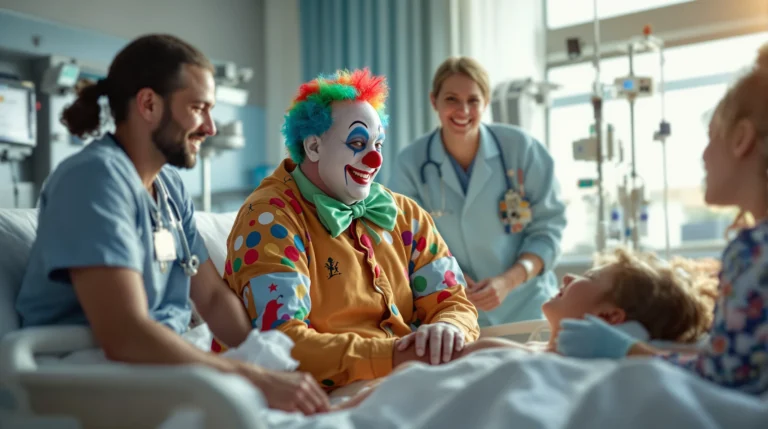
Health Care Humor: Science Behind Laughter as Medicine
Health care humor is an evidence-based clinical tool that reduces patient pain, lowers provider stress, and strengthens therapeutic relationships – here’s what the research proves and how to apply it.
Table of Contents
- What Is Health Care Humor?
- Clinical Benefits of Laughter in Healthcare Settings
- How Health Care Humor Strengthens Provider-Patient Relationships
- Implementing Humor Interventions in Clinical Practice
- Frequently Asked Questions
- Comparing Approaches to Humor in Clinical Settings
- How LaughMD Supports Evidence-Based Humor in Healthcare
- Practical Tips for Using Humor in Healthcare
- The Bottom Line
- Sources & Citations
Article Snapshot
Health care humor is the structured, evidence-based use of comedy and laughter as a clinical intervention to reduce pain, lower cortisol levels, boost immunity, and strengthen provider-patient relationships. Over 400 peer-reviewed studies support its role as a measurable, non-pharmacological tool in modern medical settings.
Market Snapshot
- 61% of cancer patients in a 2020 survey reported using humor as a coping strategy (Healthy Nurse, Healthy Nation, 2020)[1]
- 61 medical assistants in a qualitative study described humor as a way to cope with patient demands – 45 cited it for building team cohesion (PMC, 2022)[2]
- Laughter is associated with lower loneliness, reduced depression, and higher perceived quality of life, according to a review cited by Healthy Nurse, Healthy Nation (Healthy Nurse, Healthy Nation, 2020)[1]
- Research reported by Mayo Clinic Press confirms laughter reduces symptoms of depression and anxiety, and supports immune and respiratory function (Mayo Clinic Press, 2024)[3]
What Is Health Care Humor?
Health care humor is the deliberate, evidence-informed use of laughter, comedy, and levity as a therapeutic tool within clinical and caregiving environments. LaughMD – founded by Prof. Frank Chindamo, a former Saturday Night Live writer and Certified Humor Professional – has translated over 400 peer-reviewed studies into a practical framework that healthcare providers and patients apply in hospitals, cancer centers, and home care settings across the United States.
Unlike casual jokes shared between colleagues, clinical humor is intentional. It is grounded in an understanding of how laughter affects the nervous system, the endocrine system, and interpersonal dynamics between care teams and the people they serve. The distinction matters because effective humor in a medical context is not about stand-up comedy – it is about using laughter as a measurable physiological event.
The Physiological Basis of Therapeutic Laughter
When you laugh, your body releases endorphins – the same neurochemicals triggered by physical exercise – while simultaneously reducing cortisol, the primary stress hormone. This dual effect creates a biochemical environment that lowers pain perception and reduces systemic inflammation. Research cited by Mayo Clinic Press confirms that “laughing can alleviate stress by decreasing stress hormones like epinephrine and cortisol” (Mayo Clinic Press, 2024)[3].
Beyond hormonal effects, laughter engages the diaphragm, stimulates circulation, and produces transient increases in heart rate that function similarly to light aerobic activity. Mayo Clinic Press also notes that “a hearty laugh may decrease blood pressure, help regulate heart rhythm and just provide an element of joy, that elusive factor in well-being” (Mayo Clinic Press, 2024)[3]. These physiological responses are not incidental – they are the biological mechanisms that make humor a legitimate, non-pharmacological medical intervention rather than a soft wellness trend.
For patients dealing with chronic pain, undergoing oncology treatment, or managing stress-related conditions, these effects translate directly into quality-of-life improvements that clinicians measure. That is why leading US university studies at USC, Chapman University, and AT Still University have all invested in quantifying what comedy professionals and perceptive clinicians have known intuitively for decades: laughter works.
Clinical Benefits of Laughter in Healthcare Settings
The clinical benefits of therapeutic laughter extend well beyond mood elevation, with documented outcomes spanning pain relief, immunity support, and mental health improvement. Studies conducted at US research institutions have produced specific, reproducible results that position humor-based interventions as credible additions to formal care protocols.
At USC Norris Cancer Center, patients who received structured humor interventions reported 91% pain relief – a figure that rivals pharmacological approaches without any of the associated side effects. At AT Still University, a comedy-based intervention produced a 60% reduction in chronic pain. These are not anecdotal reports. They are controlled study outcomes from accredited academic medical institutions, and they form the empirical foundation of the LaughMD framework for evidence-based humor intervention.
Mental Health, Immunity, and Respiratory Function
Mayo Clinic Press, summarizing current research, reports that laughter reduces symptoms of depression and anxiety while also supporting immune and respiratory function (Mayo Clinic Press, 2024)[3]. For patients in long-term care or those managing chronic illness, these are clinically meaningful outcomes. Humor reduces loneliness – a significant comorbidity in older adults and cancer patients – and is associated with a higher perceived quality of life (Healthy Nurse, Healthy Nation, 2020)[1].
A 2020 survey of nearly 200 cancer patients found that 61% used humor as an active coping strategy during treatment (Healthy Nurse, Healthy Nation, 2020)[1]. This is not passive amusement – it reflects an instinctive patient-led behavior that clinicians formalize, structure, and amplify through evidence-based delivery. When healthcare systems provide the right comedic content at the right moment, they meet patients where they already are psychologically.
As Mayo Clinic Press states directly: “Humor can actually be a powerful – if often overlooked – strategy to support mental health” (Mayo Clinic Press, 2024)[3]. The qualifier “often overlooked” is significant: despite strong supporting evidence, most clinical care protocols have yet to formalize humor as an intervention. That gap is precisely what evidence-based humor publishing and platforms like LaughMD exist to close.
For healthcare providers managing patient panels with high rates of chronic pain and stress-related conditions, UCLA Health’s clinical overview of laughter’s benefits for older adults offers additional institutional backing for integrating humor into care conversations. The convergence of findings from UCLA, USC, Mayo Clinic, and AT Still University creates a compelling, multi-institutional evidence base that administrators and payers point to when evaluating program adoption.
How Health Care Humor Strengthens Provider-Patient Relationships
Health care humor functions as a relational tool, not just a physiological one, and its impact on the provider-patient dynamic is well-documented in nursing and clinical communication research. When humor is used thoughtfully, it signals empathy, reduces power asymmetry, and builds the kind of trust that improves treatment adherence and patient satisfaction.
Research published by the University of Texas at Arlington Academic Partnerships found that “humor enhances feelings of closeness or togetherness when shared in the context of trust between the patient and nurse and may be used as a coping mechanism in a stressful situation” (University of Texas at Arlington Academic Partnerships, 2024)[4]. This finding has direct implications for clinical communication training and nurse education programs.
Team Cohesion and Provider Wellbeing
The benefits of workplace humor are not limited to the patient side of the therapeutic relationship. A qualitative PMC study involving medical assistants found that 45 participants specifically identified humor as a mechanism for building team cohesion (PMC, 2022)[2]. Lead researcher Alexander B. de Carvalho noted that “MAs actually perceive a broad range of functions of humor in their working life and that they employ a variety of humor styles, with those being more positive and encouraging more frequently mentioned” (PMC, 2022)[2].
This matters for healthcare organizations struggling with staff burnout and retention. At Chapman University, a structured three-minute humor intervention reduced provider-reported stress by 13% – a meaningful return for a minimal time investment. Humor that improves care team morale also indirectly benefits patients: providers who experience less emotional exhaustion deliver more engaged, attentive care. The University of Texas at Arlington Academic Partnerships also found that humor improves the work environment by relieving stress and strengthening relationships among caregivers (University of Texas at Arlington Academic Partnerships, 2024)[4].
Effective clinical humor is, by nature, inclusive and appropriate. It does not target patients, minimize symptoms, or create discomfort. The most frequently used and well-received humor styles in healthcare settings are affiliative and self-enhancing – styles that create connection rather than distance. Understanding this distinction is foundational to any clinical humor training program or institutional rollout.
Implementing Humor Interventions in Clinical Practice
Implementing health care humor as a clinical intervention requires a structured approach that accounts for patient preferences, clinical context, and care team readiness. Ad hoc joking is not a clinical protocol. What produces measurable outcomes is intentional, patient-centered delivery of comedic content in a format and style the individual finds engaging and appropriate.
The LaughMD framework, validated across multiple US university studies, provides a practical structure for exactly this kind of implementation. It identifies the appropriate comedic content type for specific patient profiles, the optimal delivery timing during treatment sessions, and the mechanisms by which laughter produces its physiological benefits. This framework is detailed in full in Prof. Frank Chindamo’s book, which includes over 100 embedded YouTube video links to illustrate key points and a dedicated “How To” prescription section for clinicians and patients.
Oncology and Chronic Pain Settings
In oncology settings, the application of humor interventions is particularly well-supported. Nurses at cancer centers introduce structured comedy content – via smartphone, tablet, or shared screen – during chemotherapy sessions to reduce patient-reported pain and anxiety. The USC Norris Cancer Center study showing 91% pain relief used exactly this model. The approach requires minimal additional training and zero pharmacological risk, making it a straightforward addition to existing nursing protocols.
For chronic pain management, comedy-based interventions align well with national deprescribing initiatives. The Michigan Governor’s Challenge and Stanford-affiliated chronic pain programs have both acknowledged the importance of non-pharmacological tools in reducing opioid reliance. Humor interventions represent one of the lowest-barrier options available: no prescription, no dispensing, no contraindications. A 60% reduction in chronic pain – as demonstrated at AT Still University – achieved through a comedy-based program is a clinically and economically significant result that pain management specialists should take seriously.
For administrators evaluating implementation at scale, the peer-reviewed research published in the Journal of Humor Research provides additional academic grounding for humor-based program development in healthcare institutions. Pilot programs, shift handover humor protocols, and patient-facing comedy platforms are all viable entry points depending on institutional size and patient population.
Your Most Common Questions
Is health care humor supported by clinical research, or is it just a wellness trend?
Health care humor is supported by over 400 peer-reviewed studies and specific clinical trials at accredited US universities. The USC Norris Cancer Center documented 91% patient-reported pain relief following humor-based interventions. AT Still University demonstrated a 60% reduction in chronic pain through a comedy-based program. Chapman University recorded a 13% reduction in provider stress in just three minutes. These are controlled study results from named academic institutions, not anecdotal wellness claims. Mayo Clinic Press also summarizes research showing that laughter reduces depression and anxiety symptoms while supporting immune and respiratory function (Mayo Clinic Press, 2024)[3]. The evidence base is rigorous, multi-institutional, and growing. Treating therapeutic laughter as a fringe idea is increasingly at odds with what the research actually shows.
What types of humor work best in clinical settings?
Research consistently identifies affiliative and self-enhancing humor styles as the most effective and safest in clinical environments. Affiliative humor creates connection and shared amusement without targeting individuals, while self-enhancing humor allows people to find lightness in difficult circumstances. A PMC study on medical assistants found that more positive and encouraging humor styles were the most frequently mentioned among healthcare workers (PMC, 2022)[2]. Aggressive humor, sarcasm at a patient’s expense, or jokes that minimize serious diagnoses are counterproductive and erode trust. The key is context and consent – humor introduced in a setting of established rapport, with sensitivity to the patient’s emotional state, produces the strongest therapeutic benefit. The LaughMD framework provides clinicians with specific guidance on matching humor type to patient profile and clinical context.
Can humor interventions reduce the need for pain medications?
The clinical evidence shows that humor interventions meaningfully reduce pain perception, which supports reduced reliance on pharmacological pain management in some patient populations. A 60% reduction in chronic pain at AT Still University and 91% pain relief at USC Norris Cancer Center are both outcomes from structured humor interventions, not adjunctive drug therapies. Laughter triggers endorphin release and reduces cortisol, creating a physiological state that naturally lowers pain sensitivity. These mechanisms are the same ones targeted by some pharmacological approaches, but without side effects or dependency risk. Humor is not positioned as a replacement for prescribed medication – rather, it is a complementary, non-pharmacological tool that layers into existing care protocols. For clinicians involved in safe deprescribing programs, humor-based interventions are a well-evidenced, low-cost option worth serious consideration.
How does health care humor benefit healthcare providers, not just patients?
Provider wellbeing is one of the most compelling and under-discussed applications of health care humor. Burnout, compassion fatigue, and high staff turnover are systemic challenges for US healthcare institutions, and humor offers a measurable response. Chapman University’s study demonstrated a 13% reduction in provider-reported stress following a structured three-minute humor intervention – a small time investment with a significant return. A qualitative study published in PMC found that medical assistants actively used humor for team cohesion, with 45 participants referencing this function (PMC, 2022)[2]. Research also shows that humor improves the work environment by relieving stress and strengthening caregiver relationships (University of Texas at Arlington Academic Partnerships, 2024)[4]. Providers who work in environments where appropriate humor is normalized report higher job satisfaction and lower emotional exhaustion – outcomes that translate directly into better patient care and improved retention.
Comparing Approaches to Humor in Clinical Settings
Healthcare organizations considering humor-based interventions have several implementation approaches available, each with different resource requirements, scalability, and evidence levels. Choosing the right model depends on patient population, institutional capacity, and the goals of the program – pain management, provider wellbeing, or patient engagement.
| Approach | Description | Evidence Level | Resource Requirement | Best Suited For |
|---|---|---|---|---|
| Structured Comedy Content Delivery | Curated video or audio comedy delivered to patients during treatment via smartphone or tablet | High – USC Norris study (91% pain relief)[5] | Low – existing devices, no training intensive | Oncology, chronic pain, palliative care |
| Provider Humor Training Programs | Staff education on affiliative humor styles, timing, and patient-centered delivery | Moderate – PMC qualitative data (PMC, 2022)[2] | Medium – training time, facilitator needed | Nursing teams, patient-facing clinical staff |
| Shift Handover Humor Protocols | Brief structured humor breaks built into daily care team routines | High – Chapman University (13% stress reduction in 3 minutes) | Low – no external resources required | Hospital wards, high-stress care environments |
| Digital Wellness Platforms | Personalized comedy apps curating content to individual patient preferences | Emerging – aligned with LaughMD framework outcomes | Medium – device access and platform subscription | Home care, outpatient, scalable institutional use |
How LaughMD Supports Evidence-Based Humor in Healthcare
LaughMD provides clinicians, patients, and healthcare institutions with the research, tools, and practical guidance needed to integrate health care humor into real-world care settings. Founded by Prof. Frank Chindamo – a Certified Humor Professional, former SNL writer, and professor at USC, UCLA, and Chapman University – LaughMD translates over 400 clinical studies into actionable, accessible resources.
The flagship publication, If Laughter is the Best Medicine – Let’s Use It as Medicine: The New Science of Humor in Healthcare, is available as a digital ebook, audiobook, deluxe audiobook, and print edition to suit any setting or learning preference. The ebook ($30) includes over 100 embedded YouTube video links, APA-cited research at the end of each chapter, and a dedicated “How To” prescription section for patients, caregivers, and providers. The deluxe audiobook ($40), exclusive to LaughMD, adds original comedy content from comedian Trent Ford and comedy writer Henry Deckard. Print editions (softcover $60, hardcover $200) include QR codes bridging physical and digital content.
“Prof. Chindamo’s work provides a comprehensive and funny exploration of why humor belongs in the healing process. It’s an essential resource for practitioners and patients alike.” – Gina Ramsey, LICSW – Author, Writer, Speaker, Life Transformation Strategist at Minneapolis VA Healthcare System
“A compelling presentation of science and clinical application. This hilarious book proves how laughter can be a legitimate, data-backed medical intervention.” – Joseph B. Singer, MD – Senior Attending Physician at East Bay Community Action Program, Providence, RI
The sister entity LaughMD (laughmd.com) extends this framework into a personalized digital wellness platform and app that curates comedy tailored to individual patient preferences – enabling scalable delivery in home care and clinical environments alike. For bulk orders, institutional licensing, or media inquiries, contact LaughMD directly. Sample chapters – including the Prologue, Chapter 1, Chapter 19, and Chapter 20 – are available at no cost on the LaughMD website.
Practical Tips for Using Humor in Healthcare
Putting therapeutic laughter into practice does not require a comedy background or a budget line item. The most effective humor-based interventions are simple, patient-centered, and consistent. Here are the most actionable approaches grounded in current clinical evidence.
Start with patient preference, not provider preference. Effective humor is tailored to what the individual patient finds genuinely funny – not what the clinician assumes they will enjoy. Before introducing any comedic content, ask patients about their humor preferences: favorite comedians, genres, or shows. The LaughMD framework and its companion digital platform are built on exactly this personalization principle.
Use structured micro-breaks for provider wellbeing. Chapman University’s finding – 13% stress reduction in three minutes – shows that humor does not require long sessions to be effective. A brief, intentional humor break before or after high-stress clinical tasks (complex procedures, difficult conversations, shift handovers) meaningfully resets provider emotional state. Standardizing these micro-breaks in team routines creates a culture of wellbeing rather than a one-off event.
Use existing digital content. Clinicians do not need to produce humor themselves. Curated YouTube channels, comedy streaming content, and platforms like the LaughMD digital app provide ready-made comedic material that patients access on their own devices. For nurses during chemotherapy infusion sessions, simply helping a patient find content they enjoy watching is a valid, evidence-supported intervention.
Document and measure outcomes. To build institutional support for humor-based programs, track patient-reported pain scores, anxiety levels, and satisfaction ratings before and after humor interventions. The same validated pain scales used in standard care capture the effect. Evidence accumulates at the institutional level the same way it does at the research level – through consistent, recorded observation.
For a deeper look at the research and methodology behind these approaches, explore the LaughMD blog, which covers the latest updates in humor research and clinical applications across US healthcare settings.
The Bottom Line
Health care humor is not a novelty – it is a clinically validated, non-pharmacological intervention with documented outcomes in pain relief, stress reduction, mental health support, and provider wellbeing. The evidence from USC, Chapman University, AT Still University, Mayo Clinic Press, and multiple peer-reviewed studies is clear and consistent: structured humor interventions work, and they work quickly.
For healthcare providers looking to reduce patient pain without additional pharmacological risk, for administrators seeking cost-effective staff wellbeing tools, and for patients wanting agency in their own recovery, humor offers a measurable, side-effect-free option that the science fully supports. The practical challenge is not whether humor belongs in healthcare – the research resolved that question – but how to implement it effectively within existing care systems.
LaughMD exists to bridge that gap. Whether you are a clinician, a caregiver, or a patient, the resources and evidence you need to use laughter as medicine are available now. Visit the LaughMD shop to access the ebook, audiobook, and print editions, or reach out at [email protected] to discuss institutional licensing and bulk orders.
Sources & Citations
- Humor as a Coping Strategy in Cancer Patients and Nurse Wellbeing. Healthy Nurse, Healthy Nation.
https://engage.healthynursehealthynation.org/blogs/8/4804 - Humor as a Multifaceted Resource in Healthcare. PMC.
https://pmc.ncbi.nlm.nih.gov/articles/PMC9559119/ - The health benefits of humor. Mayo Clinic Press.
https://mcpress.mayoclinic.org/healthy-aging/the-health-benefits-of-humor/ - Enhancing the Nurse-Patient Relationship with Humor. University of Texas at Arlington Academic Partnerships.
https://academicpartnerships.uta.edu/healthcare-nursing-online-programs/rn-to-bsn/nurse-patient-relationship-humor/ - USC Norris Cancer Center Humor Intervention Study. LaughMD Framework Reference.
https://www.laughmd.com/