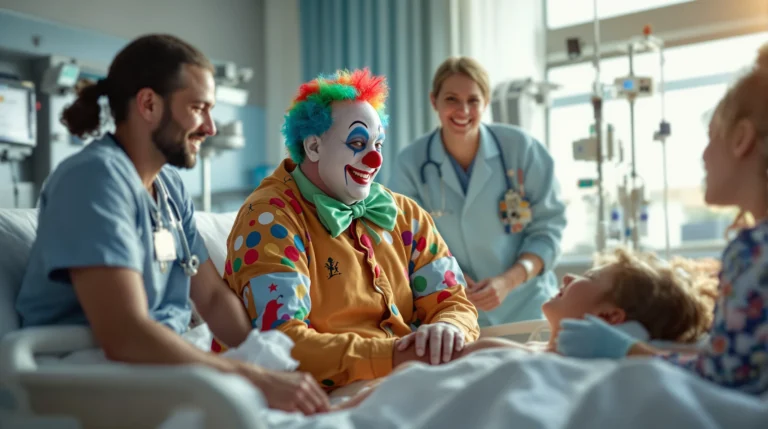
Why Humor Is the Best Medicine for Health
Humor is the best medicine may sound like an old saying, but clinical research from USC, Chapman University, and AT Still University now proves it delivers measurable, real-world health outcomes for patients and providers.
Table of Contents
- The Science Behind Humor Is the Best Medicine
- Clinical Pain Relief Through Laughter Therapy
- How Humor Reduces Provider Stress
- Implementing Humor in Healthcare Settings
- Frequently Asked Questions
- Comparison: Humor vs. Other Non-Pharmacological Approaches
- LaughMD: Evidence-Based Humor for Healthcare
- Practical Tips for Using Humor in Care
- The Bottom Line
- Sources & Citations
Article Snapshot
Humor is the best medicine is a clinically validated concept supported by over 400 peer-reviewed studies. Laughter reduces cortisol, triggers endorphins, lowers blood pressure, and delivers measurable pain relief – making it a legitimate, side-effect-free tool in modern patient care.
By the Numbers
- 31.9% reduction in cortisol from laughter interventions, based on a 2023 systematic review and meta-analysis of 315 participants (PMC / peer-reviewed systematic review and meta-analysis, 2023)[1]
- 48% lower risk of death from all causes among older adults with a strong sense of humor, from a 15-year longitudinal study (AOPA Pilot Protection Services, 2025)[2]
- 73% lower risk of death from heart disease among older adults with a strong sense of humor (AOPA Pilot Protection Services, 2025)[2]
- 20% less agitation in older adults following humor therapy in a nursing home setting (Geisinger, 2021)[3]
The Science Behind Humor Is the Best Medicine
Humor is the best medicine not because the phrase sounds reassuring, but because peer-reviewed clinical research confirms it triggers specific, beneficial physiological responses. Laughter activates the release of endorphins – the body’s natural painkillers – while simultaneously reducing cortisol and epinephrine, the primary hormones that drive the stress response. LaughMD was founded specifically to translate this body of science into practical clinical guidance for healthcare providers, patients, and caregivers who want evidence-based tools rather than anecdotes.
A 2023 systematic review and meta-analysis pooling data from 315 participants found that laughter interventions produced a 31.9% reduction in cortisol compared to control conditions (PMC / peer-reviewed systematic review and meta-analysis, 2023)[1]. A sensitivity analysis from the same study found a single laughter session alone reduced cortisol by 36.7% (PMC / peer-reviewed systematic review and meta-analysis, 2023)[1]. These are not trivial numbers – they represent physiological changes comparable to those achieved by moderate aerobic exercise.
Dr. Charlie Creagan, a physician and Mayo Clinic Press contributor, put it plainly: “Laughing can alleviate stress by decreasing stress hormones like epinephrine and cortisol.” – Dr. Charlie Creagan[4] Beyond stress hormones, UCLA Health reports that laughter also supports immune function, stimulating the production of antibodies and activating protective immune cells that help defend against infection and disease.
The cardiovascular benefits are equally well documented. A 15-year longitudinal study found that older adults with a strong sense of humor carried a 48% lower risk of death from all causes and a 73% lower risk of death from heart disease (AOPA Pilot Protection Services, 2025)[2]. Regular laughter has also been associated with a 3-4% reduction in blood pressure, as cited in a recent presentation on humor in healthcare (TED / YouTube presentation transcript, 2025)[5]. These findings position therapeutic humor not as a feel-good afterthought, but as a clinically meaningful complement to standard medical care.
The Neurological Pathway of Laughter
Laughter engages multiple brain regions simultaneously – the limbic system, motor cortex, and frontal lobe – creating a whole-brain activation event that conventional pharmaceutical interventions rarely replicate. This neural cascade is part of why humor-based interventions produce rapid, measurable outcomes even in short sessions. The endorphin release triggered by genuine laughter binds to the same opioid receptors targeted by pain medication, which explains the analgesic effect observed in clinical trials of laughter therapy. Understanding this pathway helps clinicians appreciate why humor in healthcare is a pharmacological-grade intervention – delivered without a prescription.
Clinical Pain Relief Through Laughter Therapy
Clinical laughter therapy produces documented, statistically significant reductions in patient-reported pain, with results validated at major US research institutions. The most cited example in the LaughMD framework comes from the USC Norris Cancer Center, where 91% of patients receiving a structured humor intervention reported pain relief – a figure that surprised even seasoned oncology nurses familiar with the limitations of non-pharmacological options.
At AT Still University, a study on chronic pain patients found a 60% reduction in reported pain following comedy-based interventions. These outcomes align with the physiological mechanisms described above: endorphin release reduces pain perception while cortisol reduction decreases the inflammatory load that amplifies chronic pain signals. For patients managing conditions like cancer, fibromyalgia, or post-surgical recovery, a tool that delivers 60-91% pain relief without side effects represents a meaningful addition to any care plan.
Dr. Alex Lickerman, medical director and author at HelpGuide.org, framed the clinical significance clearly: “Laughter is strong medicine. It draws people together in ways that trigger healthy physical and emotional changes in the body.” – Dr. Alex Lickerman[6] This social dimension of humor matters in clinical settings – laughter shared between patient and caregiver creates a therapeutic alliance that improves adherence, reduces anxiety before procedures, and builds the emotional resilience needed during long treatment courses.
The analgesic properties of laughter also intersect directly with the national push toward opioid deprescribing. States including Michigan have launched formal deprescribing challenges, and programs affiliated with Stanford have pioneered humor-integrated chronic pain management. A humor intervention that reliably reduces pain by 60% or more gives clinicians a credible, non-addictive alternative – or complement – to opioid-based analgesia, fitting squarely within Mayo Clinic’s framework for stress relief and non-pharmacological wellness.
Humor as a Non-Pharmacological Pain Tool
The evidence supporting humor as a legitimate non-pharmacological pain intervention spans oncology, geriatrics, and chronic disease management. A nursing home study found humor therapy reduced agitation in older adults by 20% (Geisinger, 2021)[3] – a finding relevant to dementia care, where behavioral symptoms often prove more distressing than physical pain itself. For palliative care teams, this means humor interventions offer measurable value even at the end of life, improving dignity, comfort, and quality of the patient experience without adding to an already complex medication burden.
How Humor Reduces Provider Stress
Healthcare provider burnout represents one of the most urgent workforce challenges facing US hospitals and clinics today, and laughter therapy offers a rapid, low-cost intervention with documented results. Research conducted at Chapman University – cited in the LaughMD framework – demonstrated a 13% reduction in provider-reported stress in just three minutes of structured humor exposure. For nursing and clinical staff managing high patient loads and emotional exhaustion, three minutes is an achievable and repeatable dose.
Provider stress directly affects patient safety, clinical decision-making, and staff retention. Institutions that have piloted structured humor breaks – brief, scheduled comedy exposure during shift transitions or staff meetings – report improvements in job satisfaction and team cohesion. The mechanism mirrors what works for patients: cortisol drops, endorphins rise, and the autonomic nervous system shifts from sympathetic (fight-or-flight) to parasympathetic (rest-and-repair) dominance.
Dr. Charlie Creagan also observed that humor delivers more than stress relief: “A hearty laugh decreases blood pressure, helps regulate heart rhythm and provides an element of joy, that elusive factor in well-being.” – Dr. Charlie Creagan[4] In a healthcare environment where joy is genuinely elusive, that observation carries particular weight. Provider wellbeing is not a luxury – it is a patient safety variable, and humor interventions address it at the physiological level.
The Minneapolis VA Healthcare System has explored humor-based wellbeing tools in its provider support programs. Gina Ramsey, LICSW at the Minneapolis VA, has noted that Prof. Chindamo’s work provides important resources for both practitioners and patients, underscoring the institutional appetite for evidence-based humor tools that go beyond motivational posters and team lunches.
Structured Humor Breaks in Clinical Practice
A structured humor break differs from casual workplace banter. It involves deliberately curated comedy content – selected for the audience, delivered at a defined time, and measured for effect. The LaughMD framework operationalizes this by providing clinicians with a research-informed protocol: content selection criteria, timing guidelines, and outcome-tracking recommendations. When implemented as part of shift handover or pre-procedure briefings, structured humor breaks function as a rapid-reset tool that prepares care teams for high-stakes interactions with measurably lower stress baselines.
Implementing Humor in Healthcare Settings
Implementing humor in healthcare settings requires more than telling staff to lighten up – it demands a structured, evidence-based approach that respects the gravity of clinical environments while using the genuine therapeutic power of comedy. The LaughMD framework provides the scaffold for doing exactly that, drawing on validated protocols from USC, Chapman University, and AT Still University to guide institutions from concept to clinical practice.
The first implementation step is contextual assessment: understanding which patient populations, clinical environments, and staff cultures are most likely to respond positively to humor interventions. Oncology patients dealing with chemotherapy, chronic pain patients in outpatient settings, and elderly residents in long-term care facilities have all demonstrated strong responses in clinical literature. The peer-reviewed research on humor in healthcare confirms that tailored, patient-centered comedy delivery consistently outperforms generic wellness programming.
Dr. Anand Sastry, a physician quoted by Geisinger, offered a framing that applies directly to clinical implementation: “Viewing life through a humorous lens changes your perspective and alleviates stress.” – Dr. Anand Sastry[3] Translating this into operational guidance means equipping clinicians with curated content libraries, patient preference tools, and timing protocols that deliver humor at the right moment – before a painful procedure, during a long infusion, or at the start of a stressful shift.
Institutions implementing humor programs benefit most when they integrate comedy content delivery into existing care workflows rather than treating it as an add-on activity. The LaughMD digital wellness platform – operated by the sister entity LaughMD, Inc. – extends the book’s framework into a personalized app that curates comedy based on individual patient preferences, enabling scalable delivery in home and hospital settings without additional staff time. This technology layer bridges the gap between clinical intent and consistent patient-level execution, addressing one of the most common barriers to non-pharmacological program sustainability.
Measuring Outcomes in Humor Interventions
Outcome measurement is what separates a clinical humor program from entertainment. Validated tools include pre- and post-session cortisol sampling, patient-reported pain scores using standardized visual analog scales, and provider burnout assessments such as the Maslach Burnout Inventory. Institutions that track these metrics demonstrate ROI to administrators, build the case for program expansion, and contribute to the growing body of clinical evidence that positions humor as a reimbursable, protocol-driven intervention rather than an informal wellness gesture.
What People Are Asking
Is there clinical evidence that humor is the best medicine, or is it just a saying?
The clinical evidence is substantial. A 2023 systematic review and meta-analysis of 315 participants found laughter interventions reduced cortisol by 31.9% compared to control conditions, with a single session achieving a 36.7% reduction (PMC / peer-reviewed systematic review and meta-analysis, 2023)[1]. Studies at the USC Norris Cancer Center reported 91% of patients experienced pain relief following structured humor interventions. AT Still University documented a 60% reduction in chronic pain through comedy-based programs. These are not anecdotal reports – they are peer-reviewed outcomes from named US research institutions. UCLA Health, Mayo Clinic, and Geisinger have all published clinical guidance supporting laughter therapy as a legitimate complement to conventional treatment. The phrase started as folk wisdom, but the science has since caught up with it comprehensively.
How does laughter physically reduce pain?
Laughter triggers the release of endorphins – the body’s naturally produced opioid compounds – which bind to pain receptors in the brain and nervous system and reduce the perception of pain. This is the same receptor pathway targeted by prescription opioid medications, which is why humor interventions produce clinically meaningful analgesia without pharmacological side effects. Simultaneously, laughter reduces cortisol and epinephrine, both of which amplify pain sensitivity and inflammatory responses. Lower cortisol means lower neurological sensitivity to pain signals, compounding the analgesic benefit of endorphin release. The combined effect explains why USC Norris Cancer Center patients reported 91% pain relief and why AT Still University’s chronic pain program achieved a 60% reduction through structured comedy exposure. This dual mechanism – endorphin activation plus cortisol suppression – is what makes laughter therapy a pharmacological-grade intervention delivered without a prescription or adverse event profile.
Can humor interventions reduce burnout in healthcare providers?
Yes – and the evidence is specific. Research presented in the LaughMD framework from Chapman University demonstrated a 13% reduction in provider-reported stress in just three minutes of structured humor exposure. Provider burnout is driven by sustained cortisol elevation, emotional exhaustion, and a chronic deficit of positive affect – all of which are directly addressed by laughter’s physiological effects. When implemented as brief, structured humor breaks during shift transitions or pre-briefing moments, comedy content functions as a rapid-reset tool that lowers the baseline stress level care teams carry into patient interactions. Institutions that have piloted these protocols report improvements in staff job satisfaction and retention survey scores. For hospital administrators facing high turnover rates and nursing shortages, a three-minute, zero-cost humor intervention that measurably reduces stress represents significant operational value alongside its wellbeing benefits.
What formats does the LaughMD book come in, and who is it for?
“If Laughter is the Best Medicine, Let’s Use It as Medicine” by Prof. Frank Chindamo, CHP, is available in four formats to suit different audiences and settings. The digital eBook ($30) is the most accessible entry point for clinicians and patients who want immediate access to the research and practical protocols. The audiobook ($30, coming soon), narrated by the author, is ideal for healthcare professionals who prefer hands-free learning during commutes or downtime. The Deluxe Audiobook ($40, coming soon) is exclusive to LaughMD and features additional comedy content from comedian Trent Ford and writer Henry Deckard. Print editions in softcover ($60) and hardcover ($200) include QR codes linking to over 100 referenced YouTube videos, making them suitable for clinic waiting rooms, institutional libraries, and personal collections. The book covers the science of humor, real-world clinical examples, and a practical “How To” prescription for patients, caregivers, and healthcare providers – making it relevant across the full spectrum of healthcare audiences.
Humor Therapy vs. Other Non-Pharmacological Pain Approaches
Choosing the right non-pharmacological pain management strategy depends on the clinical setting, patient population, implementation cost, and evidence base. The table below compares humor therapy with three other commonly used approaches to help clinicians and administrators assess fit for their programs.
| Approach | Evidence Base | Implementation Cost | Provider Training Required | Patient Acceptability | Humor Therapy Advantage |
|---|---|---|---|---|---|
| Humor Therapy (LaughMD framework) | 91% pain relief (USC); 60% chronic pain reduction (AT Still); 31.9% cortisol reduction[1] | Low – book, app, or curated media | Minimal – structured protocol provided | High – universal appeal across demographics | Fastest provider stress reduction (13% in 3 min) |
| Mindfulness-Based Stress Reduction (MBSR) | Strong – multiple RCTs across chronic pain populations | Moderate – trained facilitators required | Significant – 8-week instructor certification | Moderate – requires patient motivation and sustained practice | Humor requires less patient effort to engage |
| Music Therapy | Good – documented pain and anxiety reduction in oncology | Moderate to high – licensed therapists preferred | Moderate – trained music therapist ideal | High – passive engagement possible | Humor also triggers social bonding and endorphin spike |
| Distraction Therapy (general) | Moderate – effective for acute procedural pain | Low | Minimal | Variable – depends on distraction type and patient preference | Humor produces measurable cortisol reduction; distraction alone does not |
LaughMD: Evidence-Based Humor for Healthcare
LaughMD translates the science of therapeutic humor into practical, accessible resources for healthcare providers, patients, and institutions. Founded by Prof. Frank Chindamo, CHP – a former Saturday Night Live writer, USC/UCLA/Chapman professor, and Certified Humor Professional – LaughMD sits at the intersection of comedy expertise and clinical research in a way no conventional health publisher can replicate.
The flagship resource is “If Laughter is the Best Medicine, Let’s Use It as Medicine: The New Science of Humor in Healthcare,” available now in digital eBook format and coming soon in audiobook, deluxe audiobook, and print editions. The book draws on over 400 studies and presents clinical outcomes from USC, Chapman University, and AT Still University in a four-part structure covering the background science, cultural heroes of humor in healthcare, prescribers of comedy, and a practical “How To” guide for patients and providers. Visit the LaughMD Shop to purchase the ebook, audiobook, and upcoming print editions.
Readers and clinicians who have engaged with the LaughMD framework have responded with consistent enthusiasm. “Prof. Chindamo’s work provides a comprehensive and funny exploration of why humor belongs in the healing process. It’s an important resource for practitioners and patients alike.” – Gina Ramsey, LICSW – Author, Writer, Speaker, Life Transformation Strategist at Minneapolis VA Healthcare System. “A compelling presentation of science and clinical application. This hilarious book proves how laughter is a legitimate, data-backed medical intervention.” – Joseph B. Singer, MD – Senior Attending Physician at East Bay Community Action Program, Providence, RI.
For healthcare institutions exploring bulk licensing, continuing medical education integration, or program development, LaughMD offers dedicated support. Contact LaughMD for bulk orders, institutional licensing, and media inquiries. The sister entity LaughMD, Inc. operates a personalized digital wellness app that extends the book’s framework into scalable patient-facing comedy delivery – learn more at About LaughMD – the team, the framework, and the clinical research foundation.
Practical Tips for Using Humor in Care
Integrating humor into clinical practice does not require a comedy background – it requires a structured approach and the right resources. These evidence-informed recommendations help clinicians and patients get started immediately.
- Start with a three-minute humor break. Based on the Chapman University findings, even a brief, structured comedy exposure during shift transitions or before difficult procedures produces measurable stress reduction. Use curated content – a short comedy clip, a targeted joke, or a humorous anecdote – rather than leaving it to chance.
- Match content to the patient. The LaughMD digital platform personalizes comedy delivery based on individual patient preferences. In settings without app access, brief conversations about the patient’s favorite comedians or shows allow you to tailor content. Patient-centered humor is consistently more effective than generic programming.
- Document outcomes systematically. Use validated pain scales before and after humor interventions to build an internal evidence base. Tracking cortisol proxies (self-reported stress ratings, behavioral indicators) alongside pain scores helps demonstrate program value to administrators and supports reimbursement discussions.
Beyond formal interventions, the daily practice of humor in clinical settings matters. Lighthearted exchanges during intake, a well-timed observation during a difficult consultation, or a funny waiting room resource all contribute to a therapeutic environment. The goal is not to minimize patient suffering with jokes – it is to create a physiological and emotional context in which the body’s natural healing mechanisms operate more effectively. Humor as a clinical tool works best when it is intentional, patient-centered, and grounded in the same evidence base that guides every other intervention in the care plan.
For providers managing their own stress, scheduling regular humor exposure – comedy podcasts during commutes, brief video content before high-stakes rounds, or structured team humor activities – builds the sustained cortisol-lowering effect that protects against burnout over time. The science supports treating your own humor exposure as a clinical protocol, not a guilty pleasure.
The Bottom Line
Humor is the best medicine has moved from folk wisdom to clinical fact. The evidence base – spanning cortisol reduction, endorphin activation, measurable pain relief, cardiovascular protection, and provider stress reduction – is too strong and too consistent to dismiss as anecdote. Studies from the USC Norris Cancer Center, Chapman University, AT Still University, and a growing body of peer-reviewed meta-analyses confirm that structured laughter therapy belongs in the modern clinical toolkit alongside pharmacological and behavioral interventions.
For healthcare providers ready to implement humor interventions, patients seeking non-pharmacological pain management, and institutions building sustainable wellbeing programs, LaughMD provides the research foundation and practical guidance to make it happen. The evidence is clear – what comes next is application. Explore the resources at LaughMD, order your copy of “If Laughter is the Best Medicine, Let’s Use It as Medicine,” or reach out directly at [email protected] to discuss institutional licensing and bulk orders today.
Sources & Citations
- Laughter interventions and cortisol reduction: 2023 systematic review and meta-analysis. PMC / peer-reviewed systematic review and meta-analysis.
https://pmc.ncbi.nlm.nih.gov/articles/PMC10204943/ - Humor and mortality risk in older adults: 15-year longitudinal study. AOPA Pilot Protection Services, 2025.
https://pilot-protection-services.aopa.org/news/2025/october/01/laughter-medicine - Here’s why laughter is the best medicine. Geisinger, 2021.
https://www.geisinger.org/health-and-wellness/wellness-articles/2021/02/25/19/56/why-laughter-is-the-best-medicine - The health benefits of humor. Mayo Clinic Press, 2025.
https://mcpress.mayoclinic.org/healthy-aging/the-health-benefits-of-humor/ - Is Laughter Really The Best Medicine? TED / YouTube presentation transcript, 2025.
https://www.youtube.com/watch?v=TeH19_Obpnk - Laughter is the Best Medicine. HelpGuide.org, 2024.
https://www.helpguide.org/mental-health/wellbeing/laughter-is-the-best-medicine