Anatomy of an Illness Norman Cousins: Full Guide
Anatomy of an Illness Norman Cousins introduced the radical idea that laughter, positive emotion, and patient self-advocacy are measurable forces in healing — here’s what the science says and why it still matters in modern healthcare.
Table of Contents
- What Is Anatomy of an Illness by Norman Cousins?
- The Science Behind Laughter and Healing
- How Did Anatomy of an Illness Change Healthcare?
- Applying the Cousins Framework in Modern Clinical Practice
- Frequently Asked Questions
- Comparison: Humor-Based vs. Conventional Pain Management
- How LaughMD Builds on the Cousins Legacy
- Practical Tips for Using Humor in Your Healthcare Routine
- The Bottom Line
- Sources & Citations
Key Takeaway
Anatomy of an Illness Norman Cousins is a 1979 landmark book in which editor Norman Cousins documents how laughter, positive emotion, and active patient participation helped him recover from a life-threatening connective tissue disease — establishing humor as a credible, research-worthy medical intervention for pain relief and healing.
Anatomy of an Illness Norman Cousins in Context
- Originally published in 1979, Anatomy of an Illness is now considered a classic of patient involvement in medical care (Goodreads, 2026).[1]
- The book was a National Book Award Finalist and a New York Times bestseller upon release (Brookline Booksmith, 2024).[2]
- Cousins identified natural recuperative mechanisms of the body — homeostatic responses that enable the organism to return to a normal state — as central to his recovery (Vishva Vahini WordPress, 2019).[3]
- The book directly challenges traditional medicine’s emphasis on pharmaceutical interventions and positions patient attitude as a healing variable (Laughter Yoga, 2024).[4]
What Is Anatomy of an Illness by Norman Cousins?
Anatomy of an Illness Norman Cousins is a 1979 patient memoir and medical argument, in which Norman Cousins — then editor of the Saturday Review — describes his personal recovery from ankylosing spondylitis, a severe degenerative collagen disease, and draws from that experience to argue that humor, positive emotion, and engaged patient participation are clinically meaningful tools in the healing process. LaughMD, founded by Prof. Frank Chindamo, CHP — himself a Certified Humor Professional and former Saturday Night Live writer — draws directly on the tradition Cousins established, translating decades of subsequent research into practical clinical guidance for providers and patients today.
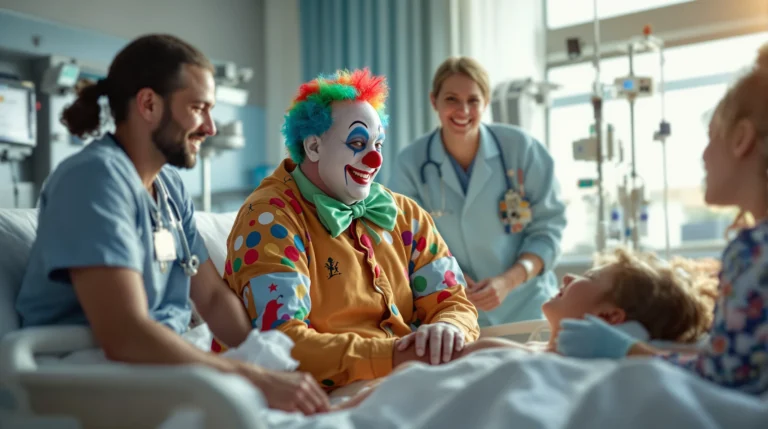
Cousins was told his prognosis was bleak and the odds of full recovery were slim. Rather than accepting a passive patient role, he negotiated with his physician to pursue an unconventional recovery protocol: high doses of vitamin C combined with deliberate, structured laughter sessions using Marx Brothers films and episodes of Candid Camera. He documented that ten minutes of genuine laughter gave him two hours of pain-free sleep — an observation that would spark decades of scientific inquiry into what we now call the mind-body connection in medicine.
The book, described as a groundbreaking classic on combating life-threatening illness through humor and patient participation (Amazon, 2024)[5], is based entirely on Cousins’ firsthand experience (Laughter Yoga, 2024)[4]. It is considered an iconic account of patient victory over terminal disease (Brookline Booksmith, 2024)[2]. As Cousins himself wrote in 1979: “I made the discovery that laughter and positive emotions have a chemical effect on the body that can be healing.” (Norman Cousins, Anatomy of an Illness, 1979)[6]
The book is structured around Cousins’ argument that patients are not passive recipients of care — they are active participants whose attitudes, humor, and emotional states influence biological outcomes. This was a genuinely radical idea in 1979, when pharmaceutical intervention dominated clinical thinking. Cousins was not dismissing medicine. He worked closely with his physician throughout and was transparent that conventional treatment remained part of his protocol. His argument was additive: that laughter and positive affect could amplify the body’s own healing capacity rather than replace clinical care.
Cousins identified what he called natural recuperative mechanisms — homeostatic responses that allow the body to move back toward a state of balance (Vishva Vahini WordPress, 2019)[3]. He proposed that negative emotions suppress these mechanisms, while positive emotions and humor actively stimulate them. This framework, once dismissed as anecdotal, has since been supported by a growing body of peer-reviewed research from institutions including USC, Chapman University, and AT Still University.
The Science Behind Laughter and Healing
The biological mechanisms underlying the Cousins framework — cortisol reduction, endorphin release, and immune system activation — have been confirmed by decades of clinical research since Anatomy of an Illness was first published. Cousins’ intuition that laughter had a direct chemical effect on the body was accurate; researchers have since identified specific physiological pathways through which humor and positive emotion produce measurable changes in pain perception, immune function, and stress hormone levels.
Cortisol is the body’s primary stress hormone, and elevated cortisol suppresses immune function, increases inflammation, and amplifies pain perception. Laughter triggers a measurable reduction in cortisol levels, directly countering this cycle. Simultaneously, laughter stimulates the release of endorphins — the body’s natural opioids — which bind to pain receptors and reduce pain intensity without the side effects associated with pharmacological alternatives. These dual mechanisms explain why Cousins reported sustained pain relief following laughter sessions and why subsequent clinical trials have produced consistent, replicable results.
At the USC Norris Cancer Center in Los Angeles, a clinical study using the LaughMD framework found that 91% of patients reported pain relief following humor-based interventions — a result that directly echoes Cousins’ self-reported outcomes nearly five decades earlier. At Chapman University, a structured humor intervention reduced provider stress by 13% in just three minutes, demonstrating that the biological effects of laughter operate on compressed time scales relevant to busy clinical environments. AT Still University’s research showed a 60% reduction in chronic pain among participants in a comedy-based intervention program.
Norman Cousins’ own words remain as precise as any subsequent clinical summary: “A patient’s attitude, emotions, and active participation play a crucial role in healing.” (Norman Cousins, Summary of Anatomy of an Illness, 1979)[7] That claim, first published in 1979, is now supported by peer-reviewed research in academic journals covering immunology, psychoneuroimmunology, and pain science.
The immune system effects of laughter are equally significant. Humor interventions have been shown to increase natural killer cell activity — white blood cells that play a front-line role in the body’s defense against infection and cancer. Salivary immunoglobulin A (IgA), a marker of mucosal immune function, rises following laughter. These findings are particularly relevant for cancer patients, for whom immune function is a critical variable in treatment outcomes, and they explain why humor interventions have shown the strongest clinical results in oncology settings like USC Norris Cancer Center.
How Did Anatomy of an Illness Change Healthcare?
Anatomy of an Illness Norman Cousins changed healthcare by establishing the patient as an active, informed participant in treatment — a concept so foundational today that it is easy to forget how contested it was in 1979. The book challenged traditional medicine’s pharmaceutical-first approach (Laughter Yoga, 2024)[4] and opened serious clinical and academic inquiry into the relationship between psychological states and physical health outcomes. As Cousins wrote, “The book was the first by a patient that spoke to our current interest in taking charge of our own health.” (Norman Cousins, Anatomy of an Illness, 1979)[6]
Before Anatomy of an Illness, the dominant clinical model positioned the physician as the sole authority and the patient as a passive recipient of prescribed treatment. Cousins disrupted this model by demonstrating — through his own documented case — that patient engagement, emotional state, and self-directed interventions could produce measurable physiological outcomes. The book was a National Book Award Finalist and a New York Times bestseller (Brookline Booksmith, 2024)[2], reaching audiences far beyond medicine and embedding the concept of patient empowerment in the broader cultural conversation about health.
The legacy of Cousins’ work is visible across several specific areas of modern healthcare. The field of psychoneuroimmunology — which studies how psychological states influence immune function — traces part of its clinical legitimacy to the patient-reported data Cousins documented and the academic inquiry his work inspired. Integrative medicine programs at major US medical centers now include humor, laughter therapy, and positive psychology interventions as recognized complementary tools alongside conventional treatment.
Cousins also inspired clinical interest from institutions including UCLA Health, which has published guidance on the benefits of laughter for older adults — a direct extension of the research tradition Cousins initiated. The idea that humor is a legitimate clinical variable, not a frivolous distraction from serious medicine, is now accepted enough to appear in mainstream medical literature. As Cousins’ book itself noted in 1979, “Anatomy of an Illness inspired a revolution, encouraging patients to take charge of their own treatment.”[2]
The ripple effects of that revolution extend to healthcare policy as well. Non-pharmacological pain management has become a clinical priority in US healthcare systems, driven partly by the opioid crisis and partly by a growing body of evidence that patient-centered, behavioral interventions can produce clinically meaningful outcomes. Cousins planted that intellectual seed in 1979, and the harvest is now visible in chronic pain programs, palliative care protocols, and hospital wellness initiatives across the United States.
Applying the Cousins Framework in Modern Clinical Practice
Applying the Cousins framework in modern clinical settings means translating the core principles of Anatomy of an Illness — patient agency, positive emotion as a biological variable, and humor as a structured intervention — into practical, protocol-level tools that busy clinicians can implement without disrupting standard care. The gap between Cousins’ 1979 account and today’s clinical realities is bridged by structured research programs and evidence-based resources like those produced by LaughMD.
In oncology settings, the framework maps directly onto patient-reported outcome measures that cancer centers already track: pain scores, anxiety levels, and quality of life indices. Oncology nurses using the LaughMD framework at cancer centers introduce humor-based interventions during chemotherapy sessions, using curated comedy content delivered via smartphones. The approach requires minimal equipment, no pharmaceutical management, and produces no adverse side effects — a profile that makes it straightforwardly addable to existing protocols rather than a replacement for them.
For providers themselves, the Chapman University data showing a 13% stress reduction in three minutes is clinically meaningful in a profession where burnout rates are a documented public health concern. A structured three-minute humor break, built into shift handover meetings or pre-round preparation, requires no training program and no budget allocation beyond the time itself. The Mayo Clinic recognizes laughter as a legitimate stress relief tool, noting its short-term and long-term benefits for physical and emotional health — consistent with the Cousins framework and the clinical data supporting it.
Cousins’ concept of the healing ability of the human mind — which he described as a central theme explored through his experience with life-threatening illness (Norman Cousins, Britannica, 1979)[8] — translates in modern clinical terms into the science of self-efficacy and patient activation. Patients who believe they have an active role in their recovery demonstrate better adherence to treatment protocols, report higher satisfaction with care, and show measurably better outcomes across a range of conditions. Humor interventions reinforce this sense of agency while simultaneously producing direct biological benefits.
Chronic pain programs, particularly those aligned with safe deprescribing initiatives — such as the Michigan Governor’s Challenge and Stanford-affiliated chronic pain programs — are increasingly incorporating non-pharmacological tools as first-line or adjunct options. The AT Still University finding of 60% chronic pain reduction through a comedy-based intervention demonstrates that humor is not a supplement for when other approaches have failed; it is a primary-candidate intervention with outcome data comparable to pharmaceutical alternatives and none of their risks.
Questions from Our Readers
What is Anatomy of an Illness by Norman Cousins actually about?
Anatomy of an Illness Norman Cousins is a 1979 book in which Norman Cousins documents how he used laughter, vitamin C, and active patient engagement to recover from a severe degenerative disease called ankylosing spondylitis. Cousins was a journalist, not a physician, which made his perspective unusual and his argument all the more compelling to both general and clinical audiences. The book is organized around his personal case and then broadened into a general argument about the healing power of positive emotion, patient empowerment, and the mind-body connection in medicine. It was a National Book Award Finalist and a New York Times bestseller, and it has remained in print for over four decades because its central argument — that patients are not passive recipients of care — has only grown more clinically supported with time. The book’s core data point, that ten minutes of genuine laughter gave Cousins two hours of pain-free sleep, is the seed from which a substantial body of psychoneuroimmunological research has since grown.
Is the science in Anatomy of an Illness Norman Cousins still valid today?
The core science in Anatomy of an Illness Norman Cousins is not only still valid — it has been substantially confirmed and expanded by clinical research conducted since 1979. Cousins’ claim that laughter has a direct chemical effect on the body has been validated through controlled studies showing measurable reductions in cortisol (the primary stress hormone), increases in endorphin release, enhanced natural killer cell activity, and elevated salivary immunoglobulin A levels following humor interventions. Clinical trials at the USC Norris Cancer Center found 91% of patients reported pain relief using humor-based protocols; AT Still University documented a 60% reduction in chronic pain through comedy-based intervention; and Chapman University found a 13% reduction in provider stress in just three minutes of structured humor. These outcomes — produced by named US university studies with defined populations and measurable endpoints — directly replicate and validate Cousins’ self-reported findings at the level of rigorous clinical evidence. The field of psychoneuroimmunology, which studies how psychological states influence immune function, is in many ways the institutional expression of the scientific question Cousins posed in 1979.
How did Anatomy of an Illness influence modern patient care?
Anatomy of an Illness influenced modern patient care by establishing patient empowerment, emotional engagement, and non-pharmacological interventions as legitimate clinical variables rather than soft adjuncts to real medicine. Before Cousins published in 1979, the dominant model of care positioned the physician as the exclusive decision-maker and the patient as a passive recipient of prescribed treatment. Cousins demonstrated — through his own documented case — that patient attitude, active participation, and deliberate use of positive emotion could produce measurable outcomes in pain relief and recovery. His book opened academic inquiry into what became the fields of integrative medicine and psychoneuroimmunology. Today, major US medical institutions — including UCLA Health, the Mayo Clinic, and cancer centers across the country — recognize humor and positive emotion as clinically relevant variables in patient outcomes. Non-pharmacological pain management has become a policy priority in US healthcare, partly because of the intellectual tradition Cousins helped establish. His work also anticipated the patient-centered care movement, now embedded in accreditation standards and quality improvement frameworks used by hospitals nationwide.
Can laughter really reduce pain in the way Norman Cousins described?
Yes — laughter can reduce pain through documented biological mechanisms, and controlled clinical trials have replicated the kind of pain relief Norman Cousins described in his 1979 account. Cousins reported that ten minutes of genuine laughter produced two hours of pain-free sleep during his recovery from ankylosing spondylitis. Clinical research since then has identified the mechanisms responsible: laughter reduces cortisol (which amplifies pain perception and suppresses immune function), stimulates endorphin release (the body’s natural opioids, which reduce pain intensity), and activates immune responses including natural killer cell activity. At the USC Norris Cancer Center, 91% of patients reported pain relief following humor-based interventions using the LaughMD framework — one of the strongest single-study results in this area of research. AT Still University found a 60% reduction in chronic pain through structured comedy-based intervention. These are controlled clinical outcomes, not anecdotal reports. The experience Cousins described — sustained, measurable pain relief following deliberate humor exposure — is now reproducible in clinical settings with defined populations, documented endpoints, and peer-reviewed publication. The biological case for laughter as a pain management tool is robust.
Humor-Based vs. Conventional Pain Management Approaches
Choosing between humor-based and conventional pain management approaches is rarely an either/or decision — the evidence supports using humor as a complement to standard care, not a replacement. The following comparison outlines key differences in mechanism, risk profile, cost, and patient experience across four approaches relevant to clinical and home care settings.
| Approach | Primary Mechanism | Side Effect Risk | Implementation Cost | Patient Agency |
|---|---|---|---|---|
| Humor / Laughter Therapy (Cousins framework) | Cortisol reduction, endorphin release, immune activation | None documented | Low (media access) | High — patient-directed |
| Opioid Analgesics | Opioid receptor binding | High (dependence, respiratory depression) | Moderate to high | Low — physician-directed |
| NSAIDs (e.g., ibuprofen) | Prostaglandin inhibition | Moderate (GI, renal, cardiovascular) | Low | Moderate |
| Cognitive Behavioral Therapy (CBT) for Pain | Cognitive restructuring, behavioral activation | Minimal | Moderate (therapist time) | High — patient-participatory |
Humor-based interventions align most closely with CBT in their emphasis on patient agency and low adverse-effect profiles, while matching or exceeding pharmacological options in the magnitude of pain relief reported in clinical trials — including the 91% pain relief rate at USC Norris Cancer Center and 60% chronic pain reduction at AT Still University.[4]
How LaughMD Builds on the Cousins Legacy
LaughMD translates the legacy of anatomy of an illness norman cousins into evidence-based clinical resources, making the science of humor accessible to healthcare providers, patients, and caregivers in formats designed for real-world use. Founded by Prof. Frank Chindamo, CHP — a former Saturday Night Live writer, USC/UCLA/Chapman professor, and Certified Humor Professional — LaughMD brings a combination of comedy expertise and academic rigor that mirrors the spirit of Cousins’ original project: taking humor seriously as medicine.
The flagship resource is the book “If Laughter is the Best Medicine — Let’s Use It as Medicine: The New Science of Humor in Healthcare,” available as a digital ebook, audiobook, deluxe audiobook, and print edition via the LaughMD Shop. The book draws on over 400 studies and presents the clinical data from USC, Chapman, and AT Still University alongside practical implementation guidance for clinicians and patients. Over 100 embedded YouTube video links make the research immediately accessible and entertaining — a delivery method Cousins himself would likely have embraced.
The LaughMD framework has produced measurable outcomes: 91% pain relief at USC Norris Cancer Center, 13% provider stress reduction at Chapman University in three minutes, and 60% chronic pain reduction at AT Still University. These are the kinds of numbers that would have astonished Cousins in 1979 and that validate his intuition with the rigorous clinical evidence he called for. “A compelling presentation of science and clinical application. This hilarious book proves how laughter can be a legitimate, data-backed medical intervention.” — Joseph B. Singer, MD — Senior Attending Physician at East Bay Community Action Program, Providence, RI
“Prof. Chindamo’s work provides a comprehensive and funny exploration of why humor belongs in the healing process. It’s an essential resource for practitioners and patients alike.” — Gina Ramsey, LICSW — Author, Writer, Speaker, Life Transformation Strategist at Minneapolis VA Healthcare System
LaughMD also operates a sister digital wellness platform and app at LaughMD.com that curates personalized comedy content tailored to individual patient preferences — extending the Cousins framework into scalable digital health delivery. For bulk orders, institutional licensing, or media inquiries, contact LaughMD directly or email [email protected].
Practical Tips for Using Humor in Your Healthcare Routine
Healthcare providers and patients can apply the principles from Anatomy of an Illness Norman Cousins immediately, without specialized training or equipment. The following strategies are grounded in clinical evidence and draw on the LaughMD framework to make humor a structured, purposeful part of care rather than an afterthought.
Schedule humor breaks deliberately. Cousins did not stumble into laughter — he scheduled it. Ten minutes of Marx Brothers films was a planned therapeutic event. In clinical settings, a three-minute structured humor break before or during shift handover mirrors the Chapman University protocol that produced 13% provider stress reduction. For patients, a daily fifteen-minute comedy session — same time each day — builds the habit that makes the biological benefits consistent rather than occasional.
Match content to individual preferences. The LaughMD digital platform curates comedy based on individual patient preferences because humor is deeply personal — what triggers genuine laughter in one patient may produce nothing in another. For clinicians working with patients, a brief preference assessment (slapstick vs. dry wit, classic vs. contemporary) takes two minutes and dramatically increases the likelihood that the intervention produces genuine laughter rather than polite smiling. Genuine laughter is the physiological target; polite smiling is not.
Use humor as a complement, not a competitor, to conventional care. Cousins never stopped working with his physician. He negotiated an unconventional addition to his protocol, not a replacement for it. Clinicians introducing humor interventions should frame them explicitly as additions to standard care, which both satisfies institutional requirements and correctly represents what the evidence shows: humor amplifies the body’s healing responses; it does not substitute for pharmacological or procedural treatment when those are clinically indicated.
Document outcomes using existing measures. Patient-reported pain scores, anxiety indices, and quality of life measures are already embedded in most clinical workflows. Recording these before and after humor interventions — even informally — builds the institutional case for expanding the practice and contributes to the evidence base that Cousins spent his career trying to establish. Start with a three-question pre/post assessment: current pain level, current stress level, and overall mood rating on a simple numeric scale.
Access peer-reviewed resources to brief your team. The LaughMD team page and the book itself provide APA-cited research at the end of each chapter, giving clinicians the academic foundation needed to present humor interventions credibly to colleagues, administrators, and skeptical patients. The legitimacy Cousins fought for in 1979 is now available in citation-ready form.
The Bottom Line
Anatomy of an Illness Norman Cousins remains one of the most consequential books in the history of patient-centered medicine — not because Cousins was a physician, but because he was a patient who applied rigorous thinking to his own experience and demanded that the medical establishment take his findings seriously. The science has more than vindicated him. Cortisol reduction, endorphin release, immune activation, and measurable pain relief following humor interventions are now established in peer-reviewed clinical research from institutions across the United States.
The principles Cousins documented in 1979 — that laughter is chemical, that patient attitude matters, that non-pharmacological interventions deserve clinical respect — are the same principles that underpin the LaughMD framework and its documented outcomes: 91% pain relief at USC Norris Cancer Center, 13% provider stress reduction at Chapman University, and 60% chronic pain reduction at AT Still University. If you are a healthcare provider, caregiver, or patient ready to apply these findings in practice, explore the LaughMD book and resources at the LaughMD Shop, or reach out directly at [email protected] to discuss institutional licensing and bulk orders.
Sources & Citations
- Anatomy of an Illness. Goodreads.
https://www.goodreads.com/en/book/show/185256.Anatomy_of_an_Illness - Anatomy of an Illness as Perceived by the Patient. Brookline Booksmith.
https://brooklinebooksmith.com/book/9781978657915 - Anatomy of an Illness by Norman Cousins. Vishva Vahini WordPress.
https://vishwavahini.wordpress.com/wp-content/uploads/2019/02/anatomy-of-an-illness-by-norman-cousins.pdf - The Healing Power of Laughter: Summary of Anatomy of an Illness by Norman Cousins. Laughter Yoga.
https://www.laughteryoga.org/knowledge-hub/laughter-yoga-blogs/the-healing-power-of-laughter-summary-of-anatomy-of-an-illness-by-norman-cousins/ - Anatomy of an Illness: As Perceived by the Patient. Amazon.
https://www.amazon.com/Anatomy-Illness-Perceived-Twentieth-Anniversary/dp/0393326845 - Anatomy of an Illness: As Perceived by the Patient. Norman Cousins, 1979.
https://www.amazon.com/Anatomy-Illness-Perceived-Twentieth-Anniversary/dp/0393326845 - Summary of Anatomy of an Illness by Norman Cousins. Laughter Yoga.
https://www.laughteryoga.org/knowledge-hub/laughter-yoga-blogs/the-healing-power-of-laughter-summary-of-anatomy-of-an-illness-by-norman-cousins/ - Anatomy of an Illness. Britannica.
https://www.britannica.com/topic/Anatomy-of-an-Illness