Benefits of Humor Therapy for Health & Healing
The benefits of humor therapy extend far beyond a good laugh – clinical research shows measurable reductions in pain, cortisol, and provider stress, making laughter a legitimate medical intervention worth prescribing.
Table of Contents
- What Is Humor Therapy and How Does It Work?
- Humor Therapy for Pain Management
- Mental Health, Stress Reduction, and Emotional Wellbeing
- Implementing Humor Therapy in Clinical Settings
- Frequently Asked Questions
- Comparing Humor Therapy Approaches
- How LaughMD Supports Humor in Healthcare
- Practical Tips for Using Humor Therapy
- The Bottom Line
- Sources & Citations
Article Snapshot
Benefits of humor therapy is a clinically validated set of physiological and psychological outcomes – including reduced pain, lower cortisol, improved immunity, and decreased provider stress – produced when laughter is used as a structured, evidence-based medical intervention. Over 400 peer-reviewed studies support its application in hospitals, cancer centers, and home care settings.
By the Numbers
- A single session of laughter reduces cortisol levels by 37% (UCLA Health, 2026)[1]
- Pain levels decreased by 50% among cancer patients in a study of laughter therapy and spontaneous laughter (UCLA Health, 2026)[1]
- Chapman University research found a 13% reduction in provider stress after a brief humor intervention (Chapman University, 2026)[2]
- A study at AT Still University reported 60% chronic pain reduction associated with a humor-based intervention (AT Still University, 2026)[2]
What Is Humor Therapy and How Does It Work?
The benefits of humor therapy are grounded in measurable biological mechanisms – not wishful thinking. Humor therapy is the structured, intentional use of comedy and laughter as a clinical or wellness intervention to produce physiological and psychological health outcomes. When you laugh, your body activates a cascade of responses: cortisol drops, endorphins release, heart rate temporarily elevates, and muscle tension dissolves – all within minutes. LaughMD, founded by Prof. Frank Chindamo, CHP, translates over 400 peer-reviewed studies on these mechanisms into practical guidance for clinicians, patients, and caregivers.
The physiological pathway is straightforward. Laughter stimulates the release of endorphins – the brain’s natural pain-relieving chemicals – while simultaneously suppressing cortisol, the body’s primary stress hormone. This dual action creates a biochemical environment that is measurably more hospitable to healing. As Edward T. Creagan, MD, a Mayo Clinic oncologist, explains: “When we laugh, when we’re funny, when we’re engaged with funny people who make us feel better, there is a decrease in cortisol and there’s an increase in the endorphins.” (Mayo Clinic Press, 2026)[3]
Humor therapy is not a single format. Therapeutic laughter interventions include humor-based group sessions, curated comedy media (video, audio, written), laughter yoga, and structured comedic content delivered by trained professionals or through digital platforms. The LaughMD framework draws on peer-reviewed academic research on humor in healthcare to standardize how these interventions are selected, sequenced, and evaluated in clinical settings.
What distinguishes evidence-based humor therapy from simply watching a funny movie is the intentionality and clinical context. Trained clinicians using the LaughMD framework assess patient preferences, select appropriate comedic content, and track patient-reported outcomes against validated pain and stress scales. This process aligns humor therapy with other non-pharmacological interventions like music therapy and guided imagery – both of which are accepted parts of integrative medicine. The humor component adds a dimension of social connection and cognitive engagement that many other modalities lack, making it uniquely effective for patients who feel isolated during treatment.
Core Mechanisms Behind Humor Therapy Benefits
Three biological pathways explain why humor therapy produces reliable clinical results across diverse patient populations. First, the neuroendocrine pathway: laughter reduces circulating cortisol and adrenaline, shifting the autonomic nervous system from sympathetic dominance (fight-or-flight) toward parasympathetic activity (rest-and-digest). Second, the endorphin pathway: laughter triggers the release of beta-endorphins in the hypothalamus, providing natural analgesia without pharmacological side effects. Third, the immunological pathway: regular laughter increases natural killer cell activity and immunoglobulin concentrations, providing measurable immune support – a particularly valuable outcome for immunocompromised patients in cancer care. These three mechanisms together explain why therapeutic humor interventions produce benefits that extend well beyond the moment of laughter itself.
Humor Therapy for Pain Management
Humor therapy delivers clinically significant pain relief in both acute and chronic care settings, with outcomes validated at multiple US research institutions. Pain management represents the most extensively studied application of therapeutic laughter, with results that have surprised even skeptical clinicians. A UCLA Health analysis found that pain levels decreased by 50% among cancer patients in a study examining laughter therapy and spontaneous laughter (UCLA Health, 2026)[1] – a result that rivals many pharmacological interventions without a single adverse effect.
At the USC Norris Cancer Center, 91% of patients reported pain relief following humor-based interventions delivered through the LaughMD framework. This is not a marginal effect. When nearly all participants in a clinical study report a positive outcome, it signals a strong and reproducible mechanism – not a placebo response driven by expectation alone. The AT Still University study reinforced these findings with a 60% reduction in chronic pain scores among participants who received comedy-based intervention over a defined treatment period (AT Still University, 2026)[2].
The analgesic mechanism is dual in nature. The endorphin release triggered by laughter acts directly on opioid receptors in the central nervous system – the same receptors targeted by prescription pain medications – while the muscle relaxation that follows deep laughter reduces peripheral pain signals from tense or inflamed tissue. One review notes that laughter relaxes muscles for up to 45 minutes after a good laugh (HelpGuide.org, 2026)[4], extending the pain-relieving window well beyond the comedic episode itself. This duration makes humor therapy a practical complement to scheduled analgesic doses in postoperative and palliative care contexts.
For patients managing cancer-related pain, the psychosocial dimension of humor therapy adds a layer of benefit that analgesic medication cannot provide. Laughter restores a sense of agency, normalizes the patient’s self-image, and creates moments of genuine pleasure during treatment periods that are otherwise defined by discomfort and anxiety. UCLA Health’s clinical coverage of laughter benefits highlights how these psychosocial gains compound the direct physiological effects, producing outcomes that neither pharmacological nor psychological interventions achieve alone.
Humor Therapy in Chronic Pain Programs
Chronic pain presents a particular challenge in US healthcare because it drives opioid prescribing while responding inconsistently to pharmacological management over time. Humor therapy fits naturally into deprescribing and integrative pain management programs because it has no tolerance effects, no withdrawal risk, and no drug interactions. State-level initiatives – including the Michigan Governor’s Challenge for safe deprescribing – have created institutional demand for exactly the kind of evidence-based, non-pharmacological complement that humor therapy provides. Clinicians introduce structured comedy sessions alongside physical therapy, cognitive behavioral approaches, and mindfulness programs without competing for attention or adding a medication burden to already complex treatment regimens.
Mental Health, Stress Reduction, and Emotional Wellbeing
Humor therapy produces measurable reductions in stress hormones and supports mental health outcomes through pathways that overlap with but are distinct from antidepressant and anxiolytic mechanisms. The mental health benefits of therapeutic laughter have been documented across patient populations ranging from oncology to geriatrics, with a consistent finding: humor is not merely a coping mechanism – it is an active biological intervention against the stress response. Edward T. Creagan, MD, puts it plainly: “Humor can actually be a powerful – if often overlooked – strategy to support mental health.” (Mayo Clinic Press, 2026)[3]
A single laughter session reduces cortisol levels by 37% (UCLA Health, 2026)[1] – a reduction comparable to structured mindfulness meditation sessions of considerably longer duration. This speed and efficiency matter in clinical settings where provider time is constrained and patient tolerance for lengthy sessions is limited. A 3-minute humor intervention at Chapman University produced a 13% reduction in provider stress scores (Chapman University, 2026)[2], demonstrating that even brief, low-cost comedy breaks produce measurable neuroendocrine effects in healthcare staff.
The Mayo Clinic Press editorial team notes that “studies suggest that laughter can help to not just alleviate but actually reverse the body’s stress response.” (Mayo Clinic Press, 2026)[3] The word “reverse” is clinically significant. Most stress management interventions reduce the rate at which the stress response escalates; humor therapy appears capable of actively downregulating an already-activated stress response – a meaningful distinction for patients in acute care situations where stress has already peaked.
Humor therapy also provides cognitive benefits. The VA Whole Health Library reports improved outcomes across three cognitive domains following humor therapy sessions (U.S. Department of Veterans Affairs, 2026)[2], and a study using a 20-minute humorous movie found improved cognitive function in older adults (U.S. Department of Veterans Affairs, 2026)[2]. For older patients managing mild cognitive decline alongside other chronic conditions, the dual mental health and cognitive benefits of humor therapy make it an unusually efficient intervention. The Mayo Clinic’s guidance on stress relief through laughter reinforces this evidence base with accessible clinical language for patients and caregivers.
Humor Therapy, Social Connection, and Resilience
Beyond its direct biochemical effects, humor therapy builds social connection in ways that amplify individual mental health outcomes. R. Joseph Hoffmann, MD, of the U.S. Department of Veterans Affairs Whole Health Library, observes that “humor helps relieve tension, reassures people, and draws them together.” (U.S. Department of Veterans Affairs, 2026)[2] In hospital settings, group laughter interventions create a shared positive experience among patients who might otherwise feel isolated by their diagnoses. For caregivers, shared humor reduces the emotional isolation of the caregiver role and strengthens the therapeutic relationship with the person they are supporting. These relational benefits compound the physiological ones over time, contributing to greater resilience and improved treatment adherence.
Implementing Humor Therapy in Clinical Settings
Implementing humor therapy in clinical settings requires a structured, patient-centered approach that respects individual preferences and cultural context while delivering reproducible outcomes. The LaughMD framework offers a model for doing this systematically. Rather than leaving humor to chance or individual clinician personality, structured humor therapy defines the intervention: what type of content is delivered, by whom, for how long, in what context, and with what measurement tools. This level of specificity is what transforms informal comedy into a replicable clinical intervention that can be evaluated, refined, and scaled.
Patient preference assessment is the first step. Not all humor resonates with all patients, and the wrong type of comedy produces distress rather than relief – particularly for patients with anxiety, trauma histories, or cultural backgrounds where certain comedic forms are unwelcome. The LaughMD personalized digital wellness platform, operated by the sister entity LaughMD (laughmd.com), addresses this by curating comedy content tailored to individual patient preferences. This personalization step is not a luxury – it is what makes the difference between a humor intervention that works and one that backfires.
Staff training is the second critical element. Clinicians do not need to become stand-up comedians, but they do need to understand the rationale for humor therapy, be comfortable introducing it to patients, and know how to select and present appropriate materials. The Chapman University evidence – 13% provider stress reduction in 3 minutes – suggests that brief, structured humor training also benefits staff directly, creating a workforce that is more resilient and more capable of delivering compassionate care over time.
Measurement and documentation complete the implementation cycle. Patient-reported pain and stress scores recorded before and after humor sessions provide the data needed to show clinical value to hospital administrators and payers. The USC Norris Cancer Center results – 91% patient-reported pain relief – were generated through exactly this kind of systematic documentation. Without it, humor therapy remains anecdotal; with it, the benefits of humor therapy become the kind of evidence that changes institutional policy. Healthcare administrators considering a pilot program can reach our team at LaughMD – for bulk orders, institutional licensing, media inquiries, and general questions to discuss implementation options.
Clinical Settings Best Suited for Humor Therapy
Humor therapy has been validated across a range of US healthcare contexts, including oncology wards, outpatient cancer centers, chronic pain clinics, geriatric care units, palliative care services, and VA healthcare facilities. Each setting presents a distinct patient population with different pain profiles, stress levels, and social dynamics, but the core mechanism – laughter triggering endorphin release and cortisol suppression – applies across all of them. Home care represents a growing frontier, where caregiver-delivered humor interventions using digital content platforms extend the clinical benefit beyond institutional walls and into the daily lives of patients managing chronic conditions.
Your Most Common Questions
Is humor therapy a scientifically validated medical intervention?
Yes. The benefits of humor therapy are supported by over 400 peer-reviewed studies and multiple clinical trials conducted at US research institutions. The USC Norris Cancer Center documented 91% patient-reported pain relief; AT Still University reported 60% chronic pain reduction; Chapman University found a 13% reduction in provider stress in just 3 minutes (AT Still University, 2026; Chapman University, 2026)[2]. A PMC review article also confirms that laughter produces measurable physiological benefits in addition to psychological benefits (PMC, 2018)[5]. These are not anecdotal results – they are the outcomes of structured interventions with pre- and post-measurement. Humor therapy meets the evidence standard for inclusion alongside established non-pharmacological interventions such as music therapy, guided imagery, and mindfulness-based stress reduction.
What conditions can humor therapy help treat or manage?
Humor therapy has shown clinical benefit across several condition categories. For pain, it provides measurable analgesic effects via endorphin release and muscle relaxation – documented in cancer care, postoperative settings, and chronic pain programs. For stress and anxiety, it reduces cortisol by up to 37% per session (UCLA Health, 2026)[1] and actively reverses an already-activated stress response (Mayo Clinic Press, 2026)[3]. For mental health, Edward T. Creagan, MD, of the Mayo Clinic identifies it as a powerful strategy to support mental health outcomes. For cognitive function in older adults, VA research documents improvements across three cognitive domains following humor therapy sessions (U.S. Department of Veterans Affairs, 2026)[2]. Humor therapy also supports provider wellbeing, reducing staff stress and burnout – a growing priority in US healthcare systems facing workforce retention challenges.
Can humor therapy replace medication for pain management?
Humor therapy is not a replacement for medication but a clinically valuable complement to it. The LaughMD framework positions therapeutic laughter as a non-pharmacological adjunct – meaning it works alongside conventional pain management to reduce the total medication burden rather than eliminating pharmaceuticals entirely. For patients with chronic pain, this distinction matters enormously: humor therapy reduces the required analgesic dose, extends the time between doses, and provides pain relief during periods when escalating medication would carry unacceptable risk. In the context of safe deprescribing initiatives – a growing priority in US chronic pain management – humor therapy provides the kind of measurable, evidence-based non-drug option that clinicians need to responsibly reduce opioid reliance. The result is a safer, more complete pain management strategy, not an either-or choice.
How can healthcare providers get started with humor therapy for their patients?
Getting started with humor therapy does not require a major program overhaul. The most practical first step is education: understanding the mechanisms, the evidence base, and the implementation principles that make structured laughter interventions effective rather than haphazard. The LaughMD book – “If Laughter is the Best Medicine, Let’s Use It as Medicine” by Prof. Frank Chindamo, CHP – provides exactly this foundation, with APA-cited research chapters, clinical case examples, and a practical “How To” prescription section for providers. It is available as a digital ebook, audiobook, and print edition. For institutions considering a pilot program, our team at LaughMD offers guidance on bulk orders and institutional licensing. Start small: introduce a structured 3-minute comedy break at shift handovers, assess staff response, and measure stress scores before and after. The Chapman University data shows you will see a measurable result within weeks.
Comparing Humor Therapy Approaches
Several distinct modalities fall under the broader category of humor therapy, and choosing the right approach depends on patient population, clinical setting, and available resources. The table below compares four commonly used approaches across key dimensions relevant to healthcare implementation.
| Approach | Format | Clinical Setting | Evidence Strength | Implementation Cost |
|---|---|---|---|---|
| Structured Comedy Media (LaughMD Framework) | Curated video/audio content, personalized to patient | Cancer centers, chronic pain clinics, home care | High – USC, AT Still, Chapman University trials; 91% pain relief, 60% chronic pain reduction (AT Still University, 2026)[2] | Low – digital delivery via app or device |
| Laughter Yoga | Group sessions combining laughter exercises and yoga breathing | Outpatient, community wellness, rehab | Moderate – growing evidence base; fewer large-scale RCTs | Low-Moderate – requires trained facilitator |
| Humor in Clinical Communication | Clinician-initiated humor during consultations | Primary care, oncology consultations, palliative care | Moderate – supported by VA and Mayo Clinic guidance; relational benefits well documented | Very Low – no materials required; relies on staff training |
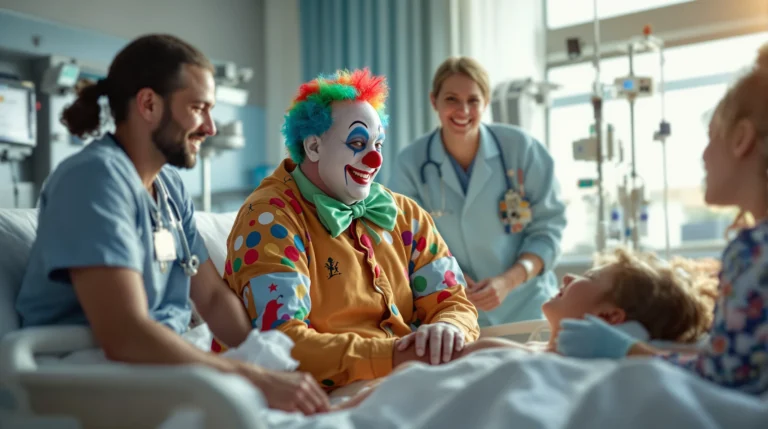
| Formal Clown/Humor Specialist Programs | Trained medical clowns or humor specialists visiting wards | Pediatric wards, oncology, palliative care | Moderate – positive patient satisfaction data; less cortisol/pain measurement | High – specialist staff or contracted performers required |
How LaughMD Supports Humor in Healthcare
LaughMD exists because the clinical evidence for humor therapy deserves a dedicated, professionally produced resource – not a paragraph in a wellness blog. Founded by Prof. Frank Chindamo, CHP – a former Saturday Night Live writer, USC/UCLA/Chapman professor, and Certified Humor Professional – LaughMD translates a rigorous body of research into formats that clinicians, patients, and caregivers can actually use. The flagship resource is the book “If Laughter is the Best Medicine, Let’s Use It as Medicine: The New Science of Humor in Healthcare,” available in digital ebook, audiobook, deluxe audiobook, and print editions through the LaughMD Shop – purchase the ebook, audiobook, deluxe audiobook, and print editions.
The book’s structure reflects the evidence base it presents. Part One covers the background science – cortisol, endorphins, immunity, and cardiovascular effects. Part Two profiles real-world Heroes of Humor including Kevin Hart, Jon Stewart, John Oliver, US military heroes, and the former Pope. Part Three examines clinical Prescribers of Comedy. Part Four delivers the practical “How To” prescription – what patients, caregivers, and clinicians can do starting today. Every chapter ends with APA-cited references for readers who want to dig into the primary research. Learn more about the author’s background and the LaughMD research foundation at the About LaughMD page – Prof. Frank Chindamo’s background and the clinical research foundation.
The sister entity LaughMD (laughmd.com) extends the book’s framework into a personalized digital wellness platform and app that curates comedy content tailored to individual patient preferences – enabling scalable, ongoing humor therapy delivery in home and clinical settings.
Two testimonials from clinical professionals reflect the book’s reception among healthcare practitioners:
“A compelling presentation of science and clinical application. This hilarious book proves how laughter can be a legitimate, data-backed medical intervention.” – Joseph B. Singer, MD – Senior Attending Physician at East Bay Community Action Program, Providence, RI
“Prof. Chindamo’s work provides a comprehensive and funny exploration of why humor belongs in the healing process. It’s an important resource for practitioners and patients alike.” – Gina Ramsey, LICSW – Author, Writer, Speaker, Life Transformation Strategist at Minneapolis VA Healthcare System
Practical Tips for Using Humor Therapy
Incorporating humor therapy into patient care or personal wellness does not require a clinical program or specialized equipment. The following practical approaches are drawn from the evidence base and the LaughMD framework.
Start with a preference inventory. Before introducing comedy content to a patient, ask three questions: What makes you laugh most – physical comedy, wordplay, storytelling, or observational humor? Are there topics or types of humor that you find distressing? Do you prefer to laugh alone or with others? These answers take less than two minutes to collect and significantly improve the likelihood that the intervention will produce relief rather than discomfort.
Use the 3-minute rule for provider wellbeing. The Chapman University finding – 13% stress reduction in 3 minutes (Chapman University, 2026)[2] – is an actionable benchmark. Introduce a structured 3-minute comedy clip at the start of shift handover meetings. Track staff-reported stress scores weekly using a validated single-item scale. After four weeks, review the data and present it to hospital leadership as evidence for a formal pilot program.
Pair humor with other non-pharmacological interventions. Humor therapy works well alongside music therapy, guided imagery, and mindfulness. A 10-minute sequence that begins with a comedy clip, transitions to guided breathing, and ends with a brief mindfulness exercise creates a layered stress response interruption that no single modality achieves alone. This combination is particularly effective in outpatient chemotherapy settings where patients have extended dwell time during infusions.
Monitor and document outcomes consistently. Use a validated pain scale (NRS or VAS) and a brief stress scale before and after each humor session. Record the type of content used, the duration, and the patient’s self-reported engagement level. Over time, this data builds a personalized humor profile that predicts which content works best for each patient – and provides the institutional evidence needed to justify ongoing programming.
Use digital platforms for continuity. Between clinical appointments, encourage patients to use the LaughMD app or access their personally curated comedy playlist. Continuity of the humor intervention between sessions sustains the cortisol-reduction and endorphin-release benefits across the full treatment period, not just during clinical contact hours. For further reading on getting started, the LaughMD Blog – articles and updates on humor research, clinical applications, and events provides ongoing guidance and research updates.
The Bottom Line
The benefits of humor therapy are no longer a soft claim or a wellness platitude – they are a body of clinical evidence built across dozens of peer-reviewed studies and validated at US institutions including USC, Chapman, and AT Still University. Laughter reduces cortisol, releases endorphins, relaxes muscles, supports immunity, and measurably reduces pain and provider stress. These outcomes make humor therapy a legitimate, side-effect-free addition to any non-pharmacological pain management or wellness program. Edward T. Creagan, MD, of the Mayo Clinic frames it well: “A hearty laugh decreases blood pressure, helps regulate heart rhythm and provides an element of joy, that elusive factor in well-being.” (Mayo Clinic Press, 2026)[3]
If you are a clinician ready to integrate structured humor into your practice, a patient looking for a natural complement to your current pain management plan, or a hospital administrator evaluating non-pharmacological interventions for a pilot program, LaughMD provides the evidence base, the practical framework, and the accessible formats to help you start. Visit the LaughMD Shop to purchase the ebook, audiobook, or print edition, or contact our team directly at [email protected] with institutional licensing or bulk order inquiries.
Sources & Citations
- Laugh it up: 5 benefits of laughter for older adults. UCLA Health, 2026.
https://www.uclahealth.org/news/article/laugh-it-up-5-benefits-laughter-older-adults - The Healing Benefits of Humor and Laughter. U.S. Department of Veterans Affairs Whole Health Library, 2026.
https://www.va.gov/WHOLEHEALTHLIBRARY/tools/healing-benefits-humor-laughter.asp - The health benefits of humor. Mayo Clinic Press, 2026.
https://mcpress.mayoclinic.org/healthy-aging/the-health-benefits-of-humor/ - Laughter is the best medicine. HelpGuide.org, 2026.
https://www.helpguide.org/mental-health/wellbeing/laughter-is-the-best-medicine - Humor and laughter – physiological and psychological benefits. PMC, 2018.
https://pmc.ncbi.nlm.nih.gov/articles/PMC6125057/