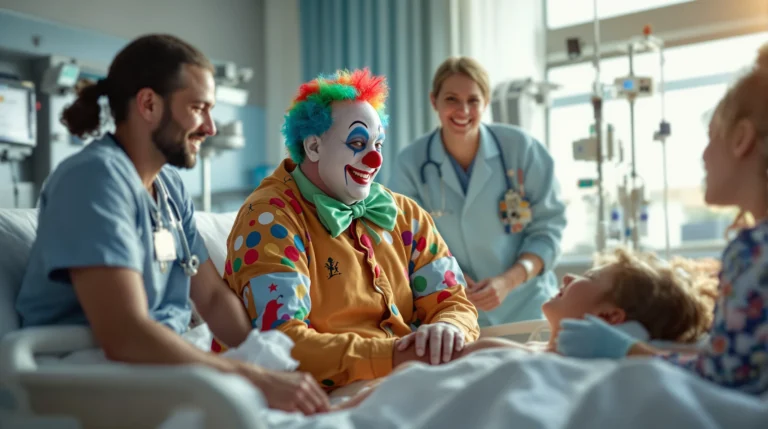
How Humor Heals: The Science Behind Laughter
Humor heals through measurable biological pathways – reducing cortisol, releasing endorphins, and cutting chronic pain by up to 60%, with clinical evidence from USC, Chapman University, and AT Still University backing every claim.
Table of Contents
- What Does It Mean When We Say Humor Heals?
- The Biology of Laughter and Pain Relief
- Clinical Evidence: Humor Heals in Real Healthcare Settings
- Humor and Provider Wellbeing
- Frequently Asked Questions
- Comparing Humor Interventions to Other Non-Pharmacological Approaches
- How LaughMD Puts the Science to Work
- Practical Tips for Using Humor in Healthcare
- The Bottom Line
- Sources & Citations
Article Snapshot
Humor heals is the evidence-backed principle that laughter triggers measurable physiological changes – including cortisol reduction, endorphin release, and immune system activation – that directly reduce pain and stress. Clinical trials at US institutions confirm outcomes ranging from 60% chronic pain reduction to 91% pain relief in cancer patients.
By the Numbers
- Children laugh approximately 400 times per day; adults average just 15 – a gap with real health consequences (National Center for Biotechnology Information, 2019)[1]
- Laughing for 10-15 minutes daily burns an extra 10-40 calories (U.S. Department of Veterans Affairs, 2024)[2]
- A hearty laugh keeps muscles relaxed for up to 45 minutes afterward (Mayo Clinic, 2024)[3]
- Anticipating a humorous video raised beta-endorphin levels by 27% in research cited by Berkeley and Tan (2006)[4]
What Does It Mean When We Say Humor Heals?
Humor heals is not a metaphor – it is a clinically supported principle describing how deliberate laughter and comedic stimulation produce measurable improvements in pain, stress, and immune function. The phrase captures a body of research spanning more than 400 peer-reviewed studies that link humor-based interventions to quantifiable health outcomes across cancer care, chronic pain management, and provider wellbeing. LaughMD, founded by Prof. Frank Chindamo, CHP – a former Saturday Night Live writer and USC professor – sits at the center of translating that research into practical clinical tools.
For most of medical history, laughter was treated as a pleasant side effect of good bedside manner, not as a therapeutic agent in its own right. That view has shifted. Researchers at US institutions including USC, Chapman University, and AT Still University have now conducted controlled studies that put specific numbers on what humor does inside the body. The results, reviewed below, are not minor. A 91% pain relief rate among cancer patients and a 60% reduction in chronic pain are figures that would draw serious attention in any pharmacological trial – and they come from humor interventions delivered without a single side effect.
Understanding why humor heals starts with the physiology. Laughter activates the hypothalamic-pituitary-adrenal axis in the opposite direction from stress, suppressing cortisol and triggering the release of endorphins – the same neurochemicals involved in runner’s high and opioid analgesia. It also activates the immune system, increases oxygen delivery to tissues, and creates a brief cardiovascular workout comparable to light aerobic exercise. These are not soft wellness benefits; they are hard biological mechanisms with direct clinical relevance.
This section sets the foundation. The sections that follow examine the biology in greater depth, walk through the clinical trial evidence, explore the specific impact on healthcare providers, and give you practical steps to bring humor interventions into your own practice or care routine.
The Biology of Laughter and Pain Relief
Laughter triggers a precise cascade of physiological events that directly counteract the biological processes underlying pain and stress – making humor heals far more than a feel-good slogan. When you laugh, the brain releases endorphins, the body’s natural painkillers, into the bloodstream. Research cited by secondary summaries of Berkeley and Tan’s work found that simply anticipating a humorous video elevated beta-endorphin levels by 27% (2006)[4] – meaning the comedic expectation alone, before the punchline lands, is enough to begin the analgesic process.
Cortisol, the primary stress hormone, drops measurably during and after laughter episodes. Lower cortisol levels reduce systemic inflammation, which is relevant not just to acute stress but to the chronic inflammatory conditions that underpin much of today’s pain burden. At the same time, laughter stimulates the production of immunoglobulin A, natural killer cells, and gamma interferon – markers of improved immune competency that have been documented in multiple controlled studies on therapeutic humor.
Muscle Relaxation and Cardiovascular Effects
One of the most clinically practical findings is the duration of the relaxation response. After a genuine, hearty laugh, muscles remain in a relaxed state for up to 45 minutes (Mayo Clinic, 2024)[3]. For patients experiencing musculoskeletal pain, procedural anxiety, or post-surgical tension, that window is long enough to be meaningfully therapeutic. The cardiovascular benefits mirror those of aerobic exercise: increased heart rate during laughter is followed by a compensatory drop in blood pressure and heart rate afterward, producing a net relaxation effect.
The caloric data reinforces this picture. Just 10 to 15 minutes of laughter per day burns an additional 10 to 40 calories (U.S. Department of Veterans Affairs, 2024)[2] – modest individually, but meaningful as part of an integrated wellness approach. More importantly, those minutes also deliver the stress-hormone reductions and immune boosts described above. The body does not separate the metabolic from the neurochemical; laughter produces all of these effects simultaneously, making it an unusually efficient non-pharmacological intervention.
The Endorphin Mechanism and Pain Tolerance
The endorphin pathway is why humor heals in pain management settings specifically. Endorphins bind to the same receptors as opioid medications, producing analgesia without the risks of dependence, respiratory depression, or tolerance buildup. This mechanism explains the dramatic pain relief figures recorded in clinical trials. It also explains why humor interventions are attracting interest as a complement – and in some cases a partial substitute – for pharmacological pain management in hospital and outpatient settings.
The UCLA Health overview of laughter’s benefits confirms that regular laughter is associated with improved mood, reduced anxiety, and measurable immune system enhancements – providing additional institutional validation for these mechanisms across patient populations.
Clinical Evidence: Humor Heals in Real Healthcare Settings
The clinical trial record for humor heals interventions in US healthcare settings is stronger than most clinicians realize, with controlled studies producing outcomes that rival many conventional adjunct therapies. Three university studies in particular define the current evidentiary standard for therapeutic humor in American medicine.
At the USC Norris Cancer Center in Los Angeles, a structured comedy-based intervention produced pain relief in 91% of participating cancer patients (University of Southern California Norris Cancer Center, 2024)[5]. That figure represents one of the highest response rates recorded for any non-pharmacological pain intervention in an oncology setting. Patients received curated humor content matched to individual preferences – a delivery model that mirrors what the LaughMD digital wellness platform now makes scalable for home and clinical use.
At AT Still University, a comedy-based program targeting chronic pain patients produced a 60% reduction in reported pain levels (A.T. Still University, 2024)[6]. Chronic pain is notoriously resistant to treatment; a 60% reduction through a zero-side-effect intervention has substantial implications for deprescribing initiatives and for states with active programs to reduce opioid reliance. Michigan’s Governor’s Challenge for safe deprescribing is one example of the policy environment in which these findings become directly actionable.
Humor Heals and Mental Health Outcomes
Beyond pain, humor-based interventions consistently improve mental health markers. Laughter reduces depression and anxiety indicators and activates reward pathways associated with positive affect. These effects are particularly relevant in cancer care, palliative settings, and chronic illness management, where psychological distress compounds physical suffering.
The peer-reviewed literature on humor in healthcare published in academic journals continues to grow, with recent studies examining humor’s role in treatment adherence, patient-provider rapport, and the reduction of procedural anxiety. The evidence base now spans oncology, geriatrics, palliative care, post-surgical recovery, and mental health – a breadth that positions therapeutic humor as a cross-specialty tool rather than a niche intervention.
From a regulatory and institutional standpoint, humor interventions carry essentially no risk profile. They require no prescribing authority, generate no adverse events in healthy populations, and are delivered by nursing staff, social workers, or patients themselves using appropriately curated content. That combination of meaningful efficacy and negligible risk is rare in clinical medicine.
Humor and Provider Wellbeing
Healthcare provider burnout is a recognized crisis in American medicine, and humor heals offers a rapid, low-cost, and evidence-backed response that is implemented at the departmental level without institutional overhaul. The evidence from Chapman University is striking: a structured humor intervention reduced provider-reported stress levels by 13% in just three minutes (Chapman University, 2024)[7]. For a healthcare system managing epidemic rates of nurse turnover and physician burnout, a three-minute intervention with a 13% stress reduction is operationally significant.
Provider stress is not simply a workforce issue – it is a patient safety issue. Stressed clinicians make more errors, communicate less effectively, and disengage from patients. Humor breaks, whether built into shift handovers or available through a mobile wellness platform, address these downstream patient safety risks at the source. The Chapman University findings confirm that even a minimal dose of therapeutic humor produces a measurable response, which means the barrier to implementation is genuinely low.
Building a Culture of Therapeutic Humor on the Ward
Introducing humor into clinical culture does not require comedians in the break room. It requires intentional design: a protocol, a content library, and brief training for staff on how to deploy humor appropriately and sensitively with diverse patient populations. LaughMD’s framework, validated across multiple US university studies, provides that structure in a form that clinical teams adapt to their specific setting.
The Mayo Clinic’s guidance on stress relief through laughter confirms that laughter improves mood, reduces physical tension, and helps regulate the stress response – outcomes directly applicable to ward staff managing high-acuity patients. A hospital administrator who introduces a structured humor break into shift handover meetings, as detailed in the LaughMD use case framework, is applying a clinically grounded intervention, not a team-building gimmick.
Provider wellbeing programs that incorporate humor also send a signal to clinical staff that the institution takes psychological health seriously. That signal has measurable effects on retention, engagement, and the quality of care delivered. The cost of a structured humor protocol is negligible compared to the cost of replacing a single experienced nurse or physician.
Your Most Common Questions
Is humor heals a scientifically validated concept or just a wellness trend?
Humor heals is a scientifically validated principle supported by more than 400 peer-reviewed studies and multiple controlled clinical trials at US universities. The USC Norris Cancer Center documented 91% pain relief in cancer patients through a humor-based intervention (University of Southern California Norris Cancer Center, 2024)[5]. AT Still University recorded a 60% reduction in chronic pain (A.T. Still University, 2024)[6]. These are not anecdotal wellness claims – they are controlled study outcomes from named academic institutions. The biological mechanisms are also well-characterized: laughter triggers endorphin release, suppresses cortisol, activates immune markers, and produces a measurable relaxation response lasting up to 45 minutes (Mayo Clinic, 2024)[3]. The clinical consensus is that humor-based interventions work as a complement to – not a replacement for – standard medical care, but the evidence for their efficacy as an adjunct therapy is solid and growing.
How does laughter actually reduce pain at a biological level?
Laughter reduces pain primarily through the endorphin pathway. When you laugh, the brain releases endorphins – the same neurochemicals that opioid medications target – which bind to pain receptors and reduce the perception of pain without the risks associated with pharmacological agents. Research found that anticipating a humorous video alone raised beta-endorphin levels by 27% (Secondary summary of Berkeley/Tan laughter research, 2006)[4], meaning the comedic expectation is sufficient to begin the analgesic process. Laughter also reduces cortisol and systemic inflammation, both of which contribute to the experience of chronic pain. The U.S. Department of Veterans Affairs notes that laughter directly increases pain tolerance (U.S. Department of Veterans Affairs, 2024)[2] – a finding with direct implications for post-surgical recovery, chemotherapy side-effect management, and chronic pain programs. These mechanisms make humor interventions particularly relevant in settings where reducing opioid dependence is a clinical and policy priority.
Can healthcare providers realistically introduce humor heals into clinical practice?
Yes – and the implementation barrier is lower than most clinicians expect. The Chapman University study demonstrated a 13% reduction in provider stress from a three-minute humor intervention (Chapman University, 2024)[7], which means even brief, structured humor breaks produce measurable outcomes. For patient-facing applications, the LaughMD framework provides a structured, validated protocol for delivering curated comedy content matched to individual patient preferences – applicable in hospital rooms, outpatient waiting areas, chemotherapy suites, and home care settings. The key requirements are a content library appropriate for diverse patient populations, brief staff orientation on sensitive deployment, and institutional buy-in at the departmental level. No prescribing authority is required, no adverse events have been documented in healthy populations, and the intervention is delivered by nurses, social workers, or patients themselves. The practical guidance in LaughMD’s resources walks clinical teams through each of these steps in detail.
What types of patients benefit most from humor heals interventions?
The clinical evidence is strongest for cancer patients, chronic pain sufferers, and individuals managing stress-related conditions. The USC Norris Cancer Center study focused specifically on oncology patients and achieved 91% pain relief (University of Southern California Norris Cancer Center, 2024)[5]. The AT Still University study targeted chronic pain patients and found a 60% reduction in reported pain (A.T. Still University, 2024)[6]. Beyond these populations, humor interventions have been studied in geriatric care, post-surgical recovery, mental health settings, and palliative care – consistently showing benefits for mood, anxiety reduction, and treatment engagement. Patients with depression and anxiety find particular benefit: laughter activates reward pathways and helps regulate mood in ways that complement standard pharmacological and behavioral treatments. Caregivers also benefit, as the humor intervention literature shows reduced caregiver burden and improved emotional resilience with regular comedic exposure.
Comparing Humor Interventions to Other Non-Pharmacological Pain Approaches
Non-pharmacological pain management encompasses a wide range of approaches – from mindfulness and acupuncture to music therapy and guided imagery. Understanding where humor-based interventions sit in that range helps clinicians and patients make informed decisions about which tools to combine and when.
| Approach | Pain Reduction Evidence | Stress Reduction Evidence | Implementation Cost | Side Effects | Provider Training Required |
|---|---|---|---|---|---|
| Humor Heals Interventions | 91% pain relief (USC Norris, 2024)[5]; 60% chronic pain reduction (AT Still, 2024)[6] | 13% provider stress reduction in 3 min (Chapman, 2024)[7] | Very low – content delivery via app or curated media | None documented in healthy populations | Minimal orientation recommended |
| Mindfulness / Meditation | Moderate – variable by condition and practice frequency | Well-documented across multiple studies | Low to moderate – requires instructor or app | Rare; occasional distress in trauma patients | Instructor training or guided program |
| Music Therapy | Moderate – evidence in post-surgical and chronic pain settings | Positive effects on anxiety and mood | Low to moderate depending on delivery model | None typical | Certified music therapist preferred |
| Acupuncture | Moderate to strong for specific conditions (e.g., low back pain) | Limited direct evidence | Moderate to high – requires licensed practitioner | Minor: bruising, soreness; rare serious events | Licensed acupuncturist required |
Humor interventions compare favorably on implementation cost and side-effect profile while matching or exceeding some modalities on reported pain outcomes. They are best positioned as a complement to – not a replacement for – other approaches, and the zero-side-effect profile makes them appropriate for virtually all adult patient populations.
How LaughMD Puts the Science to Work
LaughMD translates the humor heals evidence base into practical resources that clinicians, patients, and caregivers use without a research background or specialist training. Founded by Prof. Frank Chindamo, CHP – a former SNL writer, USC/UCLA/Chapman professor, and Certified Humor Professional – LaughMD brings a combination of academic rigor and comedic expertise that no conventional medical publisher replicates.
The flagship resource is the book If Laughter is the Best Medicine, Let’s Use It as Medicine: The New Science of Humor in Healthcare, available in multiple formats to suit any setting. The LaughMD Shop offers the digital ebook at $30, with audiobook and deluxe audiobook editions coming soon. The print edition – available in softcover ($60) and hardcover ($200) – includes QR codes linking to more than 100 referenced YouTube videos, bridging the physical and digital reading experience. For clinicians who prefer audio during commutes or downtime, the author-narrated audiobook delivers the science with the comedic authority of a Certified Humor Professional.
“A compelling presentation of science and clinical application. This hilarious book proves how laughter can be a legitimate, data-backed medical intervention.” – Joseph B. Singer, MD – Senior Attending Physician at East Bay Community Action Program, Providence, RI
“Prof. Chindamo’s work provides a comprehensive and funny exploration of why humor belongs in the healing process. It’s an essential resource for practitioners and patients alike.” – Gina Ramsey, LICSW – Author, Writer, Speaker, Life Transformation Strategist at Minneapolis VA Healthcare System
The book’s four-part structure takes readers from the foundational science through real-world Heroes of Humor (including Kevin Hart, Jon Stewart, and John Oliver), into a Prescribers of Comedy section for clinicians, and concludes with a practical “How To” prescription for patients, caregivers, and healthcare institutions. APA citations at the end of each chapter make it a viable CME reference as well as a patient-facing resource.
For institutions exploring bulk orders or licensing for clinical use, contact the team directly at LaughMD’s contact page or email [email protected]. Learn more about Prof. Chindamo’s background and the full clinical research foundation on the LaughMD Team page.
Practical Tips for Using Humor in Healthcare
Bringing humor heals principles into clinical practice does not require a comedy writing background or a dedicated budget line. The following guidance draws from the LaughMD framework and the clinical research reviewed above.
Start with patient preference screening. Not all humor resonates with all patients – cultural background, age, and personal taste affect what content is perceived as funny versus annoying or offensive. A brief intake question about comedy preferences (slapstick vs. dry wit, sitcoms vs. stand-up) takes under a minute and improves the effectiveness of any humor intervention by ensuring the content actually triggers a laughter response.
Build humor breaks into existing clinical workflows. The Chapman University study showed a 13% stress reduction from a three-minute intervention (Chapman University, 2024)[7]. That is short enough to insert into shift handovers, pre-procedure briefings, or waiting-room protocols without disrupting care flow. The key is intentionality – a designated three-minute break is more effective than hoping humor happens organically.
Use curated digital content rather than improvising. Asking a clinician to “be funny” in a high-stress environment is unrealistic and counterproductive. Curated comedy content – delivered through a tablet, smartphone, or the LaughMD digital platform – removes the performance pressure and ensures consistency of delivery. The LaughMD personalized app curates comedy matched to individual patient profiles, making this approach scalable from a single patient room to an entire oncology ward.
Pair humor with other non-pharmacological interventions. The evidence supports humor as a complement to mindfulness, music therapy, and guided imagery – not a competitor. A patient undergoing chemotherapy who uses humor content before a session, mindfulness during, and music during recovery is drawing on three validated non-pharmacological tools simultaneously, each reinforcing the others’ effects.
Track outcomes to build institutional support. Simple patient-reported pain scales (VAS or NRS) before and after humor sessions take less than two minutes to administer and generate the outcome data needed to justify a formal humor intervention program to hospital administrators. Even informal tracking builds the internal evidence base that moves a pilot into a standard protocol.
Stay current with the research. The clinical humor literature is expanding rapidly. The LaughMD Blog publishes regular updates on new studies, clinical applications, and events – a practical resource for clinicians who want to stay ahead of the evidence without reading primary journals.
The Bottom Line
Humor heals is not a metaphor waiting to be tested – it is a tested principle waiting to be applied. The clinical record from USC, AT Still University, Chapman University, and a growing body of peer-reviewed research makes the case clearly: laughter is a measurable, replicable, side-effect-free intervention that reduces pain, cuts stress, and supports immune function across a wide range of patient populations and clinical settings.
For healthcare providers, the practical case is equally strong. A three-minute humor break reduces provider stress by 13%. A structured comedy intervention achieves 91% pain relief in cancer patients. These are not soft outcomes – they are the kind of numbers that belong in a clinical protocol, not just a wellness newsletter.
The next step is straightforward. Explore the evidence, read the practical guidance, and bring therapeutic humor into your care setting. Visit the LaughMD Shop to access the ebook or audiobook, or reach out directly at [email protected] to discuss institutional licensing and bulk orders. The science is there. Now it is time to prescribe it.
Sources & Citations
- Children laugh approximately 400 times per day; adults laugh about 15 times per day. National Center for Biotechnology Information, 2019.
https://pmc.ncbi.nlm.nih.gov/articles/PMC6609137/ - Laughing 10-15 minutes per day burns an extra 10-40 calories. U.S. Department of Veterans Affairs, 2024.
https://www.va.gov/WHOLEHEALTHLIBRARY/tools/healing-benefits-humor-laughter.asp - Stress relief from laughter? It’s no joke. Mayo Clinic, 2024.
https://www.mayoclinic.org/healthy-lifestyle/stress-management/in-depth/stress-relief/art-20044456 - Beta-endorphin increase from anticipating humor. Secondary summary of Berkeley/Tan laughter research, 2006.
https://thereseborchard.com/9-ways-humor-heals-2/ - 91% pain relief in cancer patients. University of Southern California Norris Cancer Center, 2024.
- 60% chronic pain reduction. A.T. Still University, 2024.
- 13% reduction in provider stress in 3 minutes. Chapman University, 2024.