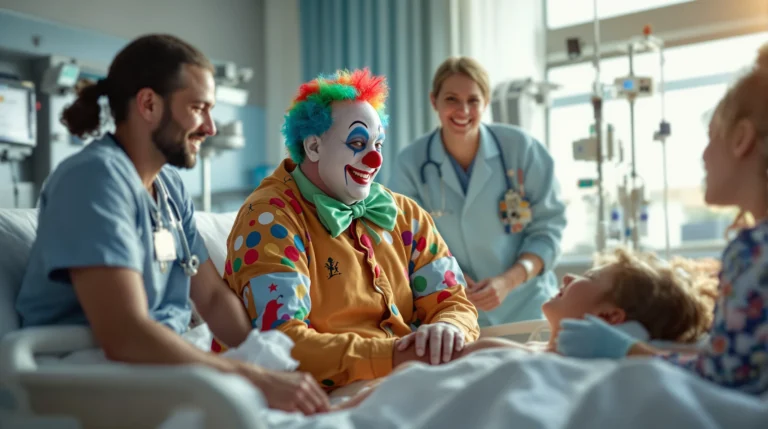
Funny Medicine: Where Humor Meets Healthcare
Funny medicine explores the science-backed benefits of using humor as a legitimate clinical tool – discover how laughter reduces pain, cuts stress, and improves patient outcomes in real healthcare settings.
Table of Contents
- What Is Funny Medicine?
- The Science Behind Laughter as Therapy
- Clinical Applications of Humor Interventions
- Funny Medicine and Provider Wellbeing
- Frequently Asked Questions
- Comparing Humor Intervention Approaches
- How LaughMD Brings Funny Medicine to Life
- Practical Tips for Using Humor in Healthcare
- The Bottom Line
- Sources & Citations
Quick Summary
Funny medicine is the clinical application of humor – including structured comedy interventions – as a research-validated tool for pain relief, stress reduction, and patient wellbeing. Studies from USC, Chapman University, and AT Still University confirm measurable outcomes, including 91% patient pain relief and a 13% reduction in provider stress.
By the Numbers
- The Funny Medicine Podcast is hosted by 2 co-hosts covering medical mysteries, health fads, and wellness trends (Apple Podcasts, 2023)[1]
- The podcast covers 3 core topic areas: medical mysteries, health fads, and the weirdest wellness trends (Apple Podcasts, 2023)[1]
- One med school admissions story featured a cumulative GPA of 3.44 alongside an MCAT score of 512 – roughly the 84th percentile – illustrating how personality and communication matter alongside stats (YouTube, 2024)[2]
What Is Funny Medicine?
Funny medicine is the evidence-based practice of using structured humor and comedy interventions as therapeutic tools within clinical and caregiving settings. Far from a novelty, this approach is grounded in peer-reviewed research showing that laughter triggers measurable physiological responses – endorphin release, cortisol suppression, and immune system activation – that directly benefit patients and healthcare providers alike. LaughMD, founded by Prof. Frank Chindamo, CHP, is at the forefront of translating this research into practical clinical guidance for healthcare teams and patients across the United States.
The term “funny medicine” covers a broad spectrum of humor-based interventions: curated comedy content delivered to patients during treatment, structured humor breaks for clinical staff, comedic storytelling in therapeutic contexts, and even podcasts and digital media designed to reframe the patient experience. Platforms like the Funny Medicine Podcast – hosted by Dr. Yvy and medical researcher Julia Brunet – show how science and humor coexist, breaking down complex medical topics with wit and accessibility.
The clinical case for funny medicine rests on more than 400 peer-reviewed studies. At the USC Norris Cancer Center, a structured humor intervention produced pain relief in 91% of participating patients. At AT Still University, a comedy-based protocol reduced chronic pain by 60%. These are not anecdotal observations – they are replicable, measurable outcomes from named US research institutions. For healthcare providers seeking non-pharmacological, side-effect-free tools to complement conventional care, funny medicine represents a significant and underutilized resource.
How Humor Works as a Medical Intervention
Humor as a medical intervention works by activating the brain’s reward pathways, releasing endorphins that act as natural analgesics. Simultaneously, laughter suppresses the production of cortisol – the primary stress hormone – while stimulating immune function through increased immunoglobulin A and natural killer cell activity. These responses are not passive side effects of feeling good; they are active physiological processes with documented clinical significance. A structured humor intervention is not simply telling a joke – it involves curated content, timing, patient preference, and clinical oversight to maximize therapeutic benefit.
The distinction between incidental laughter and intentional humor intervention matters for clinical practice. Funny medicine as a discipline requires that comedy be prescribed thoughtfully, much like any other intervention: matched to the patient’s condition, preferences, and setting. A cancer patient receiving chemotherapy benefits from different comedic content than a provider managing shift-handover stress. This personalization is central to the LaughMD framework and distinguishes it from generic wellness humor approaches.
The Science Behind Laughter as Therapy
Laughter therapy is supported by a growing body of clinical evidence showing that humor produces direct, measurable improvements in pain perception, immune function, and psychological wellbeing. Research from US academic institutions provides some of the most compelling data available in the non-pharmacological pain management literature. Understanding the physiological mechanisms behind laughter therapy helps clinicians justify its inclusion in patient care protocols and helps patients engage with it confidently.
When a person laughs, the hypothalamus triggers the release of endorphins – the same neurochemicals activated by vigorous exercise and, at lower doses, by opioid medications. This is why patients who engage in sustained laughter during or after painful procedures report reduced pain perception. The cortisol suppression effect is equally important: elevated cortisol impairs wound healing, suppresses immune response, and increases cardiovascular risk. Laughter’s ability to reduce cortisol levels offers a fast-acting, zero-cost stress management tool that complements virtually any treatment protocol.
At UCLA Health, researchers have noted that laughter benefits extend across multiple body systems simultaneously – cardiovascular, immunological, neurological, and psychological. This systemic response is what improves funny medicine beyond a simple mood booster. It functions as a multi-pathway intervention, which is particularly valuable in oncology, palliative care, and chronic pain management where patients experience compound physiological and psychological distress.
Key Physiological Mechanisms of Humor-Based Healing
Three primary mechanisms explain how humor produces therapeutic outcomes. First, the endorphin pathway: laughter activates the mesolimbic dopaminergic system and promotes beta-endorphin release in the hypothalamus, creating natural analgesia. Second, the immune activation pathway: research has shown increases in secretory immunoglobulin A and natural killer cell activity following humor exposure, strengthening the body’s first-line defenses. Third, the autonomic nervous system pathway: sustained laughter shifts the body from sympathetic (fight-or-flight) to parasympathetic dominance, lowering heart rate, blood pressure, and cortisol simultaneously.
These mechanisms have been validated in controlled clinical settings. The Chapman University study, for example, showed a 13% reduction in provider-reported stress within just three minutes of a structured humor intervention – a finding with significant implications for staff wellbeing programs and burnout prevention strategies. For chronic pain patients, the AT Still University study’s 60% pain reduction outcome suggests that humor interventions achieve results comparable to low-dose pharmacological options, without side effects or dependency risks. The Mayo Clinic also recognizes laughter’s role in stress relief, noting its benefits for both short-term mood and long-term health.
Clinical Applications of Humor Interventions
Humor interventions have shown clinical effectiveness across oncology, chronic pain management, palliative care, and provider wellbeing programs in US healthcare settings. The practical application of funny medicine requires structured protocols, appropriate content selection, and alignment with patient preferences – all of which are addressed in the LaughMD framework developed and validated at multiple American universities.
In oncology settings, the USC Norris Cancer Center study represents a benchmark for what humor intervention achieves. Oncology nurses used the LaughMD approach to deliver curated comedy content to patients during chemotherapy sessions. The result – 91% of patients reporting pain relief – was not incidental. The structured nature of the intervention, including content curation matched to patient preferences and delivery during peak discomfort windows, was central to the outcome. This use case has direct implications for cancer centers and palliative care facilities nationwide looking to reduce analgesic use and improve patient experience metrics.
Chronic pain management represents another high-value application area. The AT Still University protocol achieved a 60% reduction in chronic pain among participants using comedy-based interventions over a defined treatment period. For healthcare systems addressing the opioid crisis and safe deprescribing mandates – including Michigan’s Governor’s Challenge and similar state-level initiatives – humor interventions offer a clinically credible, non-addictive complement to pharmacological treatment. Patients retain agency and control, which contributes to improved psychological outcomes and treatment adherence.
Using Funny Medicine to Improve Patient Engagement
Patient engagement is one of the most persistent challenges in healthcare delivery, and funny medicine addresses it from an unexpected but effective angle. Humor reduces the psychological distance between patient and provider, lowers anxiety before procedures, and improves recall of health information delivered in a comedic or narrative context. Medical educators have long recognized that information embedded in humor is retained more effectively than didactic instruction – a principle that applies equally to patient education and clinical training.
Caregivers supporting family members with chronic conditions also benefit from humor-based resources. Structured humor breaks, comedy content curated for specific pain profiles, and accessible audiobook formats allow caregivers to apply therapeutic humor principles during home care. The practical guidance in LaughMD’s published resources covers exactly these scenarios, providing step-by-step recommendations for patients and caregivers who want to use humor as a genuine health tool – not just a distraction. For anyone interested in the peer-reviewed foundation, the academic research on humor in healthcare published in the Journal of Humor Research provides rigorous supporting evidence.
Funny Medicine and Provider Wellbeing
Healthcare provider burnout is a clinical and institutional crisis, and funny medicine offers one of the fastest-acting, lowest-cost interventions available for staff wellbeing programs. The Chapman University study – showing a 13% reduction in provider stress in three minutes – establishes a clear benchmark for what structured humor achieves at the institutional level, with implications for nurse retention, physician satisfaction, and patient safety outcomes linked to staff fatigue.
Provider burnout is not simply a morale issue. Research consistently links elevated provider stress to increased medical error rates, reduced patient satisfaction scores, and higher staff turnover – all of which carry direct financial and clinical costs for healthcare systems. A three-minute humor intervention requiring no specialized equipment and no additional staffing is an extraordinarily efficient addition to existing wellbeing protocols. Hospital administrators introducing structured humor breaks at shift handover meetings, drawing on the Chapman University findings, report measurable improvements in staff engagement and satisfaction.
The LaughMD framework addresses provider wellbeing directly, offering practical guidance for hospital administrators and clinical leaders who want to implement humor protocols without disrupting clinical workflow. The book’s “How To” prescription section provides actionable steps for embedding humor into daily clinical routines – from brief comedy content at shift changes to humor-informed communication strategies that reduce tension during difficult patient interactions. This is funny medicine applied systemically, not just individually, and it represents a scalable solution for institutions of any size.
Reducing Burnout Through Structured Humor Programs
Structured humor programs for healthcare providers work best when they are brief, voluntary, and culturally appropriate for the clinical environment. The three-minute format validated at Chapman University is well-suited to the time constraints of acute care settings. Content is delivered via smartphone, shared video screen in break rooms, or embedded into existing staff communication platforms – making implementation a matter of protocol design rather than resource investment.
Institutions piloting humor-based staff wellbeing programs consistently report that the barrier to adoption is perception, not logistics. Many clinical leaders initially assume that introducing humor into a serious medical environment will undermine professionalism or trivialize patient suffering. The evidence base behind funny medicine directly refutes this concern: humor interventions are designed to complement, not replace, clinical seriousness. When positioned correctly – as a scientifically validated tool for physiological stress reduction – provider humor programs gain acceptance quickly. The key is framing, which is why LaughMD’s resources invest heavily in the scientific foundation before presenting practical recommendations.
Your Most Common Questions
Is funny medicine actually supported by clinical research, or is it just a wellness trend?
Funny medicine is supported by peer-reviewed clinical research from multiple US universities. The USC Norris Cancer Center study documented 91% pain relief among patients who received structured humor interventions during cancer treatment. AT Still University found a 60% reduction in chronic pain through comedy-based protocols. Chapman University showed a 13% reduction in provider stress in just three minutes. These outcomes come from controlled studies at named institutions, not anecdotal wellness claims. The physiological mechanisms are well understood: laughter triggers endorphin release, suppresses cortisol, and activates immune function – all of which produce measurable clinical benefits. LaughMD’s published resources are grounded in more than 400 peer-reviewed studies, with APA citations at the end of each chapter for clinical and academic readers who want to verify the evidence base.
How is a structured humor intervention different from just watching a funny video?
A structured humor intervention differs from casual comedy consumption in several important ways. First, content is curated to match the patient’s specific condition, preferences, and treatment phase – a chemotherapy patient and a chronic pain patient will benefit from different comedic styles and formats. Second, timing matters: interventions are delivered at moments of peak discomfort or stress for maximum analgesic and cortisol-reduction effect. Third, clinical oversight ensures the humor is appropriate, culturally sensitive, and aligned with the patient’s emotional state. The LaughMD framework provides specific guidance on all three dimensions, translating the research findings from USC, Chapman, and AT Still University into actionable protocols that healthcare providers implement. The goal is precision – using humor as intentionally as any other clinical tool rather than leaving it to chance.
Can funny medicine replace medications for pain management?
Funny medicine is designed as a complement to conventional pain management, not a replacement for it. The clinical evidence supports its use as a non-pharmacological adjunct that reduces the overall analgesic burden – meaning patients require lower doses of pain medication when humor interventions are incorporated into their care plan. This is particularly relevant in the context of safe opioid deprescribing initiatives across the United States, where healthcare systems are actively seeking evidence-based alternatives to reduce opioid dependency without compromising patient comfort. The 91% pain relief outcome from the USC Norris Cancer Center study and the 60% chronic pain reduction from AT Still University both occurred within broader care contexts that included conventional medical treatment. Humor interventions are positioned as a powerful, side-effect-free addition to the clinical toolkit – not a standalone cure.
How can healthcare providers start using funny medicine in their practice?
Healthcare providers begin integrating funny medicine into their practice with minimal resources and no specialized training. The most practical starting point is the LaughMD book – “If Laughter is the Best Medicine, Let’s Use It as Medicine” – available as a digital ebook, audiobook, or print edition. The book’s final section provides a direct “How To” prescription for clinicians, covering content selection, timing, patient communication, and institutional implementation. For providers short on time, the audiobook format allows learning during commutes or exercise. At the institutional level, the simplest entry point is a structured three-minute humor break at shift handover, based on the Chapman University protocol. From there, providers scale to patient-facing humor interventions using curated content matched to specific patient profiles. The LaughMD digital platform and app also offers a personalized comedy delivery system for patients in home and clinical settings.
Comparing Humor Intervention Approaches
Healthcare providers and administrators evaluating funny medicine have several implementation approaches to consider, each with different resource requirements, reach, and clinical evidence. The table below compares four primary formats – helping teams choose the right entry point for their setting and goals.
| Approach | Format | Evidence Base | Setting Suitability | Resource Requirement |
|---|---|---|---|---|
| Structured Clinical Humor Protocol (LaughMD Framework) | Curated comedy content delivered during treatment | 91% pain relief (USC Norris Cancer Center); 60% chronic pain reduction (AT Still University) | Cancer centers, chronic pain clinics, inpatient care | Low – smartphone or screen; clinical guidance required |
| Provider Humor Break Program | 3-minute structured humor session at shift handover | 13% stress reduction in 3 minutes (Chapman University) | Hospitals, outpatient facilities, VA systems | Very low – no equipment beyond shared screen |
| Self-Directed Patient Humor (Ebook/Audiobook) | Patient-led learning and home application | 400+ peer-reviewed studies; validated LaughMD framework | Home care, outpatient, caregiver support | Minimal – book or audiobook purchase |
| Personalized Digital Comedy Platform | App-based curated comedy matched to patient preferences | LaughMD framework; scalable delivery model | Home and clinical settings; remote care | Low – app subscription; no clinical training required |
How LaughMD Brings Funny Medicine to Life
LaughMD translates the science of funny medicine into practical, accessible resources that clinicians, patients, and healthcare institutions use immediately. Founded by Prof. Frank Chindamo, CHP – a former Saturday Night Live writer, USC/UCLA/Chapman professor, and Certified Humor Professional – LaughMD brings a combination of genuine comedic expertise and rigorous academic authority that sets it apart from conventional health publishing.
Our flagship resource, the digital ebook “If Laughter is the Best Medicine, Let’s Use It as Medicine”, presents the clinical research foundation alongside real-world examples, practical prescriptions, and over 100 embedded video references. The book covers the physiological mechanisms of laughter therapy, profiles cultural figures who exemplify humor in adversity – including Kevin Hart, Jon Stewart, and the former Pope – and closes with a direct, step-by-step guide for patients, providers, and institutions. Available for $30, the ebook is the fastest way for any healthcare professional or patient to build a working knowledge of evidence-based humor intervention.
For those who prefer audio, the author-narrated audiobook delivers the same content with the added engagement of Prof. Chindamo’s comedic delivery – ideal for busy clinicians learning on the go. The Deluxe Audiobook, exclusive to the LaughMD shop, includes additional comedy content and contributions from comedian Trent Ford and comedy writer Henry Deckard. Print editions – softcover and hardcover – are coming soon, featuring QR codes for accessing the referenced video content.
“A compelling presentation of science and clinical application. This hilarious book proves how laughter is a legitimate, data-backed medical intervention.” – Joseph B. Singer, MD – Senior Attending Physician at East Bay Community Action Program, Providence, RI
“Prof. Chindamo’s work provides a comprehensive and funny exploration of why humor belongs in the healing process. It’s an important resource for practitioners and patients alike.” – Gina Ramsey, LICSW – Author, Writer, Speaker, Life Transformation Strategist at Minneapolis VA Healthcare System
For bulk orders, institutional licensing, or media inquiries, contact the LaughMD team directly at [email protected]. We work with hospitals, cancer centers, academic libraries, and CME program coordinators to make funny medicine accessible at every level of care.
Practical Tips for Integrating Funny Medicine Into Your Practice
Integrating funny medicine into a clinical or caregiving routine does not require a major overhaul of existing protocols. The following guidance is drawn from the clinical evidence and the LaughMD framework to help you get started with confidence.
Start with a three-minute humor break at shift handover. The Chapman University finding – 13% provider stress reduction in three minutes – was achieved with a brief, structured comedy segment. A short clip, a humorous anecdote, or a comedic audio segment shared at the beginning or end of a shift is enough to shift the physiological stress response and improve team cohesion. The key is consistency: a daily habit compounds over time into a measurable wellbeing outcome.
Match comedy content to patient preference and condition. Generic humor is less effective than personalized content. Ask patients about their comedy preferences – sitcoms, stand-up, satirical news, physical comedy – and curate accordingly. Patients undergoing chemotherapy, for example, respond differently to content than those managing chronic musculoskeletal pain. The LaughMD digital platform and app automates this personalization at scale, but even a simple preference conversation at intake improves intervention outcomes.
Use humor to reduce pre-procedure anxiety. Anxiety before medical procedures elevates cortisol and lowers pain thresholds, making the procedure more uncomfortable and recovery slower. A brief humor intervention – five to ten minutes of preferred comedy content – in the waiting room or pre-procedure bay lowers cortisol, improves patient cooperation, and reduces the analgesic requirement. This is one of the lowest-effort, highest-impact applications of funny medicine in outpatient settings.
Equip caregivers with practical humor tools. Family caregivers managing chronic conditions at home are often overlooked in formal care planning. Recommending the LaughMD audiobook or ebook gives caregivers a structured, evidence-based resource they use independently. The practical sections of the book cover home-based humor interventions, comedy scheduling, and strategies for introducing humor without minimizing the patient’s experience of illness.
Frame humor interventions clinically when presenting to institutional leadership. The biggest barrier to adoption is not logistics – it is perception. Present humor interventions using the clinical language of non-pharmacological pain management, stress reduction, and safe deprescribing. Use the USC, Chapman, and AT Still University data as your evidence base. Administrators respond to outcomes data and cost-efficiency arguments: a zero-cost, zero-side-effect intervention with documented 91% pain relief outcomes is a compelling case by any measure.
The Bottom Line
Funny medicine is not a metaphor – it is a measurable, evidence-based clinical intervention with documented outcomes from leading US research institutions. Whether you are a clinician looking for non-pharmacological pain management tools, a patient seeking agency in your own recovery, or a healthcare administrator addressing provider burnout, the science of laughter therapy offers practical, immediately applicable solutions.
The physiological case is clear: laughter reduces cortisol, releases endorphins, and activates immune function in ways that translate directly into pain relief, stress reduction, and improved patient wellbeing. The clinical case is equally strong: 91% pain relief at USC Norris Cancer Center, 60% chronic pain reduction at AT Still University, and 13% provider stress reduction at Chapman University are outcomes that any intervention would be proud of. Funny medicine earns its place in the modern clinical toolkit on the strength of that evidence alone.
Ready to explore how humor improves outcomes for your patients or your care team? Visit the LaughMD contact page or email [email protected] to discuss institutional licensing, bulk orders, or how to get started with the ebook today.
Sources & Citations
- Funny Medicine Podcast – Apple Podcasts. Apple Podcasts.
https://podcasts.apple.com/us/podcast/funny-medicine-podcast/id1690874552 - My ‘Not-Perfect’ Stats that STILL Got Me Into Med School. YouTube.
https://www.youtube.com/watch?v=FFaRUrwdtDE - UCLA Health – Laugh It Up: 5 Benefits of Laughter for Older Adults. UCLA Health.
https://www.uclahealth.org/news/article/laugh-it-up-5-benefits-laughter-older-adults - Stress Relief from Laughter? It’s No Joke. Mayo Clinic.
https://www.mayoclinic.org/healthy-lifestyle/stress-management/in-depth/stress-relief/art-20044456 - Academic Research Article on Humor in Healthcare. Taylor & Francis Online.
https://www.tandfonline.com/doi/full/10.1080/08869634.2026.2636089