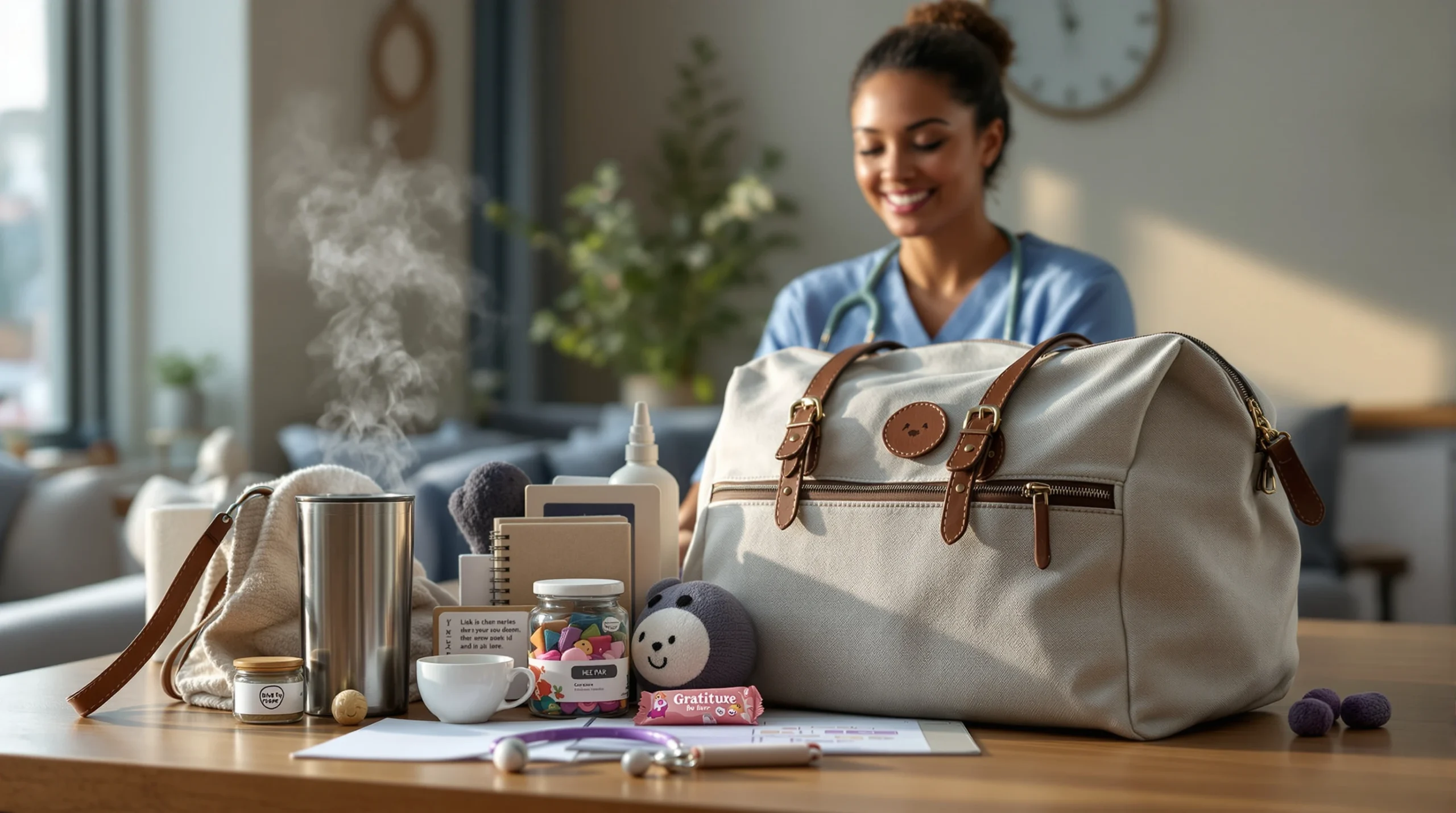
Nurse Survival Kit for Burnout Relief
Discover the ultimate nurse survival kit to combat burnout and stress. Learn evidence-based humor strategies to protect your mental health and wellbeing.
Table of Contents
- What Is a Nurse Survival Kit?
- Why Do Nurses Need a Survival Kit for Burnout?
- How Does Humor Fit Into a Clinical Survival Strategy?
- What Are the Best Non-Pharmacological Tools for Nursing Stress?
- Questions from Our Readers
- Comparing Coping Strategies
- Evidence-Based Resources from LaughMD
- Practical Tips for Building Your Kit
- Before You Go
- Sources & Citations
Article Snapshot
A nurse survival kit is a curated collection of physical, emotional, and evidence-based psychological tools designed to help healthcare professionals manage stress, prevent burnout, and maintain wellbeing during demanding clinical shifts.
By the Numbers
- 35 percent of registered nurses reported experiencing burnout at least a few times a week in 2024 (National Council of State Boards of Nursing, 2025) [1] .
- More than 138,000 nurses left the U.S. workforce between 2022 and 2024, citing stress and burnout as primary drivers (National Council of State Boards of Nursing, 2025) [2] .
- Laughter-based interventions reduced stress in nursing students with a standardized mean difference of -1.26 in a 2025 meta-analysis (PubMed, 2025) [3] .
What Is a Nurse Survival Kit?
A comprehensive nurse survival kit encompasses both tangible physical supplies and evidence-based psychological strategies designed to sustain healthcare professionals through grueling clinical shifts. Historically, the concept of nursing survival gear was limited to a physical pouch containing high-quality pens, medical tape, compression socks, and high-protein snacks. While these physical items remain necessary for handling the physical demands of a twelve-hour shift on the hospital floor, the modern understanding of a clinical survival supplies cache has evolved significantly to address the profound mental and emotional toll of patient care. Early versions of these kits focused entirely on physical endurance, assuming that mental fatigue was simply an unavoidable byproduct of the job. Today, healthcare professionals recognize that physical stamina without psychological support leads directly to compassion fatigue and early career departure.
Today, a true healthcare worker coping kit must prioritize psychological armor alongside physical comforts. The emotional labor of nursing involves constant exposure to human suffering, high-stakes decision-making, and the heavy burden of moral responsibility. To counteract this, modern kits integrate non-pharmacological stress reduction techniques, mindfulness practices, and structured humor interventions. These psychological tools are not merely distractions; they are key mechanisms for regulating the nervous system, lowering cortisol levels, and preventing the emotional exhaustion that leads to compassion fatigue.
The shift toward a more complete nursing resilience package reflects a broader cultural change within the medical community. Healthcare institutions and individual clinicians are increasingly recognizing that physical stamina alone is insufficient for long-term career sustainability. By deliberately curating a collection of evidence-based coping mechanisms, nurses create a personalized buffer against the systemic pressures of the healthcare environment. This proactive approach turns the survival kit from a simple bag of tricks into a comprehensive, daily practice of self-preservation and professional longevity.
Building this kind of strong toolkit requires an understanding of one’s own stress triggers and recovery needs. Some clinicians rely heavily on brief moments of peer connection and shared laughter during charting breaks, while others depend on guided breathing exercises or digital wellness applications. The most effective kits are highly personalized, combining the immediate physical relief of ergonomic gear with the deep, systemic stress regulation provided by evidence-based psychological interventions.
Why Do Nurses Need a Survival Kit for Burnout?
The modern nursing profession demands a strong nurse burnout toolkit because systemic workplace pressures have pushed emotional exhaustion to historic highs across the United States. The data surrounding nursing retention and mental health paints a stark picture of a workforce under immense strain. In 2024, 35 percent of registered nurses and 38 percent of licensed practical nurses reported experiencing burnout at least a few times a week (National Council of State Boards of Nursing, 2025) [1] . This frequent emotional depletion directly impacts patient care quality, clinical decision-making, and the overall safety of the healthcare environment. When nurses operate in a state of chronic exhaustion, their reaction times slow, their attention to detail diminishes, and their ability to empathize with patients deteriorates. This cognitive impairment increases the likelihood of medication errors, missed clinical signs, and breakdowns in communication during critical handoffs. The resulting decline in care quality not only harms patient outcomes but also deepens the moral distress experienced by the nursing staff, creating a vicious cycle of worsening burnout and declining professional satisfaction.
The consequences of this unchecked stress extend far beyond individual discomfort, manifesting as a massive workforce exodus. Between 2022 and 2024, more than 138,000 nurses left the U.S. workforce, with stress and burnout cited as the top reasons for their departure (National Council of State Boards of Nursing, 2025) [2] . In addition, 40 percent of registered nurses reported plans to leave the profession entirely within the next five years (National Council of State Boards of Nursing, 2024) [4] . This looming retention crisis threatens the stability of hospital systems and underscores the urgent need for accessible, effective coping strategies that clinicians deploy independently.
Experts in health workforce policy emphasize that the current environment requires more than just institutional adjustments; it requires personal initiative. “We’re seeing record levels of burnout and moral distress among nurses, and many feel they simply don’t have the emotional reserves or institutional support they need to keep going,” noted Patricia Pittman, Director of the Health Workforce Policy Research Center at George Washington University (2025) [1] . When systemic support falls short, a personal survival kit becomes a critical lifeline, providing immediate, on-the-ground relief when administrative solutions are too slow to materialize.
The persistence of these challenges highlights why burnout cannot be treated as a temporary phase or a personal failing. “Burnout remains a persistent problem in the nursing workforce, with more than one-third of nurses experiencing symptoms at least a few times per week,” according to the authors of the National Nursing Workforce Study (Smiley et al., 2025) [1] . A well-constructed survival kit addresses this persistence by offering reliable, repeatable interventions that nurses control, ensuring they have immediate access to stress relief regardless of the chaos unfolding on the ward.
How Does Humor Fit Into a Clinical Survival Strategy?
Humor functions as a key, non-pharmacological component of any clinical survival supplies cache by triggering immediate neurochemical shifts that counteract stress. When a nurse engages with comedy or shares a genuine laugh with a colleague, the brain releases a surge of endorphins and dopamine while simultaneously suppressing the production of cortisol and adrenaline. This biological response acts as a natural reset button for the nervous system, rapidly lowering heart rate, relaxing muscle tension, and restoring cognitive clarity in the middle of a high-acuity shift.
The clinical validity of humor as a medical intervention is supported by rigorous academic research, moving it far beyond anecdotal workplace coping. A 2025 systematic review and meta-analysis found that laughter-based interventions significantly reduced stress with a standardized mean difference of -1.26, anxiety with a standardized mean difference of -1.19, and salivary cortisol with a standardized mean difference of -0.86 in nursing students (PubMed, 2025) [3] . These profound physiological changes show that laughter is not merely a psychological distraction, but a measurable biological intervention that protects the brain and body from the toxic effects of chronic stress.
Leading researchers in nursing education recognize the profound potential of integrating comedy into clinical training and daily practice. “Laughter-based interventions appear to be a promising complementary approach to promote psychological well-being and physiological stress regulation in nursing students,” stated Lina Lee, lead author of the 2025 meta-analysis on laughter-based interventions [3] . By introducing these concepts early in a nurse’s career, the profession equips new clinicians with a sustainable, side-effect-free tool for managing the intense emotional demands of patient care.
Incorporating humor into a daily routine is highly accessible and requires no specialized equipment, making it an ideal cornerstone for any nursing resilience package. Resources like the LaughMD digital wellness platform provide personalized comedy content tailored to individual preferences, allowing nurses to access targeted stress relief during brief breaks. Also, authoritative medical institutions validate this approach, with UCLA Health research on laughter benefits highlighting its capacity to improve mood and immune function, while Mayo Clinic guidelines on stress relief emphasize laughter’s role in soothing tension and stimulating circulation.
Beyond the individual physiological benefits, shared humor serves as a powerful social bonding mechanism that strengthens team cohesion on the hospital floor. When a care team shares a brief, appropriate moment of levity during a chaotic shift, it breaks the tension and re-establishes a sense of shared humanity among the staff. This collective emotional reset improves communication, reduces interpersonal friction, and builds a supportive micro-culture that buffers the entire unit against the isolating effects of chronic stress. Teams that laugh together are more likely to support one another through difficult patient outcomes and maintain high levels of collaborative problem-solving.
What Are the Best Non-Pharmacological Tools for Nursing Stress?
The most effective healthcare worker coping kit relies on a multi-modal approach that combines peer support, digital wellness applications, and structured psychological interventions. While physical comforts like compression garments and hydration bladders address the biomechanical strain of twelve-hour shifts, non-pharmacological tools target the cognitive and emotional fatigue that truly drives burnout. The best tools are those that are deployed rapidly in high-stress environments without disrupting patient care or requiring extensive setup time.
Micro-interventions represent the gold standard for on-the-floor stress management. These are brief, targeted practices that take less than three minutes to complete but yield significant neurological benefits. Examples include box breathing exercises to activate the parasympathetic nervous system, progressive muscle relaxation techniques performed while charting, and structured humor breaks using curated comedic audio or video content. By stacking these micro-interventions throughout a shift, nurses prevent the accumulation of allostatic load, keeping their stress response systems from becoming chronically overactivated.
Digital wellness platforms have emerged as a powerful addition to the modern nurse survival kit, offering scalable, personalized support that adapts to the user’s immediate emotional state. Unlike generic wellness apps that offer one-size-fits-all meditation tracks, specialized platforms use clinical frameworks to deliver content specifically designed for healthcare professionals. These tools recognize the unique dark humor and specific stressors inherent in medical environments, providing relatable, evidence-based content that resonates deeply with clinical staff and builds a sense of shared understanding.
Peer-to-peer connection remains an irreplaceable tool for processing the moral distress and emotional weight of clinical practice. Structured debriefing protocols, such as the “Code Lavender” initiative used in some hospital systems, provide a safe, moderated space for care teams to process difficult patient outcomes together. When combined with individual coping strategies like humor and mindfulness, these collective support mechanisms create a comprehensive defense system against burnout, ensuring that nurses do not have to carry the emotional burden of their work in isolation.
In addition to digital and psychological tools, managing the sensory environment of the hospital ward is an important component of stress reduction. The constant barrage of alarms, overhead pages, and bright fluorescent lighting contributes significantly to cognitive overload and nervous system dysregulation. Incorporating sensory management tools into a survival kit, such as high-fidelity earplugs that filter out harsh frequencies while allowing speech to pass through, helps nurses maintain focus and reduce auditory fatigue. Similarly, using blue-light-blocking glasses during late-night charting sessions protects circadian rhythms and improves sleep quality after a grueling night shift, ensuring better physical recovery between shifts.
Questions from Our Readers
What should be included in a physical nurse survival kit?
A physical nurse survival kit should include ergonomic and nutritional necessities that sustain energy and physical comfort during long shifts. Core items feature high-quality compression socks to promote circulation, a durable hydration vessel to prevent dehydration, and high-protein, low-sugar snacks for stable blood glucose levels. Also, including reliable medical shears, multiple pens, and a small notebook for quick reference helps simplify clinical workflows. However, the most advanced kits also incorporate sensory grounding items, such as aromatherapy oil rollerballs or noise-canceling earplugs, to help manage the overwhelming sensory input of a busy hospital ward.
How does laughter actually reduce physical pain and stress?
Laughter reduces physical pain and stress by triggering the release of endorphins and suppressing the production of cortisol and adrenaline in the brain. The endorphin release acts as a natural analgesic, raising the pain threshold while simultaneously relaxing muscle tension and lowering heart rate. The physical act of laughing also stimulates circulation and aids muscle relaxation, which helps alleviate the physical symptoms of stress. Over time, regular engagement with humor downregulates the body’s chronic stress response, protecting the cardiovascular and immune systems from the damaging effects of prolonged emotional exhaustion.
Can humor interventions really prevent nurse burnout?
Humor interventions significantly mitigate nurse burnout symptoms by providing a rapid, accessible method for emotional regulation and daily stress relief. While humor does not fix systemic issues like understaffing or administrative burdens, it effectively buffers the individual clinician against the psychological toll of those stressors. Clinical research shows that structured laughter therapy reduces anxiety, lowers salivary cortisol, and improves overall psychological well-being. By integrating humor into daily routines, nurses maintain emotional reserves, build resilience, and sustain their compassion for patients over the course of a demanding career.
What is the best way to implement a nursing resilience package at my hospital?
Implement a nursing resilience package by integrating evidence-based tools into existing shift routines and institutional wellness programs. Start by introducing brief, structured micro-breaks, such as three-minute humor or mindfulness sessions during shift handovers. Provide access to digital wellness platforms that offer personalized, clinically validated stress relief content. Also, establish peer-support debriefing protocols to help teams process moral distress. Success requires leadership buy-in to ensure staff are given the protected time necessary to use these tools without feeling guilty for stepping away from the floor.
Comparing Coping Strategies
When assembling a nurse survival kit, it is important to evaluate different coping strategies based on their accessibility, clinical validation, and long-term sustainability. Not all stress relief methods are created equal; some provide only temporary distraction, while others actively rewire the nervous system to build lasting resilience against burnout. Understanding the distinctions between these approaches allows healthcare professionals to curate a toolkit that offers genuine, measurable protection against the unique pressures of clinical environments.
The following table compares three common approaches to managing nursing stress, highlighting how evidence-based humor interventions offer distinct advantages over traditional methods.
| Strategy Type | Accessibility | Clinical Validation | Long-Term Sustainability |
|---|---|---|---|
| Traditional Venting | High (requires only peers) | Low (reinforces negative rumination) | Low (increases emotional exhaustion) |
| Physical Comfort Kits | High (snacks, gear) | Moderate (addresses biomechanical strain) | Moderate (does not address psychological burnout) |
| Evidence-Based Humor | High (digital apps, quick breaks) | High (proven cortisol reduction) [3] | High (builds neurological resilience) |
While physical comfort items and peer support remain valuable, integrating evidence-based humor provides a scientifically backed mechanism for immediate physiological stress regulation. Combining these methods ensures that both the body and the mind are protected throughout the duration of a challenging shift.
Traditional venting, while highly accessible and socially reinforced in many hospital breakrooms, carries significant long-term risks for the nursing professional. Constantly recounting traumatic events or expressing frustration without a structured resolution process reinforces negative neural pathways and keeps the nervous system in a state of hyperarousal. Over time, this unstructured complaining shifts from a harmless release valve to a primary driver of cynicism and emotional exhaustion. In contrast, evidence-based humor and structured mindfulness practices actively interrupt the stress cycle, allowing the brain to process the emotional weight of the shift without becoming trapped in a loop of negative rumination.
Evidence-Based Resources from LaughMD
At LaughMD, we believe that humor is not just a coping mechanism, but a legitimate, data-backed medical intervention for pain management and stress reduction. Founded by Prof. Frank Chindamo, CHP – a former Saturday Night Live writer turned Certified Humor Professional – our mission is to integrate evidence-based comedy into healthcare practices. Our clinical research foundation includes studies from USC, Chapman, and AT Still University, proving that structured laughter interventions measurably reduce cortisol, boost immunity, and alleviate provider stress. You explore the full background of our multidisciplinary team and our clinical framework on the About LaughMD page.
To support clinicians in building a comprehensive nurse survival kit, we offer the digital edition of “If Laughter is the Best Medicine, Let’s Use It as Medicine: The New Science of Humor in Healthcare.” This resource translates over 400 peer-reviewed studies into practical, actionable guidance for hospital staff and patients alike. The book features a four-part structure, including a specific “How To” prescription section that gives healthcare providers step-by-step instructions for implementing humor protocols on the ward. You purchase the ebook, audiobook, and upcoming print editions directly through the LaughMD Shop .
The impact of integrating humor into clinical practice is best expressed by the professionals who use it daily. “Prof. Chindamo’s work provides a comprehensive and funny exploration of why humor belongs in the healing process. It’s a valuable resource for practitioners and patients alike,” notes Gina Ramsey, LICSW , Life Transformation Strategist at the Minneapolis VA Healthcare System. Similarly, Joseph B. Singer, MD , Senior Attending Physician at East Bay Community Action Program, states: “A compelling presentation of science and clinical application. This hilarious book proves how laughter is a legitimate, data-backed medical intervention.”
Practical Tips for Building Your Kit
Assembling an effective healthcare worker coping kit requires intentional selection of tools that address both the physical and psychological demands of your specific clinical environment. The goal is to create a portable, easily accessible system that you deploy during brief windows of downtime without disrupting patient care or requiring extensive setup. By focusing on micro-interventions and ergonomic basics, you build a resilient foundation that protects your wellbeing shift after shift.
- Audit Your Stress Triggers: Identify the specific moments during your shift where you feel the most depleted – whether it is post-code debriefs, difficult family conversations, or the mid-shift charting slump. Tailor your psychological tools, such as specific comedic audio tracks or breathing exercises, to target these precise vulnerability windows.
- Curate a Digital Humor Library: Download offline-accessible comedy specials, humorous podcasts, or specialized wellness apps to your smartphone. Having a pre-vetted library of content ensures you immediately access a mood-shifting laugh during a three-minute break, without wasting time scrolling for appropriate material.
- Establish a Peer Signal System: Create a subtle, non-verbal cue with your trusted colleagues that indicates a need for a rapid humor intervention or a brief venting session. This shared language creates immediate peer support and normalizes the act of stepping away for a mental reset before emotional exhaustion peaks.
- Rotate Your Physical Supplies: Regularly check and replenish the tangible items in your kit, such as compression garments, hydration electrolytes, and high-protein snacks. A neglected physical kit fails when you need it most, so make restocking a mandatory part of your post-shift recovery routine.
- Design a Post-Shift Decompression Ritual: Create a strict boundary between your clinical duties and your personal life by establishing a consistent post-shift routine. This ritual involves listening to a specific comedic podcast during your commute, changing out of your scrubs immediately upon arriving home, or spending ten minutes in a quiet, dark room before interacting with family members. Consistently signaling to your brain that the shift is over helps prevent the emotional residue of patient care from bleeding into your personal time and protects your long-term psychological wellbeing.
For healthcare administrators or clinical educators interested in implementing institutional humor protocols or arranging bulk licensing for their nursing staff, we encourage you to Contact LaughMD to discuss tailored wellbeing programs.
Before You Go
A well-constructed nurse survival kit is an important investment in your career longevity, changing how you manage the intense physical and emotional demands of clinical practice. By moving beyond simple physical comforts and integrating evidence-based, non-pharmacological tools like structured humor interventions, you actively regulate your nervous system and protect yourself against the pervasive threat of burnout. The science is clear: laughter and targeted psychological micro-interventions are powerful, side-effect-free mechanisms for sustaining compassion and resilience on the front lines of healthcare.
Do not wait until emotional exhaustion forces you to the sidelines. Take control of your daily wellbeing by exploring the clinical frameworks and practical prescriptions available in our comprehensive digital resources. Visit the LaughMD Shop today to download your copy of “If Laughter is the Best Medicine” and start building a scientifically backed defense against nursing burnout.
Sources & Citations
- State of the U.S. Health Care Workforce, 2025. U.S. Health Resources and Services Administration.
https://bhw.hrsa.gov/sites/default/files/bureau-health-workforce/data-research/State-of-US-Health-Care-Workforce-2025.pdf - NCSBN Research Highlights Small Steps Toward Nursing Workforce Recovery. National Council of State Boards of Nursing.
https://www.ncsbn.org/news/ncsbn-research-highlights-small-steps-toward-nursing-workforce-recovery-burnout-and-staffing-challenges-persist - The effectiveness of laughter-based interventions on psychological, physiological and educational outcomes in nursing students. PubMed.
https://pubmed.ncbi.nlm.nih.gov/40812085/ - Workforce RN – 2024 National Nursing Workforce Study. National Council of State Boards of Nursing.
https://www.ncsbn.org/research/recent-research/workforce/2024-workforce-rn.page