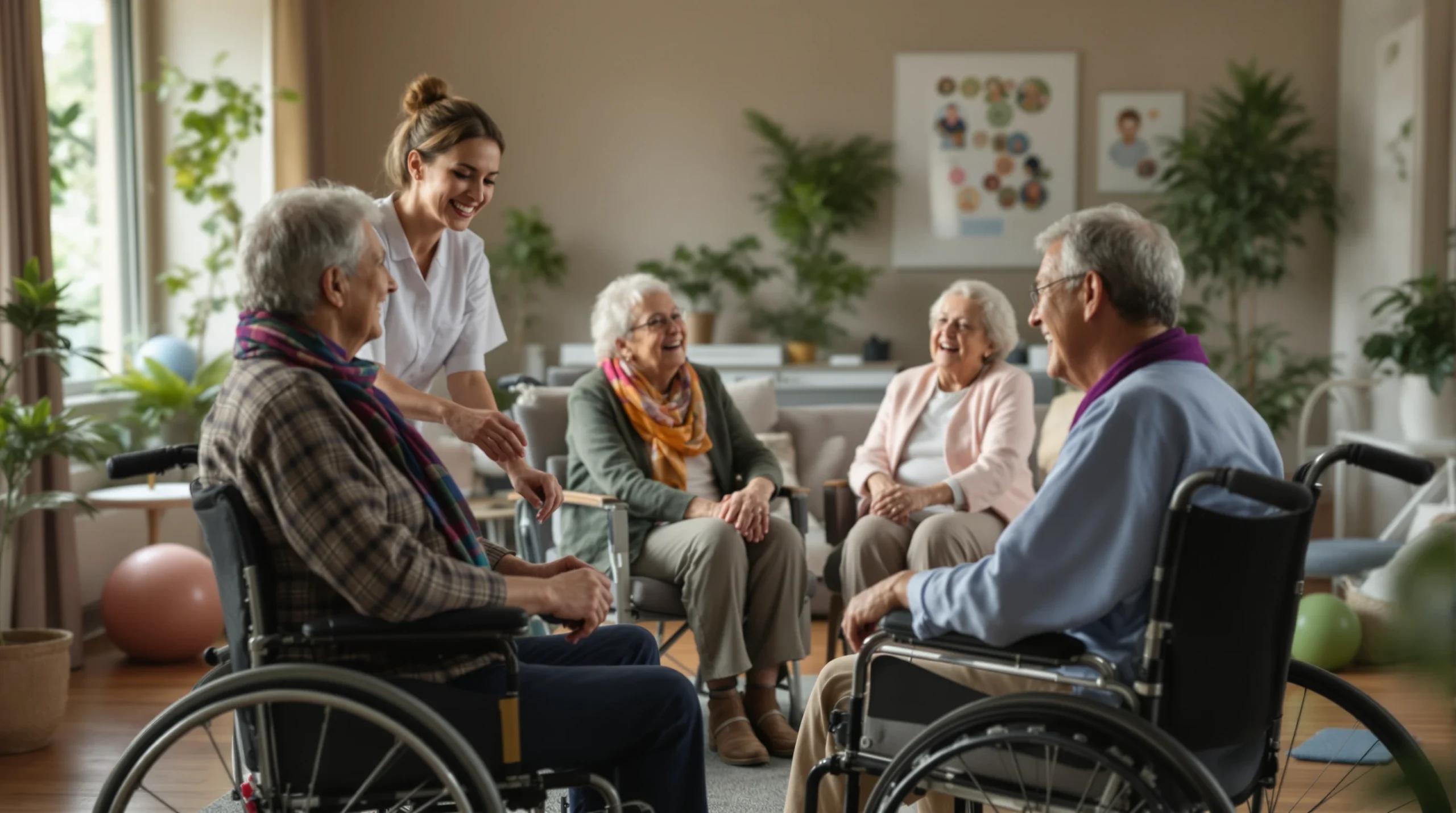
Laughter Therapy for Stroke Patients: What Works
Laughter therapy for stroke patients is an emerging, evidence-based intervention that reduces depression, improves emotional regulation, and supports recovery – here’s what the science says and how to apply it.
Table of Contents
- What Is Laughter Therapy for Stroke Patients?
- How Does Stroke Affect Emotional and Laughter Control?
- What Does the Research Say About Laughter Therapy After Stroke?
- Integrating Humor Interventions Into Stroke Recovery
- Frequently Asked Questions
- Comparison: Approaches to Post-Stroke Emotional Support
- How LaughMD Supports Stroke Patients and Caregivers
- How to Start Laughter Therapy After Stroke in 5 Steps
- The Bottom Line
- Sources & Citations
Article Snapshot
Laughter therapy for stroke patients is a structured, clinically informed intervention that uses humor and simulated laughter exercises to reduce depression, lower cortisol, and improve emotional wellbeing during neurological recovery. Research from multiple peer-reviewed studies confirms measurable improvements in mood, mobility, blood pressure, and social functioning in stroke survivors who engage in laughter-based interventions.
By the Numbers
- Post-stroke emotionalism affects 20% to 25% of survivors within the first six months after a stroke (Journal of Neuropsychiatry, 2024).[1]
- A study of 148 patients with single unilateral strokes found that 34% exhibited post-stroke emotional incontinence involving excessive or inappropriate laughing, crying, or both (Brain, 2000).[2]
- A review of pharmaceutical interventions for emotionalism after stroke reported a 50% reduction in emotionalism in trials showing large treatment effects – four of five trials showed such large effects (PubMed, 2004).[3]
- A 2024 stroke-survivor study of laughter yoga and therapy reported visible improvement across six domains: blood pressure, blood sugar levels, mobility, speech, positive emotions, and social functioning (ResearchSpace UKZN, 2024).[4]
What Is Laughter Therapy for Stroke Patients?
Laughter therapy for stroke patients is a structured non-pharmacological intervention that uses intentional humor exercises, laughter yoga, and curated comedic content to support physical and psychological recovery after a stroke. Unlike passive entertainment, clinical laughter interventions are designed to trigger specific physiological responses – including endorphin release, cortisol reduction, and immune system activation – that promote healing and emotional stability in stroke survivors.
LaughMD, founded by Prof. Frank Chindamo, CHP – a former Saturday Night Live writer and Certified Humor Professional – translates over 400 peer-reviewed studies on laughter and health into practical, evidence-based guidance for patients, caregivers, and clinicians working in stroke rehabilitation and oncology settings alike.
Laughter therapy for stroke patients falls into two main categories that researchers now distinguish clearly. Spontaneous laughter arises naturally from genuinely funny material – jokes, comedy shows, humorous stories. Simulated laughter involves intentional laughter exercises performed without a comedic trigger, such as those used in laughter yoga sessions. Both approaches produce physiological benefits, though recent meta-analytic data shows the two differ meaningfully in their clinical impact on depression outcomes, as discussed in Section 3.
Stroke recovery is a complex, multi-domain process involving physical rehabilitation, cognitive retraining, and emotional support. Laughter-based interventions address the emotional and psychosocial dimensions of recovery that pharmacological approaches often leave underserved. For patients managing fatigue, limited mobility, or communication difficulties, structured humor sessions provide accessible, low-cost relief that integrates naturally into daily care routines. A UCLA Health overview of laughter’s benefits for older adults confirms that regular laughter supports cardiovascular health and stress reduction – two areas directly relevant to stroke recovery and relapse prevention.
How Does Stroke Affect Emotional and Laughter Control?
Stroke frequently disrupts the brain circuits that regulate emotional expression, producing a range of neuropsychiatric symptoms that complicate recovery and caregiver relationships. One of the most clinically significant is post-stroke emotionalism – also called pseudobulbar affect (PBA) or pathological laughter and crying – in which survivors experience involuntary, exaggerated, or contextually inappropriate episodes of laughing or crying.
Post-stroke emotionalism affects 20% to 25% of survivors in the first six months after a stroke (Journal of Neuropsychiatry, 2024),[1] with persistent and severe cases declining to approximately 10% to 15% over the first year as some neurological recovery occurs.[1] A separate study of 148 patients with single unilateral strokes found that as many as 34% exhibited post-stroke emotional incontinence involving excessive or inappropriate laughing, crying, or both as of 2000 (Brain, 2000).[2]
These involuntary emotional displays are neurological in origin, not purely psychological. Damage to the corticobulbar pathways – which normally modulate brainstem motor circuits controlling facial expression and vocalization – removes inhibitory control over the laugh-cry reflex. The result is emotional output that does not match the survivor’s actual internal emotional state, which is distressing for patients and deeply confusing for family members and caregivers.
Distinguishing pathological emotional display from post-stroke depression is clinically important because the two conditions overlap but require different management strategies. The Pathological Laughter and Crying Scale was developed specifically to quantify the severity of involuntary emotional episodes after stroke, and a validation study reported an interrater reliability score of 0.93 in a subgroup of 15 patients (American Journal of Psychiatry, 2006),[5] supporting its use as a reliable clinical measurement tool.
As the American Stroke Association advises survivors managing PBA episodes: “Distract yourself by counting the number of objects on a shelf or by thinking about something unrelated when you think you’re about to have an episode.” (American Stroke Association, 2026)[6] This behavioral self-management strategy complements – rather than replaces – structured therapeutic interventions, including laughter therapy approaches that train survivors to modulate emotional responses through intentional humor engagement.
What Does the Research Say About Laughter Therapy After Stroke?
Clinical research on laughter therapy for stroke patients has grown substantially over the past decade, with peer-reviewed findings from laughter yoga trials, meta-analyses of laughter-inducing therapies, and pharmaceutical comparison studies all contributing to an evidence base that now supports humor as a legitimate rehabilitation tool – not a feel-good afterthought.
A 2024 study examining laughter yoga and therapy in stroke survivors found that participants in the laughter group showed visible improvement across six domains: blood pressure, blood sugar levels, mobility, speech, positive emotions, and social functioning (ResearchSpace UKZN, 2024).[4] The study authors concluded that “laughter yoga and therapy had positive biopsychosocial impacts on the laughter group” – an unusually broad spectrum of benefit for a single non-pharmacological intervention.[4]
A 2019 systematic review and meta-analysis of laughter-inducing therapies – published on PubMed – reached a finding that has significant implications for how clinicians design humor-based programs. Lead author Linda J. G. van den Heuvel concluded: “This systematic review and meta-analysis suggests that (1) ‘simulated’ (non-humorous) laughter is more effective than ‘spontaneous’ (humorous) laughter, and (2) laughter-inducing therapies can improve depression.” (PubMed, 2019)[7] For stroke recovery programs, this finding shows that intentional laughter yoga exercises – even without genuinely funny content – produce stronger antidepressant effects than simply playing comedy films.
An academic peer-reviewed article on humor in healthcare further supports the position that structured humor interventions carry measurable physiological and psychological benefits across a range of clinical populations, reinforcing the applicability of the evidence to stroke-specific settings.
Clinicians should differentiate laughter therapy – used as a positive, structured wellness intervention for depression, stress, and emotional wellbeing – from the clinical management of pathological laughter caused by neurological damage. Therapeutic laughter programs address mood and recovery; pathological laughter and crying represents an involuntary neurological symptom that requires pharmaceutical management alongside behavioral strategies. Both dimensions of laughter after stroke deserve clinical attention, and they are complementary rather than competing concerns.
Integrating Humor Interventions Into Stroke Recovery
Integrating laughter therapy into stroke rehabilitation requires a structured, patient-centered approach that accounts for the survivor’s cognitive capacity, communication ability, and emotional state – and that distinguishes between therapeutic humor use and the management of involuntary emotional displays.
Caregivers and clinicians have several practical frameworks available for delivering humor interventions. Laughter yoga – which combines intentional laughter exercises with yogic breathing – requires no comedic talent and is adapted for survivors with limited mobility or speech impairment, making it among the most accessible formats for inpatient and outpatient rehabilitation settings. Curated comedy content, including short video clips personalized to the patient’s preferences, provides spontaneous laughter cues that complement structured exercises. The Mayo Clinic’s evidence on laughter and stress relief underscores that even brief laughter episodes activate the parasympathetic nervous system, lowering heart rate and muscle tension – both beneficial outcomes for stroke survivors managing spasticity and anxiety.
Pharmacological management of pathological laughter and crying after stroke has its own evidence base. A systematic review of pharmaceutical interventions for post-stroke emotionalism, including 103 participants across five trials, reported that four of the five trials showed large treatment effects (PubMed, 2004),[3] with a 50% reduction in emotionalism in those high-effect trials.[3] Researchers noted that “antidepressants can reduce the frequency and severity of crying or laughing episodes” (PubMed, 2004).[3] A randomized double-blind study found that nortriptyline produced significant improvement in pathological laughter and crying symptoms compared to placebo at both four and six weeks of treatment (American Journal of Psychiatry, 2006).[5]
For most stroke survivors, the optimal approach integrates both tracks: pharmacological management for severe involuntary emotional episodes, and structured laughter therapy to build positive emotional tone, reduce depression, and improve quality of life. Caregivers play a central role in both – helping patients access appropriate comedy content, participating in laughter exercises, and recognizing when involuntary episodes require clinical escalation rather than a humor-based response.
Your Most Common Questions
What is laughter therapy for stroke patients and how does it work?
Laughter therapy for stroke patients is a structured intervention using intentional humor exercises and curated comedy to reduce depression, lower cortisol, and support emotional recovery after a stroke. The therapy works through well-documented physiological pathways: laughter triggers endorphin release, activates the parasympathetic nervous system, reduces stress hormone levels, and promotes social bonding – all of which support neurological recovery and emotional wellbeing. Structured formats like laughter yoga require no comedic material and are adapted for survivors with mobility or speech limitations. Research published in 2024 found that laughter yoga and therapy produced improvements in blood pressure, blood sugar, mobility, speech, positive emotions, and social functioning in stroke survivors (ResearchSpace UKZN, 2024).[4] Laughter therapy is not a treatment for involuntary neurological symptoms like pathological laughter and crying, which require separate clinical assessment and pharmacological management.
What is pathological laughter after stroke and is it the same as laughter therapy?
Pathological laughter after stroke is an involuntary neurological symptom – not a therapeutic practice – caused by damage to the brain circuits that regulate emotional expression. This condition, also called pseudobulbar affect, occurs when corticobulbar pathway damage removes inhibitory control over the brainstem’s laugh-cry reflex, producing emotional displays that do not reflect the survivor’s actual mood. Pathological laughter affects an estimated 10% to 20% of stroke patients according to one review, and up to 34% in studies of unilateral stroke populations (Brain, 2000).[2] Laughter therapy, by contrast, is a deliberate, structured intervention designed to use humor positively for wellbeing benefits. The two concepts involve the word “laughter” but address entirely different clinical problems. Survivors experiencing involuntary laughing or crying episodes should discuss symptoms with their neurologist or rehabilitation team, as antidepressants have shown a 50% reduction in emotionalism in several controlled trials (PubMed, 2004).[3]
Is simulated laughter or genuine humor more effective for stroke recovery?
Simulated laughter – intentional laughter exercises performed without a comedic trigger – is more effective than spontaneous laughter for improving depression in clinical populations, based on a 2019 systematic review and meta-analysis. The review found that non-humorous, simulated laughter produced stronger antidepressant effects than humor-induced spontaneous laughter across included trials (PubMed, 2019).[7] For stroke survivors, this finding is clinically useful because laughter yoga and structured breathing-laughter exercises are delivered without requiring patients to find anything genuinely funny – a significant advantage for survivors managing cognitive changes, communication impairments, or low mood. Spontaneous humor and comedy content still provide meaningful physiological and social benefits, and a comprehensive stroke recovery program combines both approaches. Caregivers do not need to perform comedy routines; they guide survivors through simple simulated laughter exercises that activate the same neuroendocrine pathways as genuine laughter.
Can caregivers use laughter therapy at home with stroke survivors?
Yes, caregivers implement structured laughter therapy practices at home with stroke survivors using accessible, low-cost approaches that require no specialist training. Laughter yoga exercises involve simple breathing and intentional laughter sequences that caregivers guide without any comedic background. Curated short-form comedy video content – selected to match the survivor’s preferences and cultural context – provides spontaneous laughter cues that trigger real physiological responses. Establishing short, regular humor breaks (even three minutes of intentional laughter) produces meaningful stress reduction; research at Chapman University found a 13% reduction in provider stress in just three minutes of structured humor engagement, showing that brief sessions are sufficient to initiate a physiological response. Caregivers should monitor for signs that involuntary emotional episodes (pathological laughter and crying) are being confused with voluntary laughter during sessions, and consult the survivor’s medical team if episodes appear neurological rather than therapeutically triggered. Resources like the LaughMD ebook provide step-by-step practical guidance for caregivers implementing humor interventions at home.
Comparison: Approaches to Post-Stroke Emotional Support
Post-stroke emotional challenges require different management strategies depending on whether the issue is involuntary neurological symptom expression or depression and reduced quality of life. The following table compares the primary approaches clinicians and caregivers currently use, including laughter therapy as a structured wellness intervention alongside pharmacological and behavioral options.
| Approach | Target Condition | Evidence Strength | Key Outcome | Laughter Therapy Role |
|---|---|---|---|---|
| Laughter Yoga / Simulated Laughter | Depression, stress, low mood | Positive meta-analytic evidence (PubMed, 2019)[7] | Reduced depression; improved biopsychosocial outcomes across 6 domains[4] | Primary intervention |
| Curated Comedy Content | Stress, social isolation, mood | Mechanistic and observational support | Endorphin release, cortisol reduction, social bonding | Complementary tool |
| Antidepressants (e.g., nortriptyline) | Pathological laughter and crying; post-stroke depression | Controlled trials – 50% emotionalism reduction[3] | Reduced involuntary emotional episodes; improved mood | Not applicable (pharmacological) |
| Behavioral Self-Management | Pathological emotional display (PBA) | Expert clinical guidance (American Stroke Association, 2026)[6] | In-the-moment episode interruption | Complements laughter therapy |
How LaughMD Supports Stroke Patients and Caregivers
LaughMD translates a rigorous clinical evidence base into practical, accessible resources for stroke survivors, caregivers, and the healthcare providers who serve them. Our flagship publication, If Laughter is the Best Medicine, Let’s Use It as Medicine: The New Science of Humor in Healthcare, by Prof. Frank Chindamo, CHP – a former SNL writer, USC/UCLA/Chapman professor, and Certified Humor Professional – covers the mechanisms of humor-based healing, real-world clinical outcomes, and step-by-step implementation guidance drawn from over 400 peer-reviewed studies.
“Prof. Chindamo’s work provides a comprehensive and funny exploration of why humor belongs in the healing process. It’s an essential resource for practitioners and patients alike.” – Gina Ramsey, LICSW – Author, Writer, Speaker, Life Transformation Strategist at Minneapolis VA Healthcare System
“A compelling presentation of science and clinical application. This hilarious book proves how laughter can be a legitimate, data-backed medical intervention.” – Joseph B. Singer, MD – Senior Attending Physician at East Bay Community Action Program, Providence, RI
For stroke survivors and their caregivers, Part Four of the book provides a direct “What’s In It For Me” guide to implementing humor practices at home – including how to select comedy content, how to run a simulated laughter session, and how to integrate brief humor breaks into daily care routines. These practical prescriptions are grounded in the same research cited in peer-reviewed literature, not wellness speculation.
LaughMD resources are available in formats that suit every setting. The LaughMD Shop – purchase the ebook, audiobook, deluxe audiobook, and print editions of “If Laughter is the Best Medicine” so survivors can access evidence-based humor guidance at home, in a rehabilitation facility, or on the go. The Digital eBook product page – “If Laughter is the Best Medicine, Let’s Use It as Medicine” is the most immediately accessible format, with over 100 embedded video links to curated comedic content directly relevant to the clinical guidance in the text.
For healthcare providers, hospital administrators, and academic researchers seeking bulk copies, institutional licensing, or information about integrating the LaughMD framework into stroke rehabilitation programs, contact us directly at Contact LaughMD – for bulk orders, institutional licensing, media inquiries, and general questions or email [email protected].
How to Start Laughter Therapy After Stroke in 5 Steps
Step 1: Assess the Survivor’s Emotional Baseline
Before introducing laughter-based interventions, caregivers and clinicians should determine whether the survivor is experiencing post-stroke depression, PBA-related involuntary episodes, or both. This distinction is important because laughter therapy targets voluntary mood improvement and cannot substitute for pharmacological management of pathological emotional display. Consult the survivor’s neurologist or rehabilitation team if involuntary laughing or crying episodes are present.
Step 2: Choose the Right Laughter Format for the Patient
Match the intervention format to the survivor’s cognitive capacity, mobility, and preferences. Laughter yoga exercises work well for survivors with speech or communication impairments because they require no verbal comprehension. Curated comedy video content suits survivors who can watch and engage with visual media. The 2024 stroke survivor study found improvements across six domains with laughter yoga and therapy, confirming that structured formats produce measurable benefits (ResearchSpace UKZN, 2024).[4]
Step 3: Schedule Short, Regular Humor Sessions
Consistency matters more than duration in humor-based interventions. Schedule brief daily humor breaks – as short as three minutes – rather than occasional long sessions. Chapman University research found a 13% reduction in provider stress in just three minutes of structured humor engagement, indicating that very short sessions activate real physiological responses. Build humor breaks into existing care routines such as morning care, meal times, or therapy transitions to reduce friction and increase adherence.
Step 4: Curate Comedy Content to Patient Preferences
Personalized comedy content produces stronger engagement and more genuine laughter than generic humor. Identify the survivor’s preferences – whether classic sitcoms, stand-up comedy, animated shows, or lighthearted films – and build a playlist or queue of short clips (five to fifteen minutes) suited to their attention span and taste. The LaughMD ebook includes a practical content guidance section with recommendations for matching comedy type to patient profile, grounded in clinical research on humor preferences and neurological response.
Step 5: Monitor Outcomes and Adjust the Protocol
Track changes in mood, pain levels, sleep quality, and social engagement over four to six weeks using simple validated scales or caregiver observation logs. If depression or emotional symptoms worsen, escalate to the clinical team rather than increasing laughter therapy dose independently. If outcomes are positive – as the 2024 UKZN study found across blood pressure, mobility, speech, and social functioning – document them and share findings with the rehabilitation team to support continued integration of humor-based interventions into the recovery plan.
The Bottom Line
Laughter therapy for stroke patients is a clinically supported, non-pharmacological tool that addresses some of the most persistent and underserved challenges in stroke recovery: depression, emotional dysregulation, social isolation, and reduced quality of life. Peer-reviewed research published through 2024 confirms that structured humor interventions – particularly simulated laughter formats like laughter yoga – improve mood, blood pressure, mobility, and social functioning in stroke survivors. These benefits are distinct from the pharmacological management needed for pathological laughter and crying, which is a separate neurological condition requiring clinical assessment.
If you are a caregiver, clinician, or stroke survivor ready to explore the evidence and start applying humor as a genuine recovery tool, the LaughMD ebook provides the research, the rationale, and the practical prescriptions you need. Visit the Contact LaughMD page to ask about institutional licensing or bulk orders, or go directly to the LaughMD Shop to get your copy today. You can also email [email protected] with any questions.
Sources & Citations
- Pathological Laughing and Crying Post-Stroke – Liaison Psychiatrist Beware. Journal of Neuropsychiatry, 2024.
https://www.jneuropsychiatry.org/peer-review/pathological-laughing-and-crying-poststroke-liaison-psychiatrist-beware.html - Post-Stroke Emotional Incontinence in Unilateral Stroke Patients. Brain, 2000.
https://academic.oup.com/brain/article/126/10/2121/314497 - Pharmaceutical Interventions for Emotionalism After Stroke. PubMed, 2004.
https://pubmed.ncbi.nlm.nih.gov/15106213/ - Biopsychosocial Impacts of Laughter Yoga and Therapy on Stroke Survivors. ResearchSpace UKZN, 2024.
https://researchspace.ukzn.ac.za/items/55a67ff2-370a-4fc2-87dc-318a66cb04ab - Pathological Laughing and Crying Following Stroke: Validation of a Measurement Scale and a Double-Blind Treatment Study. American Journal of Psychiatry, 2006.
https://psychiatryonline.org/doi/10.1176/ajp.150.2.286 - Pseudobulbar Affect (PBA). American Stroke Association, 2026.
https://www.stroke.org/en/about-stroke/effects-of-stroke/emotional-effects/pseudobulbar-affect - Laughter-Inducing Therapies: Systematic Review and Meta-Analysis. PubMed, 2019.
https://pubmed.ncbi.nlm.nih.gov/31029483/